
Understanding number relationships Normal Worksheets for Ages 6-7
3 filtered results
Difficulty Level
Grade
Age
-
From - To
Subject
Activity
Standards
Discover our "Understanding Number Relationships" worksheets designed for children ages 6-7. These engaging worksheets from Kids Academy help young learners build a foundational understanding of numbers, enhancing their ability to recognize patterns, compare values, and grasp key mathematical concepts. Each activity is crafted to turn learning into a fun and interactive experience, encouraging kids to develop essential problem-solving skills. Perfect for both classroom and home use, these printables support national curriculum standards, helping your child to progress confidently in their numeracy journey. Start your child's adventure in understanding number relationships today!
Favorites
With answer key
Interactive
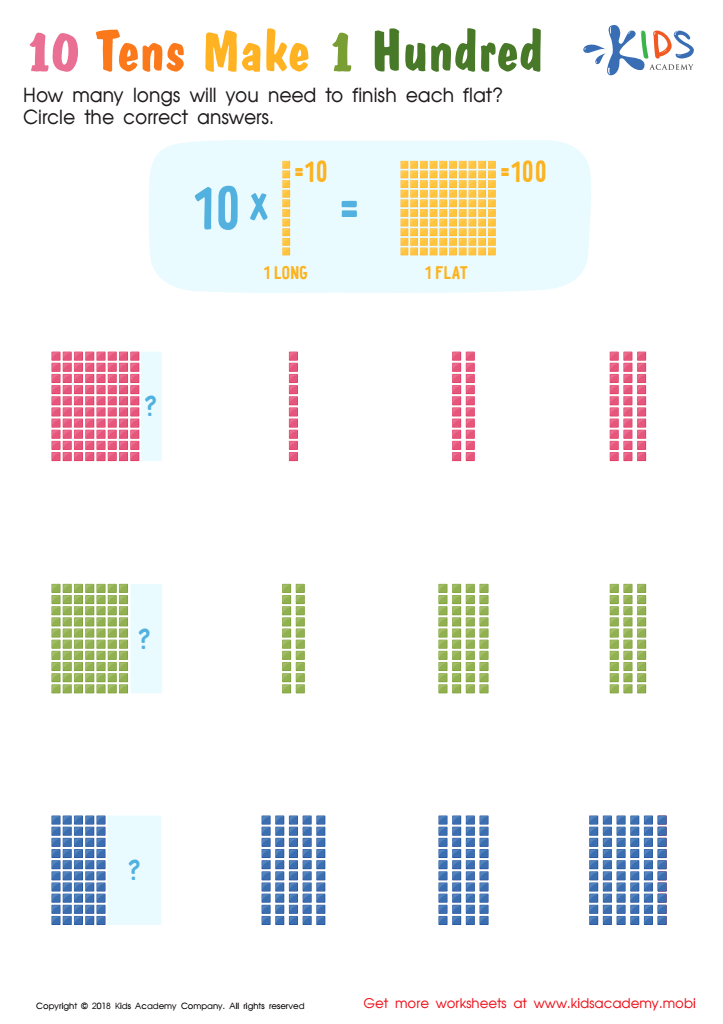
10 Tens Make 1 Hundred Worksheet
Help your child understand multiplication with this worksheet. Ask them how many 'longs' will be needed to complete each flat, then have them circle the correct answer from the options. With this exercise, your child will learn that 10 'tens' make 1 'hundred'!
 Assign to My Students
10 Tens Make 1 Hundred Worksheet
Worksheet
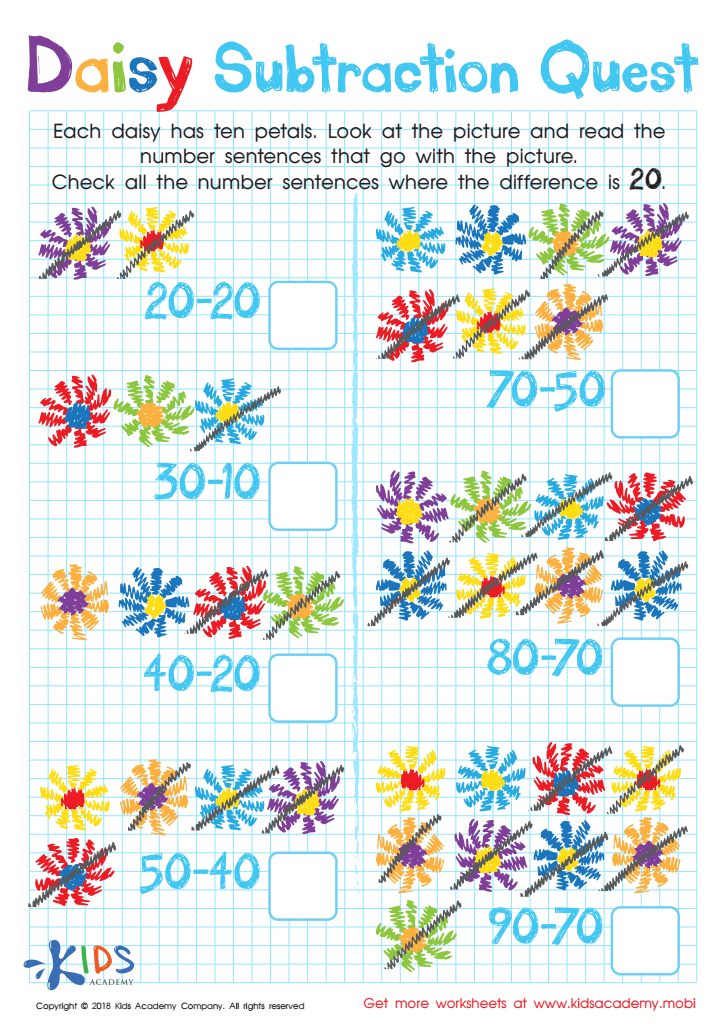
Daisy Subtraction Quest Worksheet
Ohh-la-la! These daisies are something special! With ten petals each, they're perfect for helping little math learners use tens to find number sentences that differ by 20. Our free worksheet is full of bright colors to engage and easy questions to strengthen math automaticity and confidence.
Daisy Subtraction Quest Worksheet
Worksheet
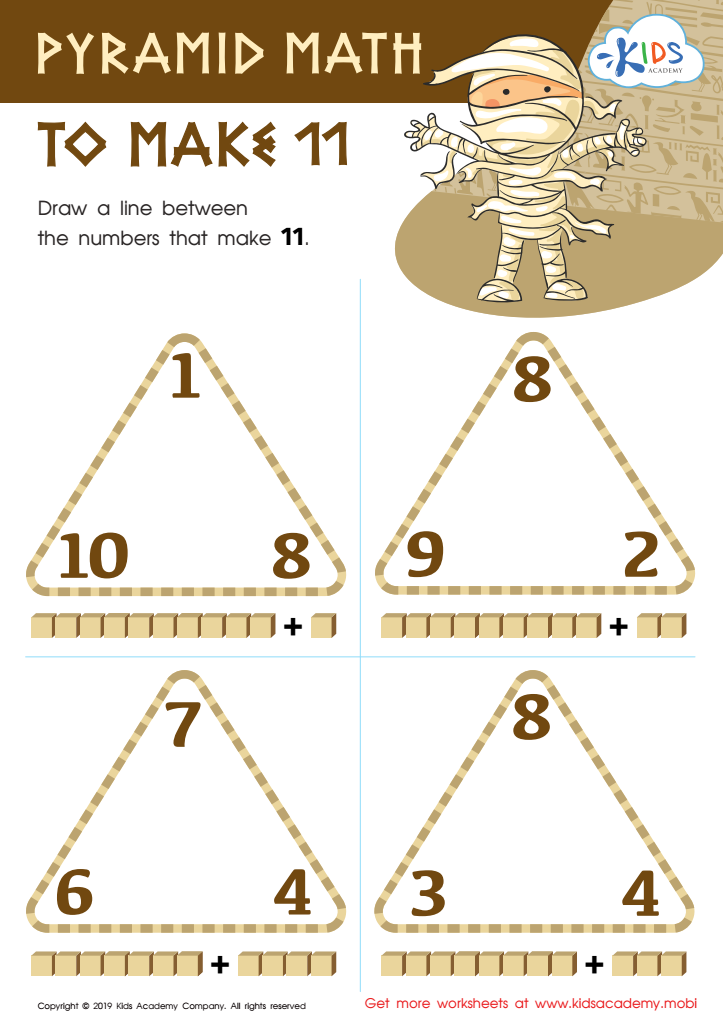
Pyramid Math to Make 11 Worksheet
Have your kids look at the picture of the Egyptian pyramids and tell you what they see. Then, help them do simple math by adding up the numbers in the pyramids and connecting those that make 11. This worksheet is perfect for teaching your kids about history, mathematics, and problem-solving.
Pyramid Math to Make 11 Worksheet
Worksheet
Join Kids Academy for Free
Who is primarily going to use this learning content?



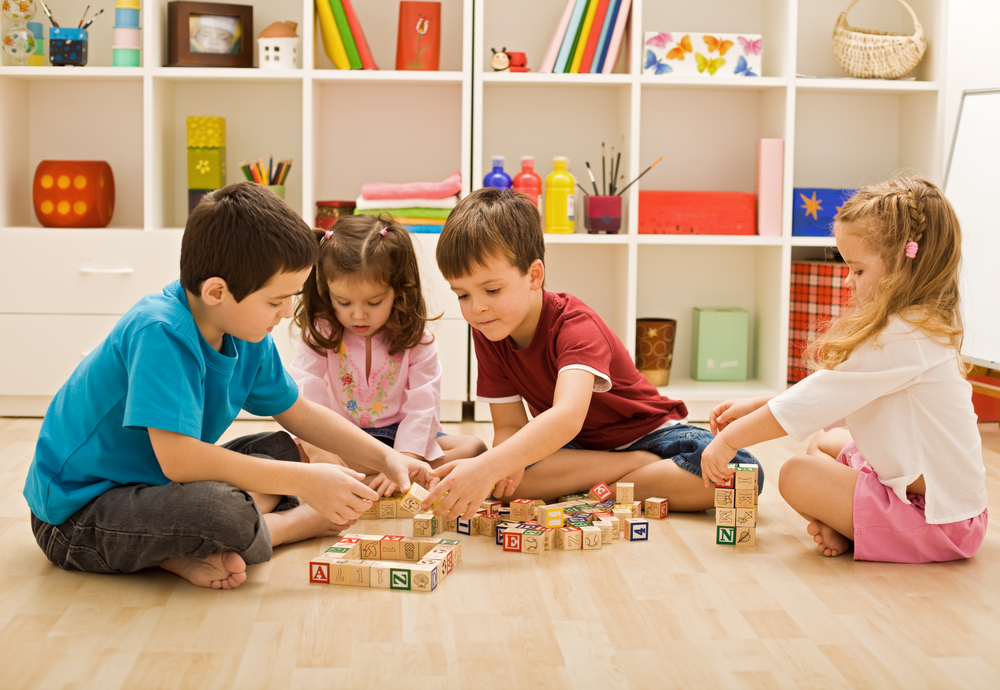



Parents and teachers should prioritize understanding number relationships for children aged 6-7 because it is a critical foundational skill in early mathematics development. At this age, children are not just learning to count but are beginning to understand how numbers interact with each other – concepts like addition, subtraction, and the relationships between quantities. This understanding is vital as it forms the basis for more complex mathematical reasoning skills required later in life.
Recognizing number relationships helps children to see patterns, develop problem-solving strategies, and improve their mental math abilities. For example, understanding that 5 + 3 equals 8 helps them realize that 8 - 3 must be 5. Such insights build their number sense, promoting confidence and competence in math. In essence, a strong grasp of number relationships during these formative years lays down the groundwork for success in more advanced areas of math, including multiplication, division, and fractions.
Moreover, a solid understanding of these relationships has practical implications in everyday life. Simple tasks like dividing snacks equally or measuring ingredients for a recipe become easier. When children grasp these concepts early, they are less likely to experience math anxiety and are more likely to approach math with a positive attitude. Thus, fostering number relationship understanding supports both academic and practical aspects of a child's development.








