Understanding seasons Normal Worksheets for Ages 6-7
3 filtered results
-
From - To
Introduce your young learners to the wonders of nature with our "Understanding Seasons Normal Worksheets for Ages 6-7." This engaging collection of worksheets is designed to help children explore the four seasons—spring, summer, autumn, and winter—through interactive activities. With fun illustrations and simple exercises, kids will learn about seasonal changes, weather patterns, and the characteristics of each season. These worksheets foster critical thinking and promote vocabulary development while keeping learning enjoyable. Perfect for homeschooling or classroom use, our seasonal worksheets provide a foundational understanding of the environment, setting the stage for a lifetime of curiosity about the world around them.
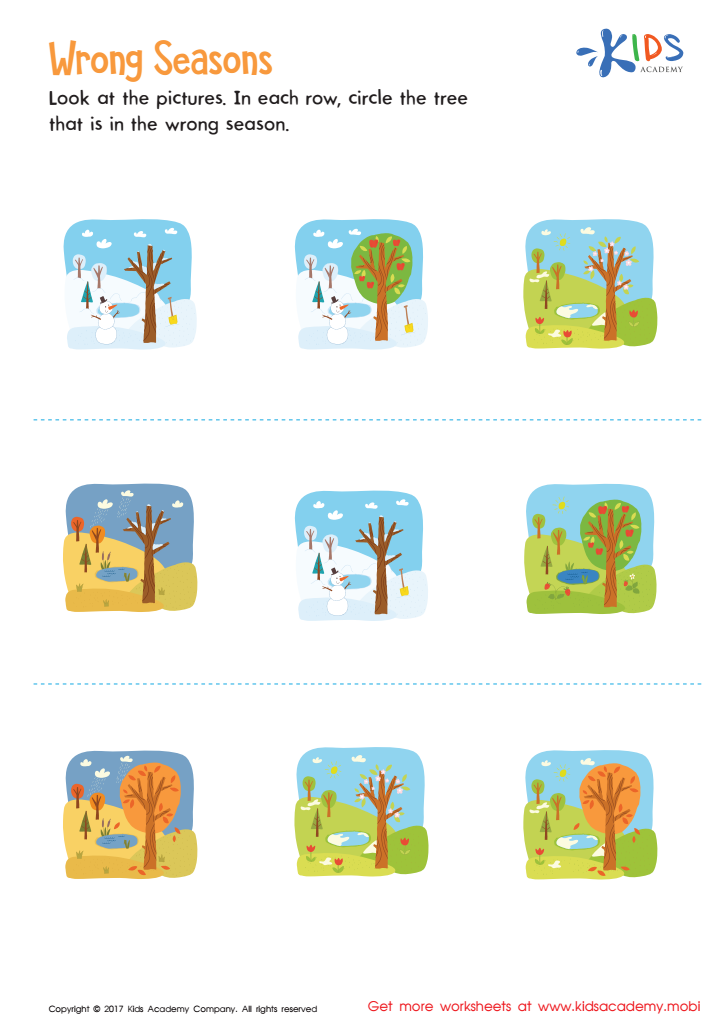
Wrong Seasons Worksheet
 Assign to My Students
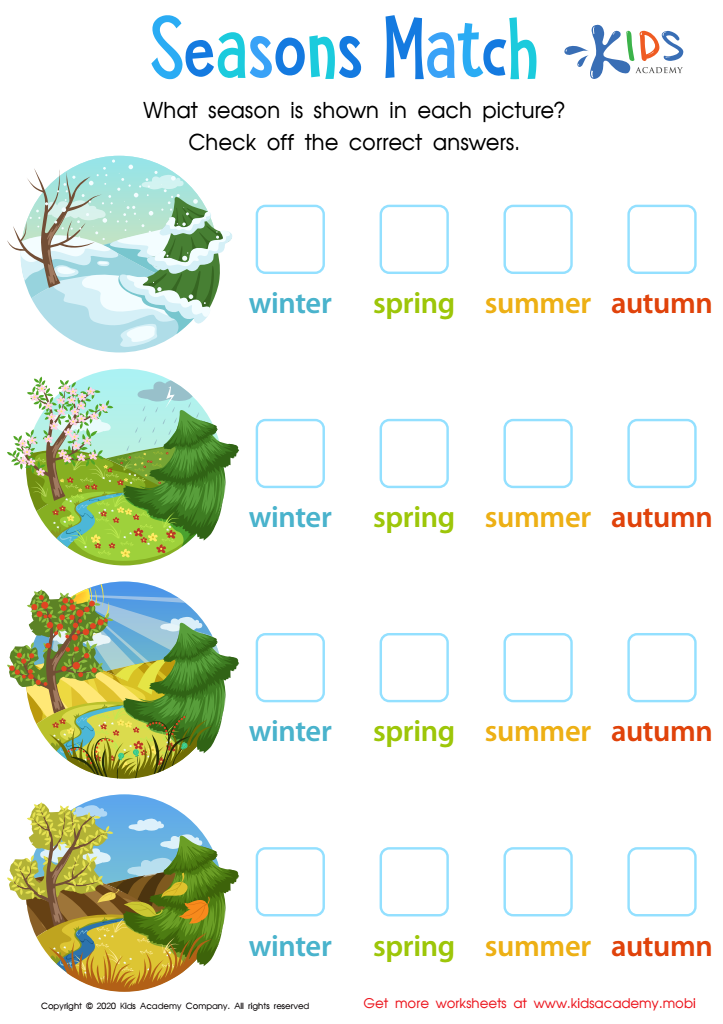
Seasons Match Worksheet
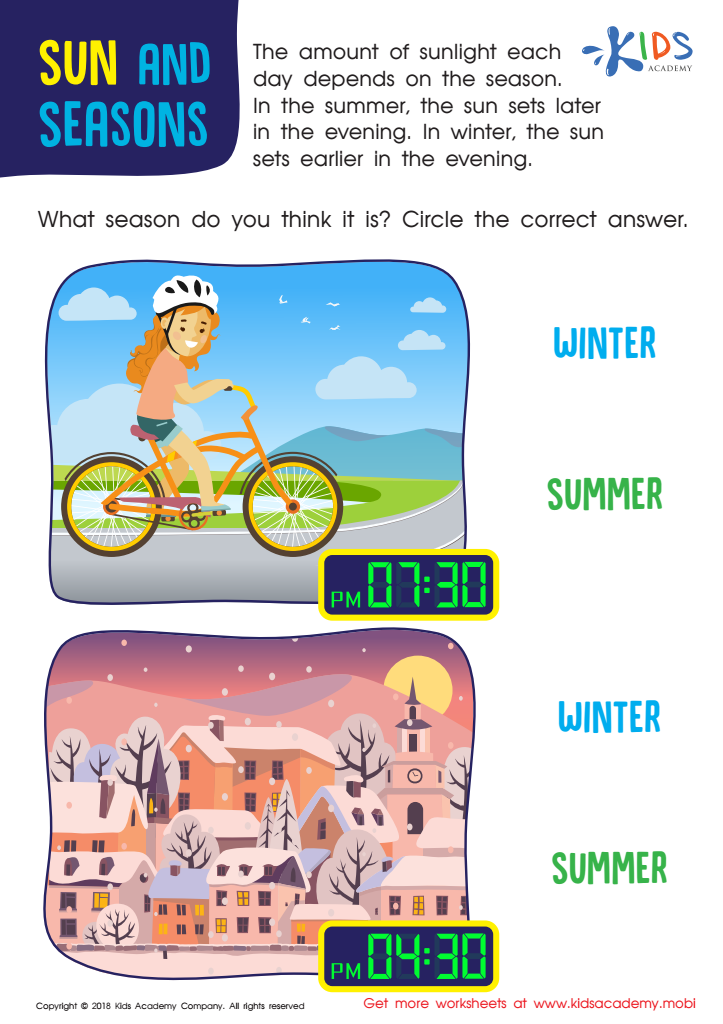
Sun and Seasons Worksheet






.jpg)
Understanding seasons is crucial for children aged 6-7, as it forms the foundation for their scientific knowledge and environmental awareness. At this age, children are naturally curious about the world around them, making it the perfect time for them to learn about the changing seasons and their impact.
Seasons teach kids about patterns in nature. For instance, they can observe how trees shed leaves in autumn or how flowers bloom in spring. These changes promote careful observation and critical thinking skills, enabling children to understand cause and effect in their environment.
Additionally, seasonal knowledge enhances children’s social awareness; holidays and traditions tied to seasons, such as Thanksgiving or Christmas, help them connect with cultural practices and family values.
From an educational perspective, understanding seasons integrates various subjects like science, art, and even mathematics. Teachers can use themes related to seasons to teach concepts like counting by using seasonal items or engaging in art projects based on seasonal changes.
Overall, fostering a rich understanding of seasons enriches children's learning experiences, making them more observant, more culturally aware, and more connected to the world around them. Parents and teachers play vital roles in guiding this process, helping children appreciate the beauty and complexity of nature.








