Understanding shapes Normal Worksheets for Ages 6-7
4 filtered results
-
From - To
Discover our "Understanding Shapes" worksheets designed for children ages 6-7. These engaging activities help young learners identify, classify, and understand various shapes through fun and interactive exercises. From recognizing basic geometric figures to exploring their properties, our expertly crafted worksheets support foundational math skills, critical thinking, and spatial awareness. Ideal for teachers and parents alike, these printable resources ensure kids develop a solid grasp of shapes in an enjoyable learning environment. Available for easy download, these worksheets are perfect for classroom sessions and home practice, setting a strong mathematical foundation. Start building shape knowledge today!
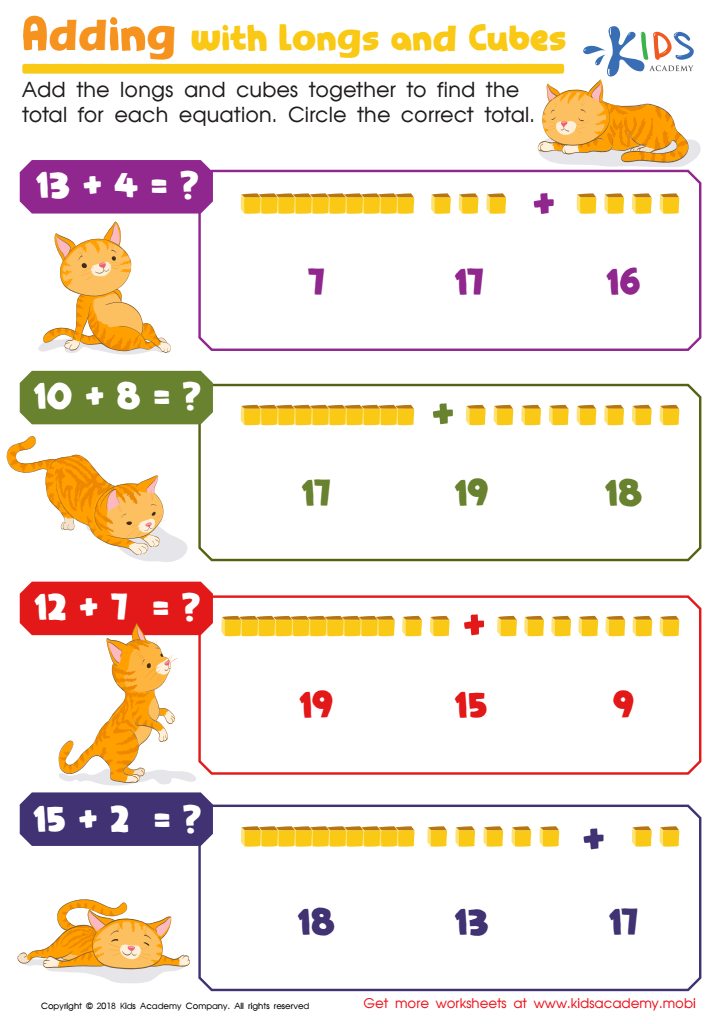
Adding With Longs and Cubes Worksheet
 Assign to My Students
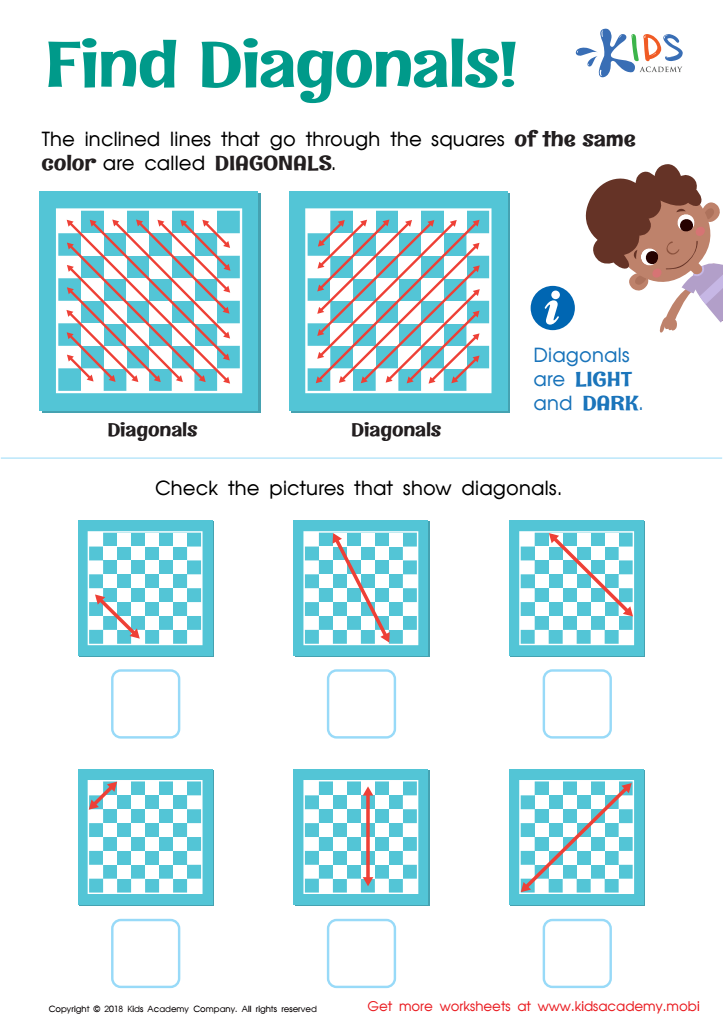
Find Diagonals Worksheet
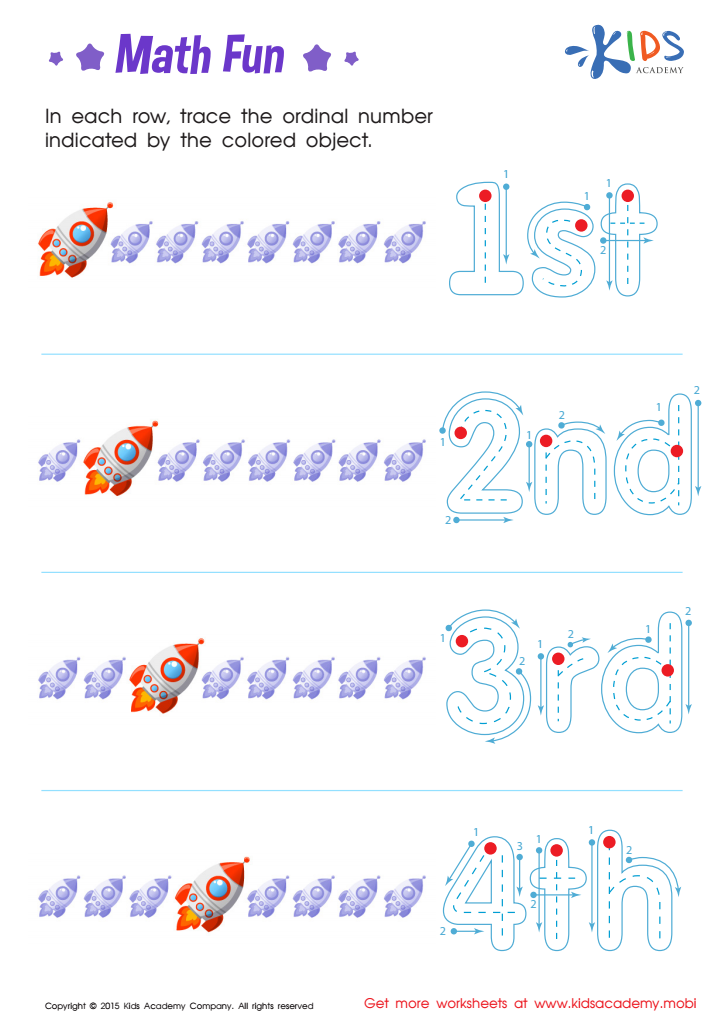
Ordinal Numbers: Math Fun Worksheet
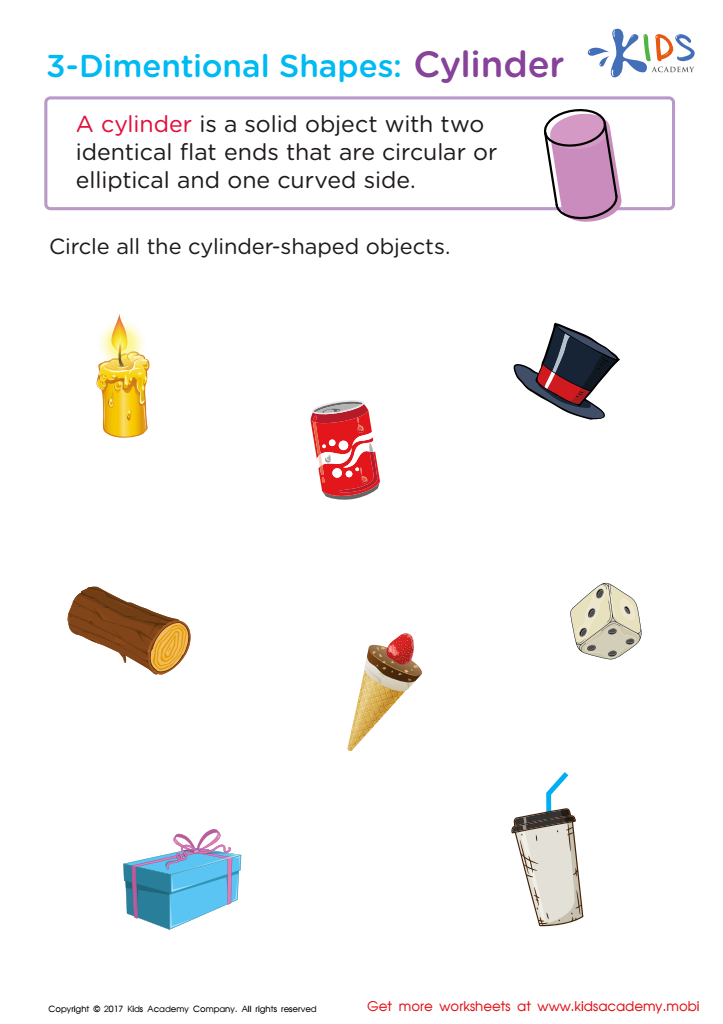
Three–Dimensional Shapes: Cylinder Worksheet





.jpg)


Understanding shapes is crucial for children aged 6-7 because it lays the foundation for more complex mathematical concepts and everyday problem-solving skills. At this age, kids are beginning to grasp abstract ideas, and shapes represent a concrete way to explore these concepts. Recognizing and differentiating between shapes helps improve spatial awareness, which is essential for subjects like geometry, science, and even the arts.
For parents and teachers, emphasizing the importance of shapes helps foster critical thinking and visual-spatial reasoning abilities in children. These skills are critical for tasks ranging from assembling puzzles to understanding graphs and charts later on. For young learners, engaging with shapes through activities like drawing, sorting, and constructing can also enhance fine motor skills, encouraging better handwriting and eye-hand coordination.
Furthermore, understanding shapes is directly linked to language development. As children learn the names and properties of different shapes, they expand their vocabulary and ability to describe the world around them. Through interactions with shapes, kids also learn important mathematical vocabulary such as "sides," "corners," and "angles," setting the stage for future math lessons.
Overall, understanding shapes in early childhood education not only supports cognitive development but also integrates learning across multiple domains, ensuring a well-rounded educational experience.








