Understanding suffixes Normal Worksheets for Ages 6-7
4 filtered results
-
From - To
Explore our engaging "Understanding Suffixes Normal Worksheets" specially designed for children aged 6-7. These worksheets foster essential reading and writing skills by introducing young learners to the concept of suffixes. Students will enjoy interactive exercises that reinforce their understanding of how suffixes modify words, expand vocabulary, and enhance language skills. Each worksheet features age-appropriate activities that encourage critical thinking and help develop literacy in a fun way. With colorful illustrations and clear instructions, these resources are perfect for classroom use or at-home practice. Help your child boost their learning confidence and mastery of suffixes with our helpful worksheets today!
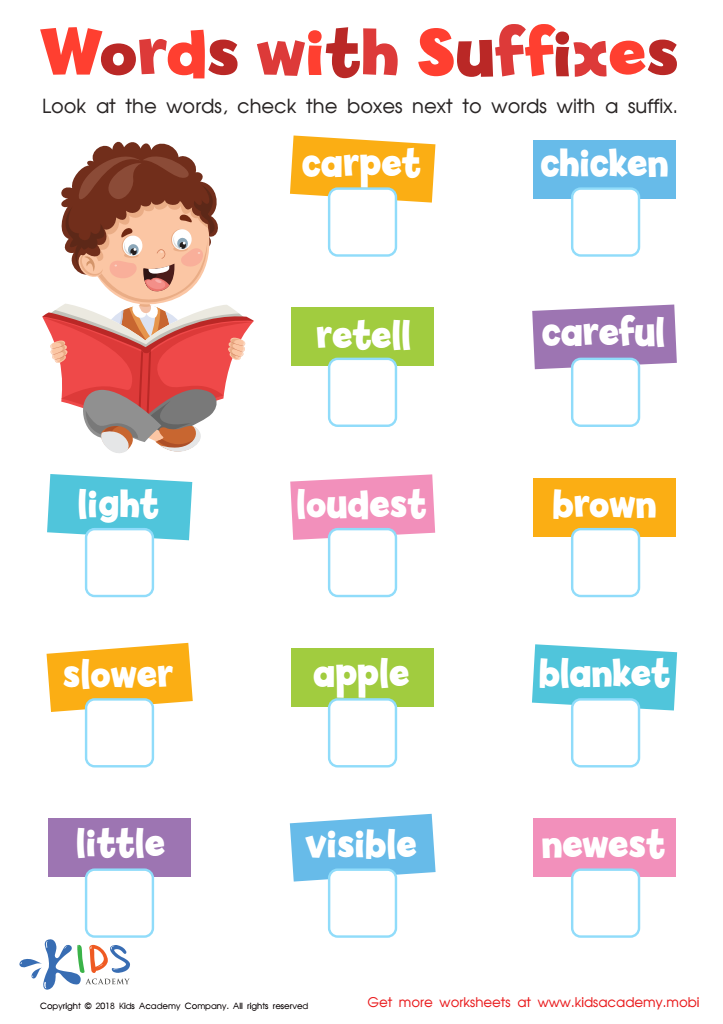
Reading: Words With Suffixes Worksheet
 Assign to My Students
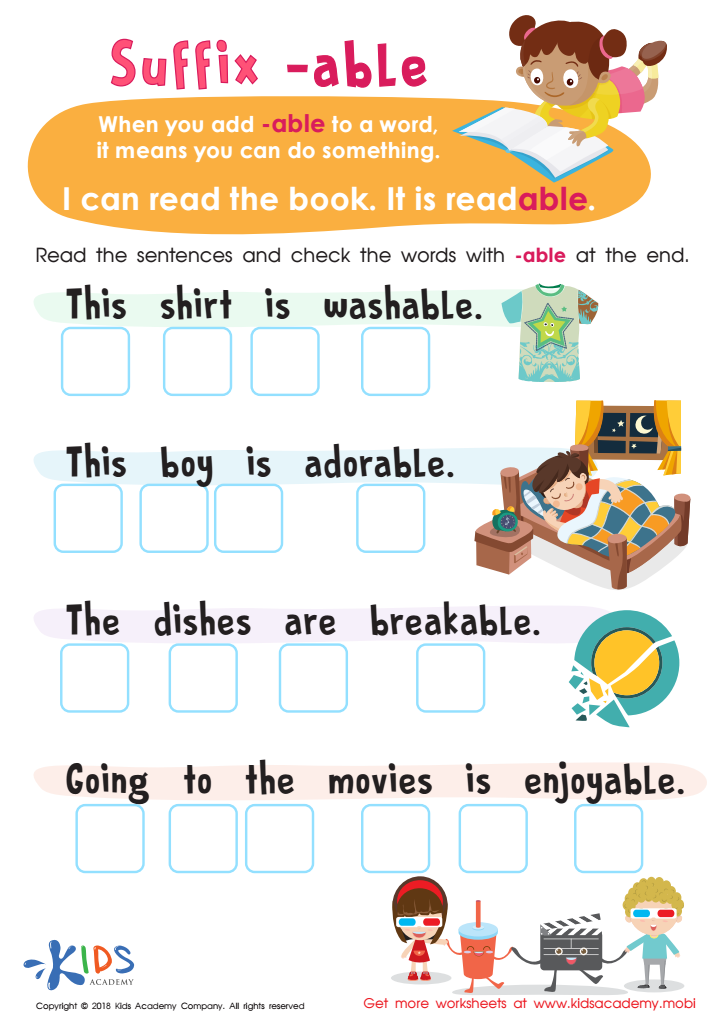
Suffix -Able Worksheet
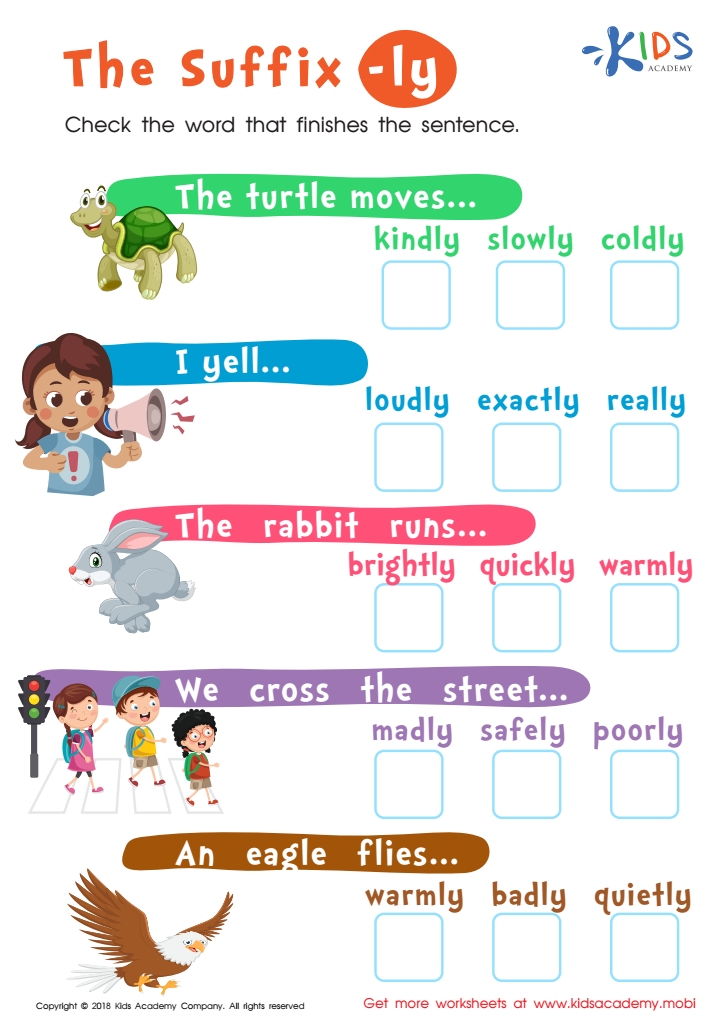
The Suffix -Ly Worksheet
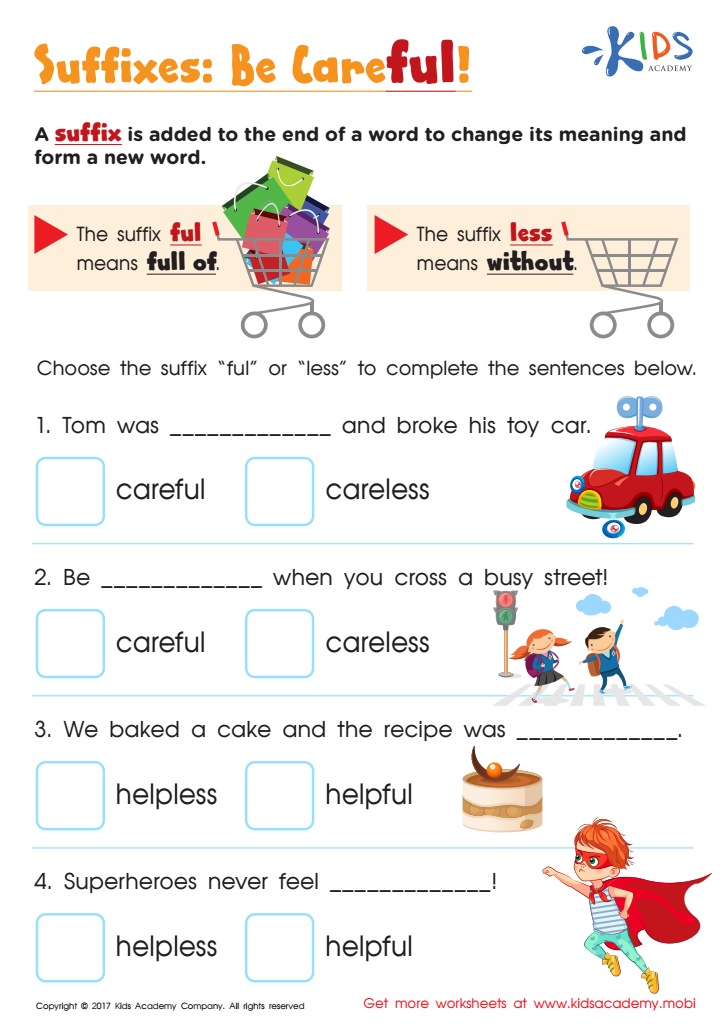
Suffixes Ful and Less Worksheet






.jpg)

Understanding suffixes is crucial for children aged 6-7, as it significantly enhances their reading and writing skills. At this age, children are becoming increasingly independent in their literacy development. By learning about suffixes—letters added to the end of a word to change its meaning or form—students can decode unfamiliar words more easily, which boosts their reading confidence. For example, recognizing the suffix “-ing” helps a child identify the action in “running,” while “-ed” tells them that something happened in the past.
Moreover, knowledge of suffixes aids in vocabulary expansion. When students learn how to manipulate words using suffixes, they unlock new meanings and can express ideas more precisely. This skill is foundational for effective communication both in written and oral forms. Furthermore, as children practice using suffixes in their writing, they develop a deeper understanding of grammar and sentence structure, which is essential for academic success.
Parents and teachers play a vital role in nurturing this understanding by incorporating playful activities, such as word games or interactive discussions. By supporting children’s exploration of suffixes, caregivers help foster a love for language and improve overall literacy skills, setting the stage for long-term academic achievement.








