Uppercase identification Normal Worksheets for Ages 6-7
5 filtered results
-
From - To
Enhance your child's uppercase letter recognition with our specialized worksheets designed for ages 6-7. These engaging resources from Kids Academy ensure that young learners can confidently identify and write uppercase letters. Each printable worksheet features fun activities that reinforce key skills in a variety of ways, combining learning with play. Ideal for classroom or at-home practice, these worksheets provide effective support for early literacy development. Start building a strong foundation for reading and writing with our comprehensive uppercase identification exercises, specifically tailored to meet the needs of children in this critical learning phase.
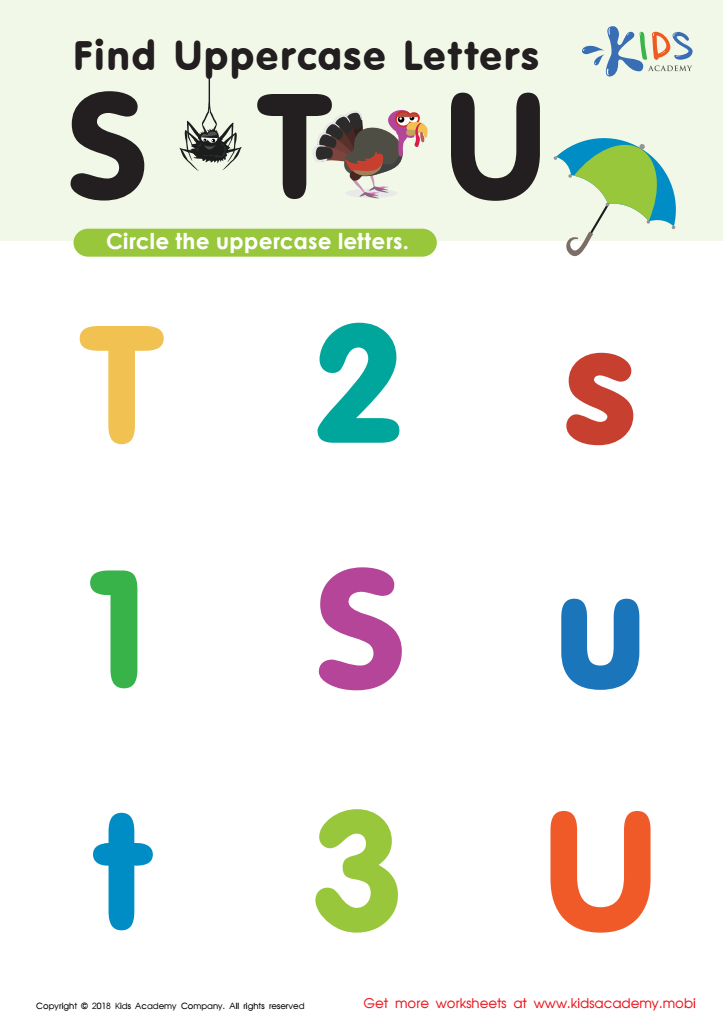
Find Uppercase Letters Worksheet
 Assign to My Students
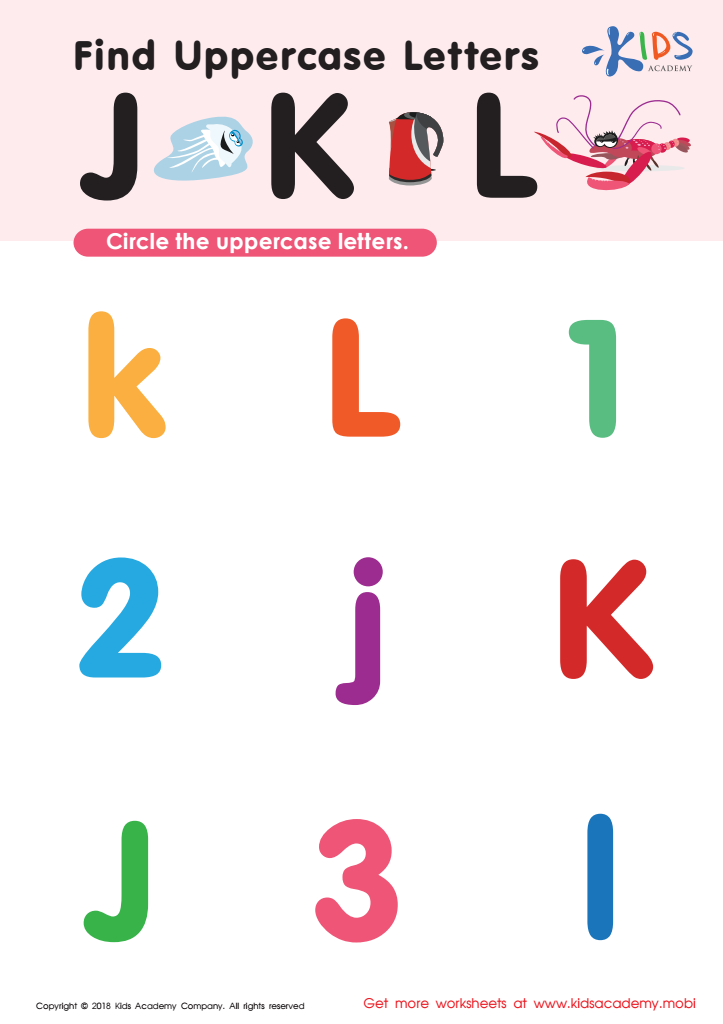
Find Uppercase Letters J, K, and L Worksheet
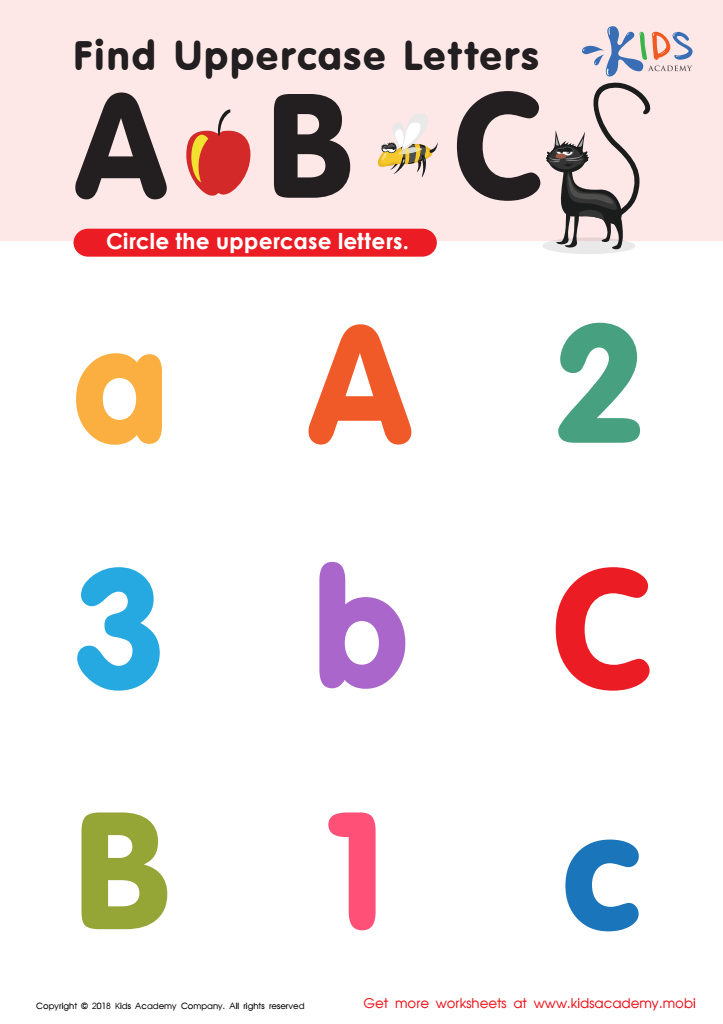
Find Uppercase Letters A, B, and C Worksheet
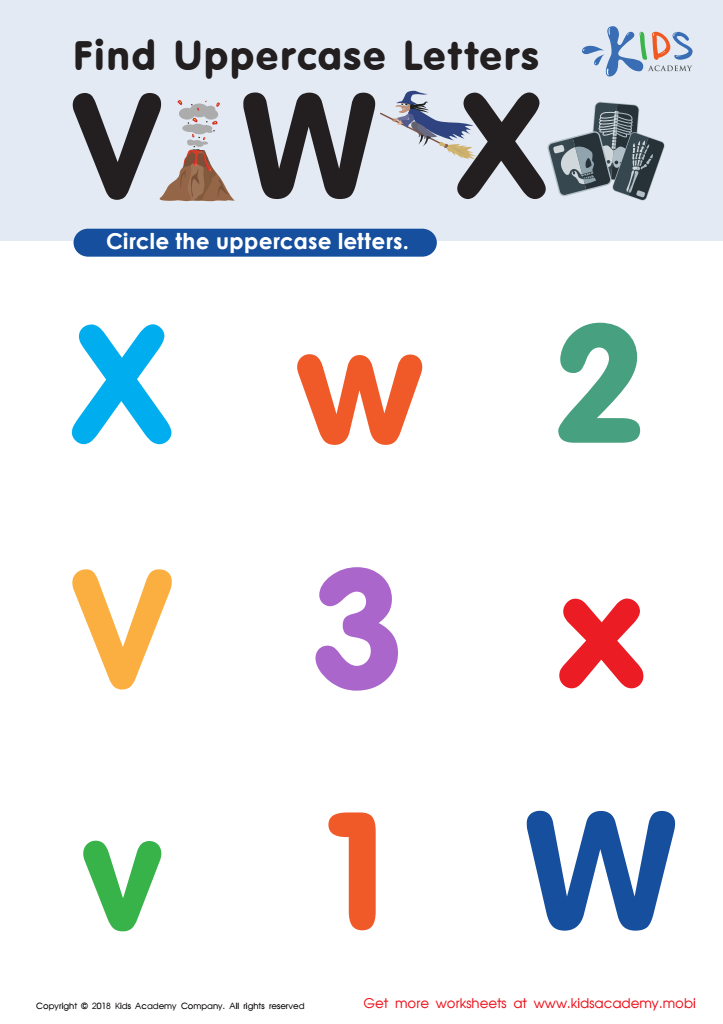
Find Uppercase Letters V, W, X Worksheet
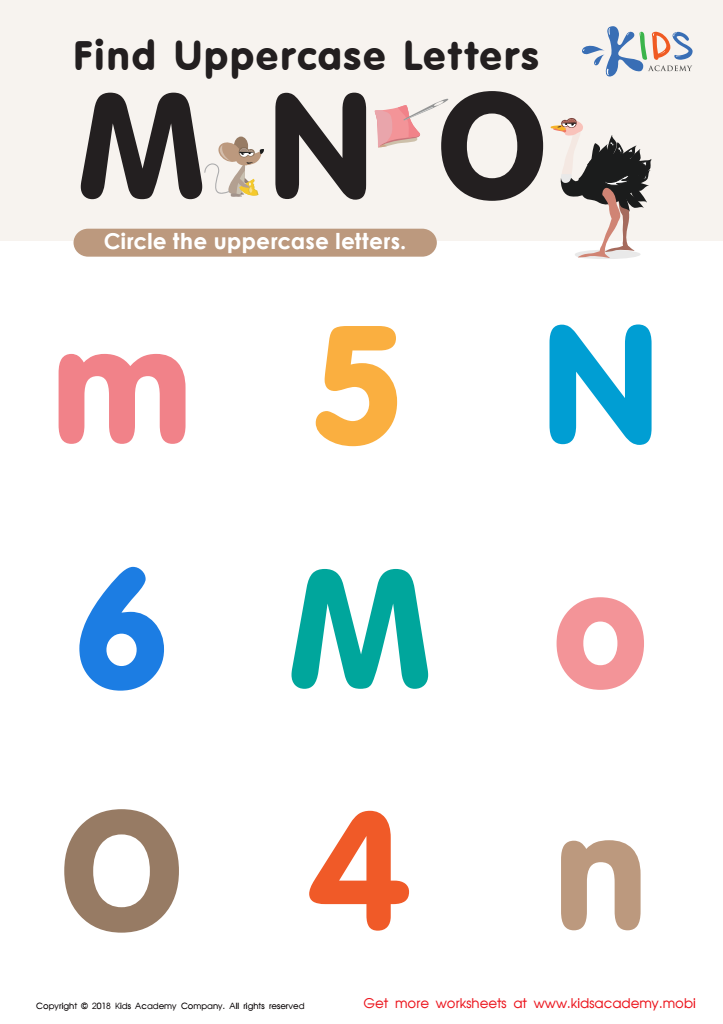
Find Uppercase Letters M, N, and O Worksheet







Uppercase letter identification is a fundamental skill that lays the groundwork for literacy in young children, typically aged 6 to 7 years. Both parents and teachers should prioritize it because recognizing uppercase letters is a significant milestone in a child’s reading and writing journey. At this age, children's brains are rapidly developing, and grasping these basics helps in decoding words, a critical early reading skill.
Uppercase letters are often the first form of text children encounter, as they are commonly used in signs, books, and learning materials directed at young learners. Mastery in identifying uppercase letters enhances alphabetic knowledge and boosts the child's confidence in reading. This skill also supports the correct formation and writing of letters, contributing to legible handwriting—a key component of effective communication.
Moreover, familiarity with uppercase letters aids in phonemic awareness and helps children understand the relationship between letters and sounds, which is vital in spelling and word recognition. A strong foundation in these areas facilitates a smoother transition to more complex literacy skills, such as reading comprehension and written expression.
By nurturing uppercase identification, parents and teachers contribute significantly to a child's academic success and foster a lifelong love for reading and writing, unlocking doors to endless learning opportunities.








