Visual interpretation Normal Worksheets for Ages 6-7
4 filtered results
-
From - To
Discover our engaging "Visual Interpretation Normal Worksheets for Ages 6-7", designed to enhance your child's ability to analyze and interpret visual information. These worksheets encourage critical thinking through a variety of fun and interactive activities, such as identifying patterns, analyzing images, and connecting visuals to real-world concepts. Tailored specifically for early learners, each worksheet fosters creativity and comprehension while aligning with educational standards. Perfect for at-home learning or classroom activities, our resources empower young learners to explore and understand their visual surroundings, building essential skills for academic success. Start your journey in visual interpretation today and watch your child's confidence soar!
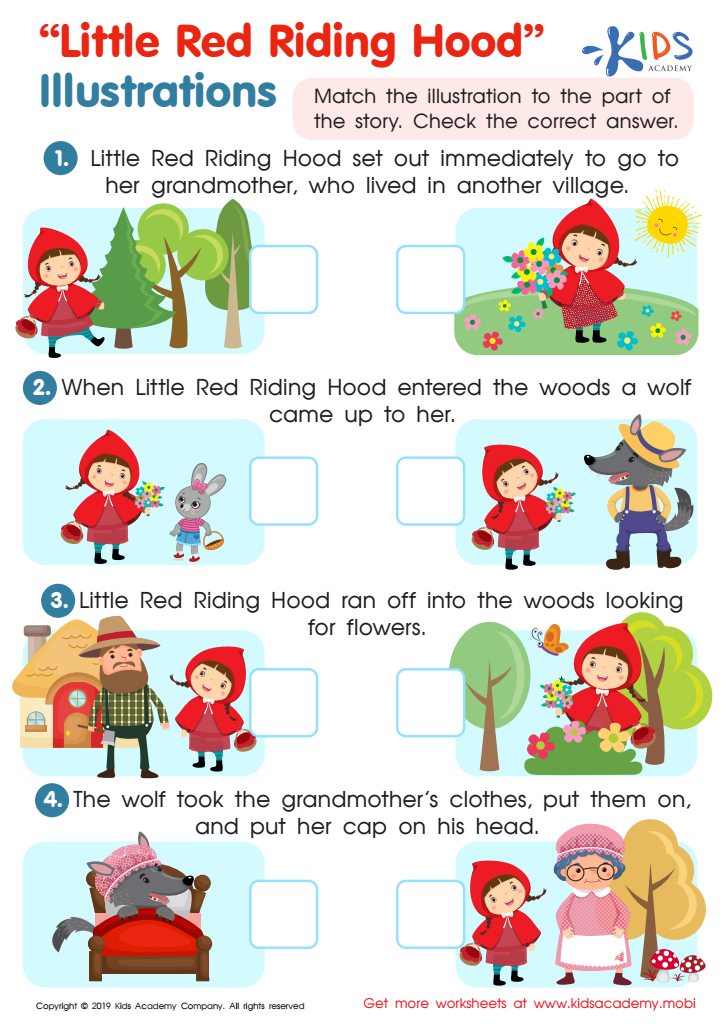
Little Red Riding Hood: Illustrations Worksheet
 Assign to My Students
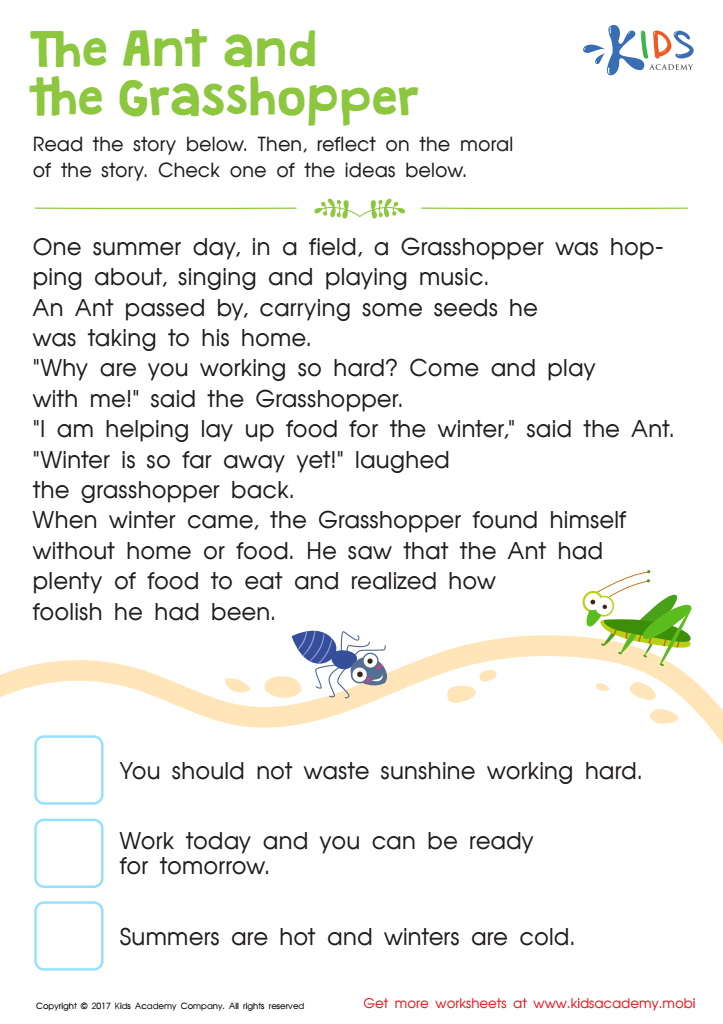
The Ant and The Grasshopper Printable
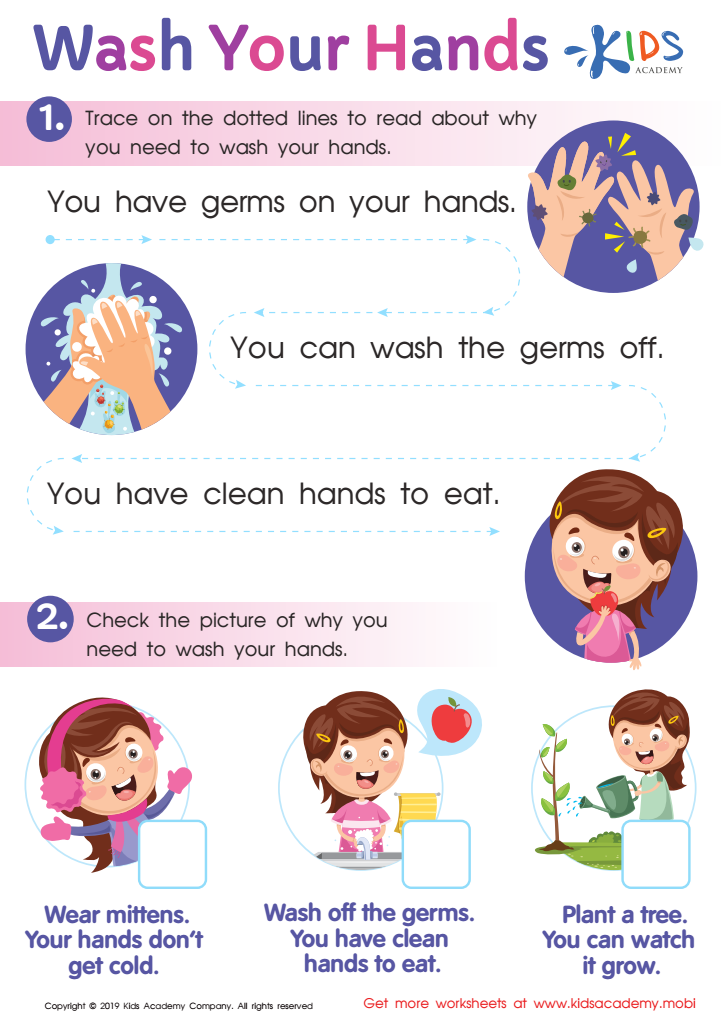
Wash Your Hands Worksheet
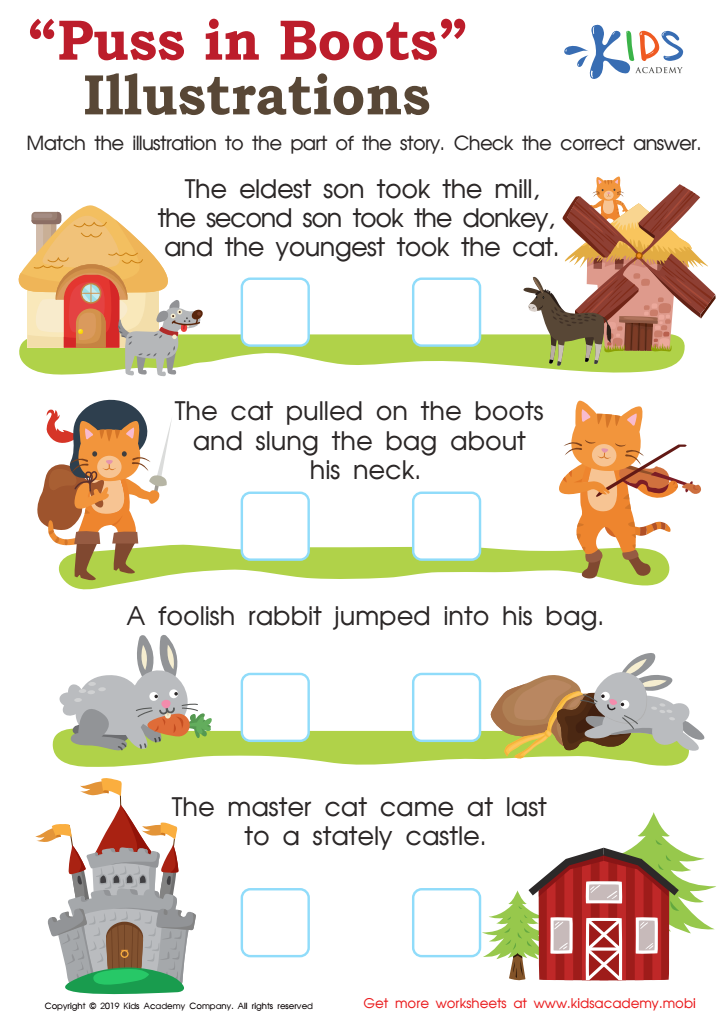
Puss in Boots Illustrations Worksheet






Visual interpretation skills are critical for children aged 6-7, as this is a crucial stage in their cognitive and educational development. During these formative years, children are like sponges, absorbing new information and mastering foundational skills essential for future learning. Parents and teachers should recognize that the ability to interpret visual information—such as images, diagrams, charts, and videos—enhances children’s understanding across various subjects, including mathematics, science, and literacy.
Moreover, visual interpretation strengthens critical thinking and problem-solving skills. Children who can analyze visual data are better equipped to draw conclusions, make connections, and apply knowledge in real-world scenarios. For instance, interpreting visual media can help them better understand stories, leading to improved comprehension and communication abilities.
In addition, fostering these skills promotes creativity and imagination. Children encouraged to visualize concepts and express themselves artistically will develop more nuanced thinking. Furthermore, as we navigate an increasingly visual world—think digital media and interactive technology—equippling children with strong visual interpretation skills prepares them for future challenges. Thus, supporting the development of these competencies ensures a well-rounded education that nurtures confident, capable learners ready for higher levels of academic inquiry.








