Addition Practice Normal Addition & Subtraction Worksheets for Ages 6-7 - Page 2
28 filtered results
-
From - To
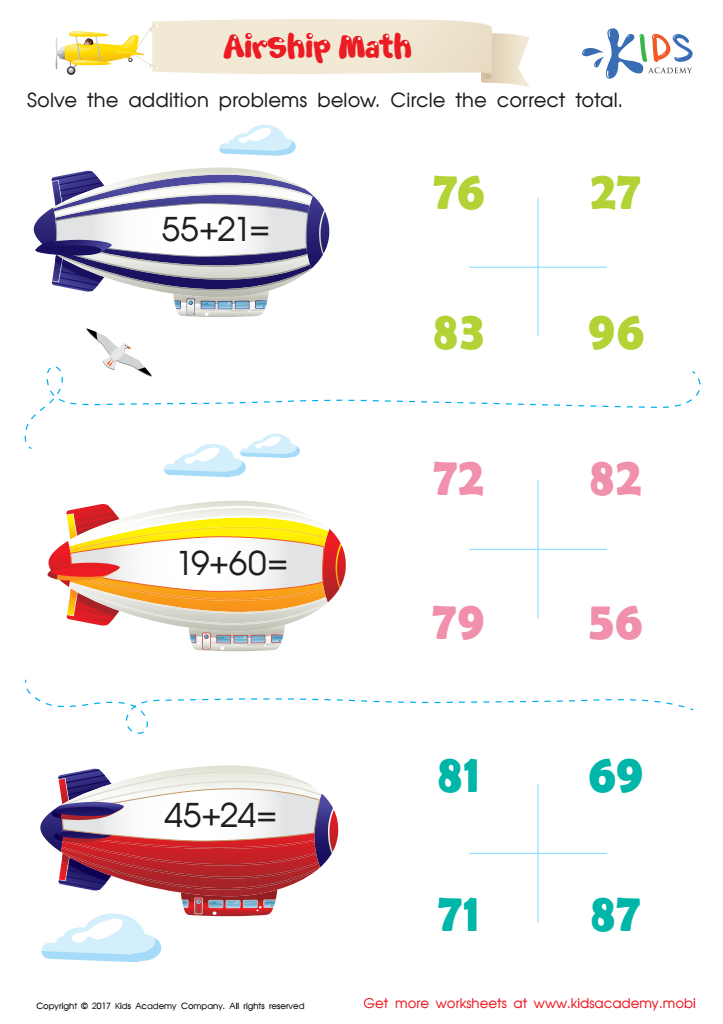
Airship Math Addition Printable
 Assign to My Students
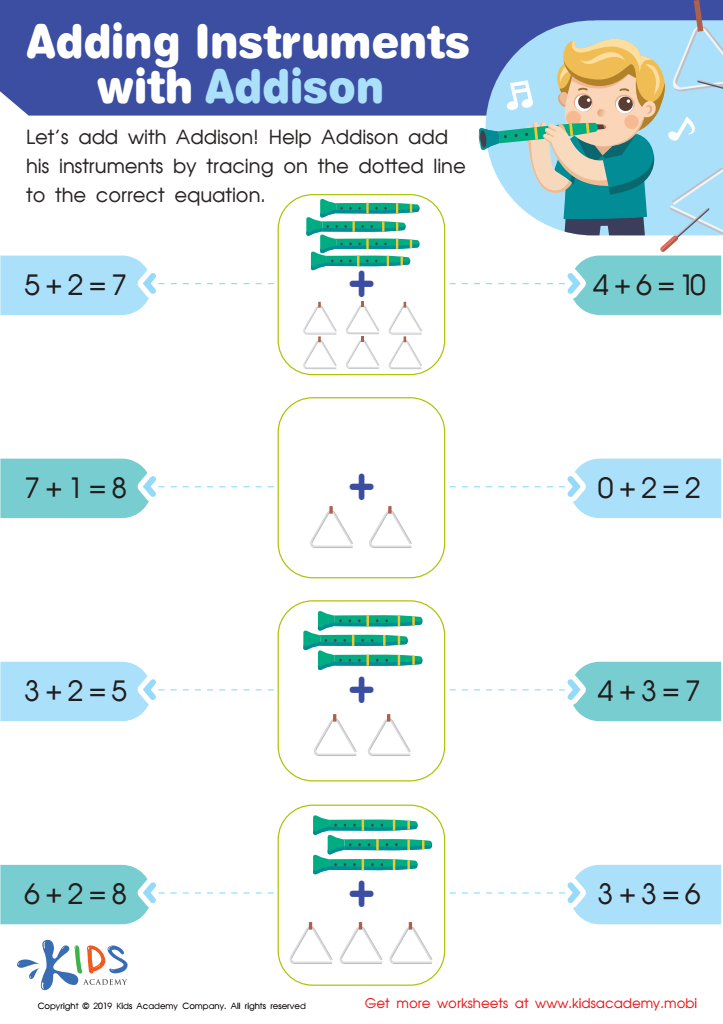
Adding Instruments with Addison Worksheet
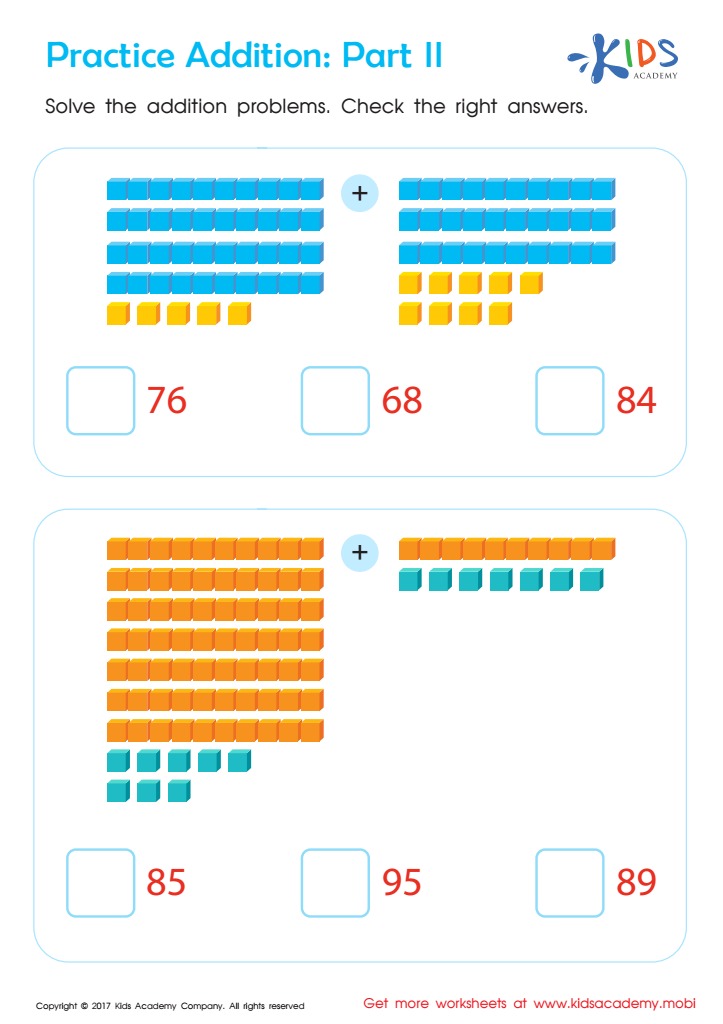
Practice Addition: Part 2 Worksheet
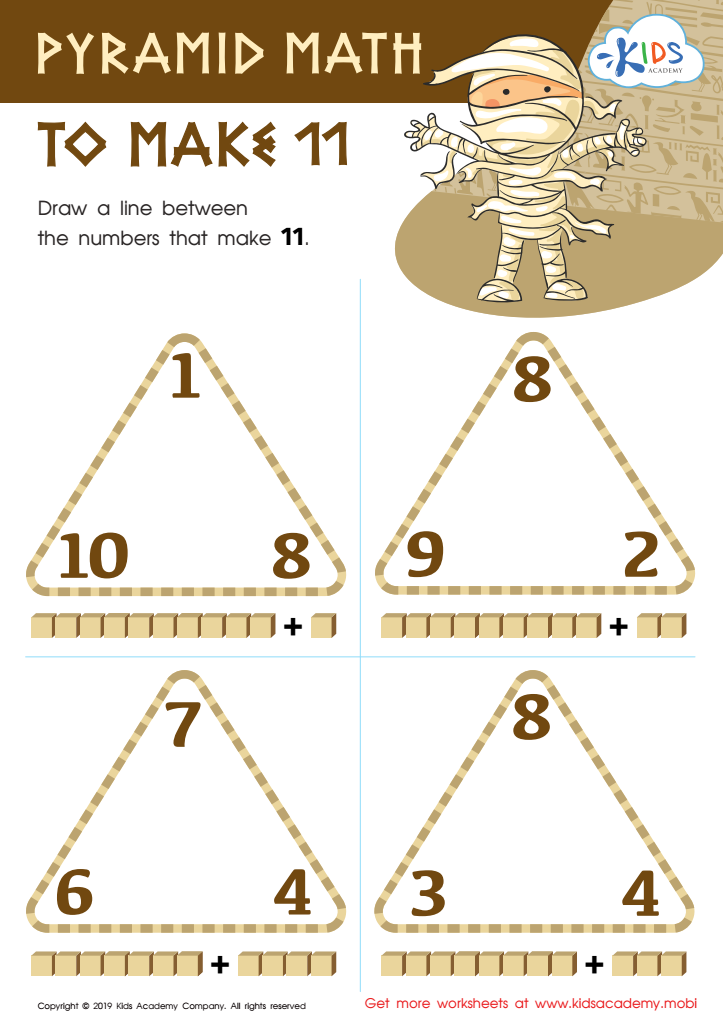
Pyramid Math to Make 11 Worksheet








Addition and subtraction skills are foundational to a child's mathematics education, especially for children aged 6-7. At this age, students are typically introduced to basic arithmetic concepts that form the groundwork for more advanced mathematical reasoning and problem-solving skills. These early skills not only enhance numerical fluency but also build confidence in a child's ability to tackle mathematical challenges.
Practicing normal addition and subtraction helps reinforce understanding of number relationships and promotes mental math skills. Engaging with these operations can improve a child's ability to visualize mathematics, making abstract concepts more concrete. This cognitive development is crucial as these skills extend beyond arithmetic; they cultivate critical thinking, decision-making, and analytical reasoning.
Additionally, regular practice offers parents and teachers the opportunity to identify areas in which a child may struggle, allowing for targeted support to address gaps in understanding before they become significant obstacles. Furthermore, strong early mathematics skills correlate with future academic success in STEM subjects. By prioritizing addition and subtraction practice, parents and teachers can foster a positive attitude towards math, ensuring students feel capable and prepared for advanced concepts as they progress in their education. This foundational skill set ultimately contributes to a lifelong appreciation for learning.








