Filters

7 filtered results

Clear all filters
Favorites
With answer key
Interactive

7 filtered results

Difficulty Level

Grade


Nurture your child's mathematical abilities with our engaging "Counting Practice: Normal Addition & Subtraction Worksheets for Ages 6-7." These expertly designed worksheets provide a fun and interactive way for young learners to develop foundational math skills. Tailored specifically for children aged 6-7, each worksheet reinforces addition and subtraction concepts while enhancing counting proficiency. Perfect for both classroom use and at-home practice, these resources ensure learning is both enjoyable and effective, guiding your child towards mathematical confidence and success. Visit our page for printable worksheets that make mastering numbers an exciting adventure!

Check out this FREE Trial Lesson on Addition & Subtraction for age 6-7!

Place Value Adding with Base 10 blocks (no regrouping)

Favorites
With answer key
Interactive
  • 6-7
  • Counting practice
  • Addition & Subtraction
  • Normal
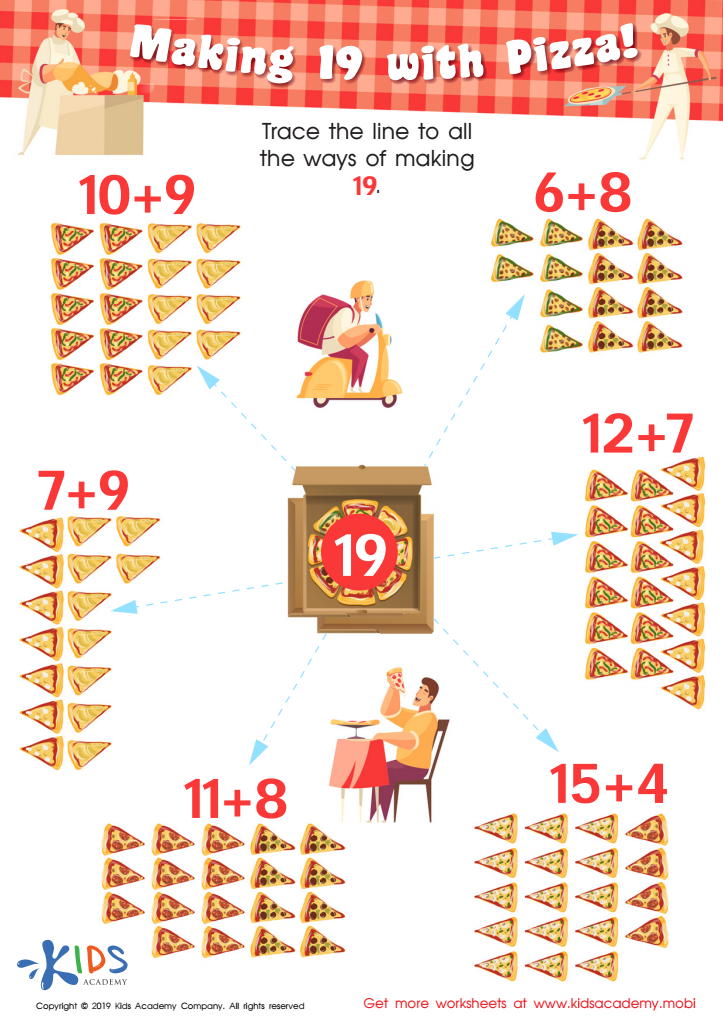
Making 19 with Pizza! Worksheet

Making 19 with Pizza! Worksheet

Who loves pizza? Your kids do! Next time you need to teach them math, make it fun by combining it with something they enjoy. This worksheet uses a pizza-themed problem to help them practice solving equations. Have them trace the line to figure out how to make 19. It's a great way to make learning math fun!
Making 19 with Pizza! Worksheet
Worksheet
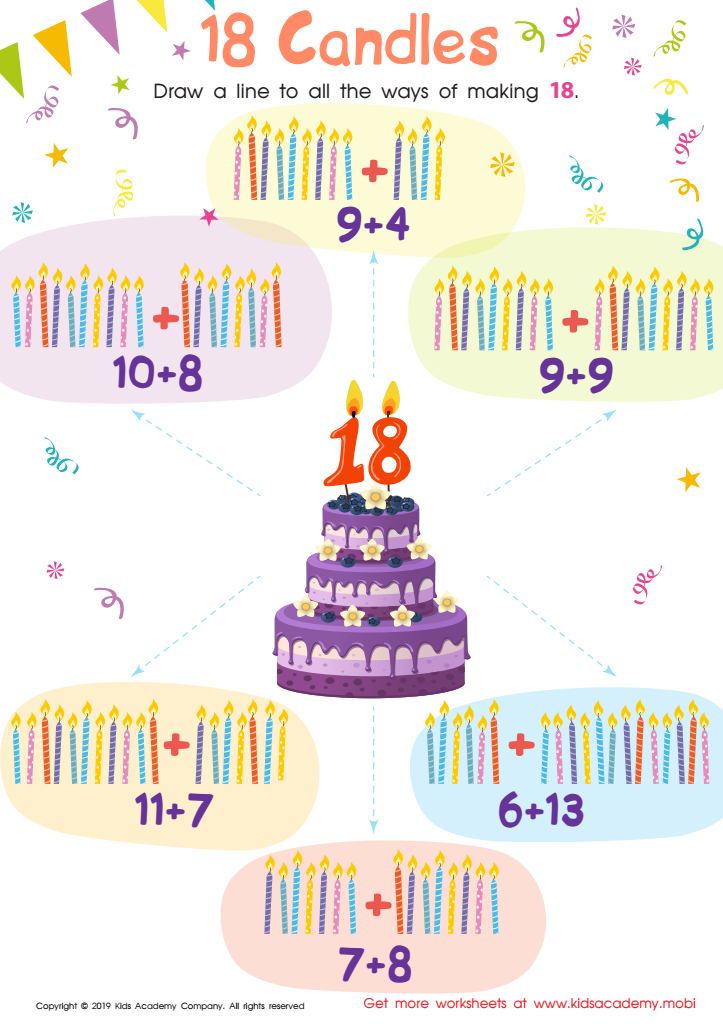
18 Candles Worksheet

18 Candles Worksheet

This worksheet is great for introducing your students to addition and subtraction. Help your kids solve the simple equations on it and draw a line from the birthday cake with 18 on it to all the solutions. Practice like this will prepare them to tackle more complex math problems.
18 Candles Worksheet
Worksheet
Simple Addition PDF Worksheet

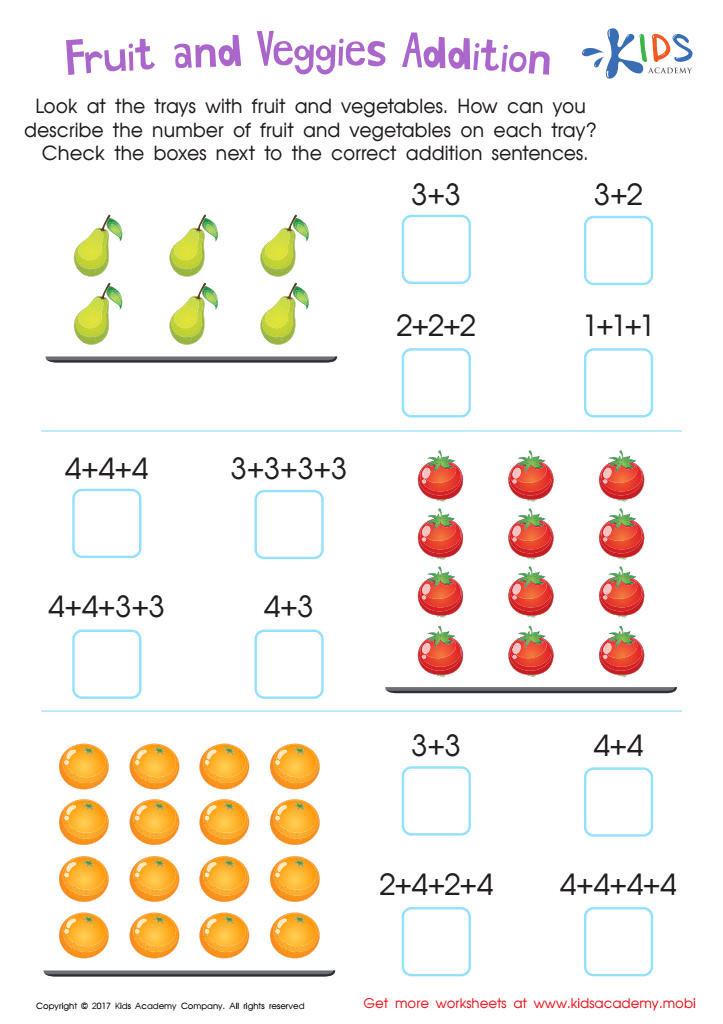
Fruit and Veggies Worksheet
It promotes problem-solving and analytical skills as kids match pictures to correct addition sentences. Help your child go beyond simple addition with this PDF worksheet!
Fruit and Veggies Worksheet
Worksheet
Adding With Longs and Cubes Worksheet

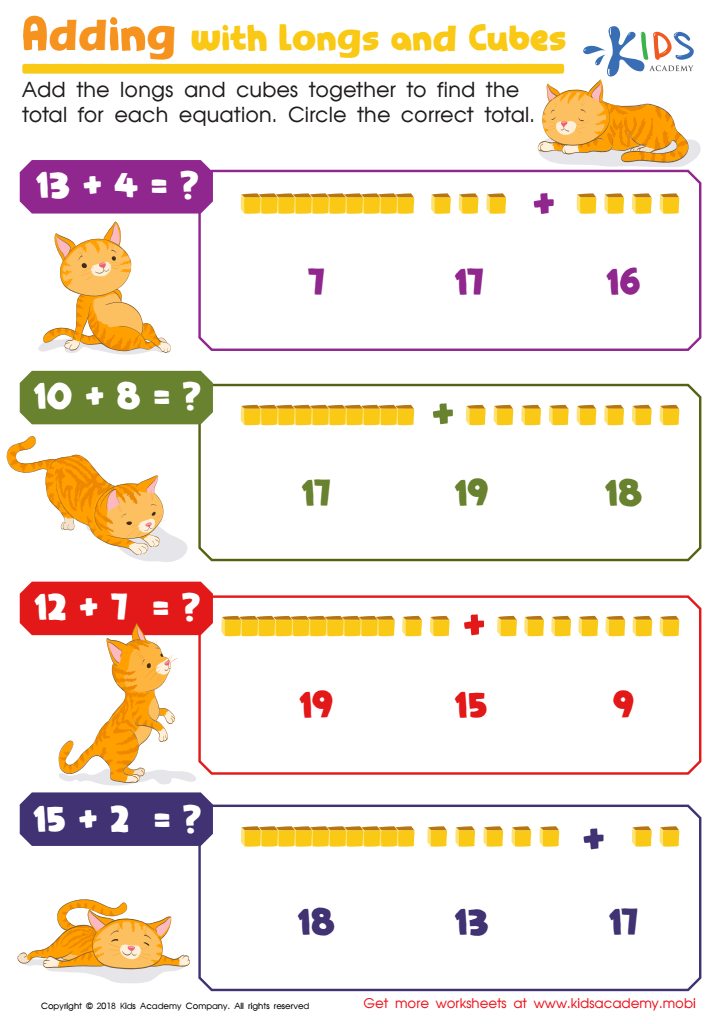
Adding With Longs and Cubes Worksheet

Math might not be your child's favorite, but they must master it to advance. If they're having difficulties or don't like it, use this worksheet to make it easier. Have them add longs and cubes together to find the total for each question, then circle the correct answer. This exercise can help make math experiences better.
Adding With Longs and Cubes Worksheet
Worksheet
Counting in Your Community Worksheet

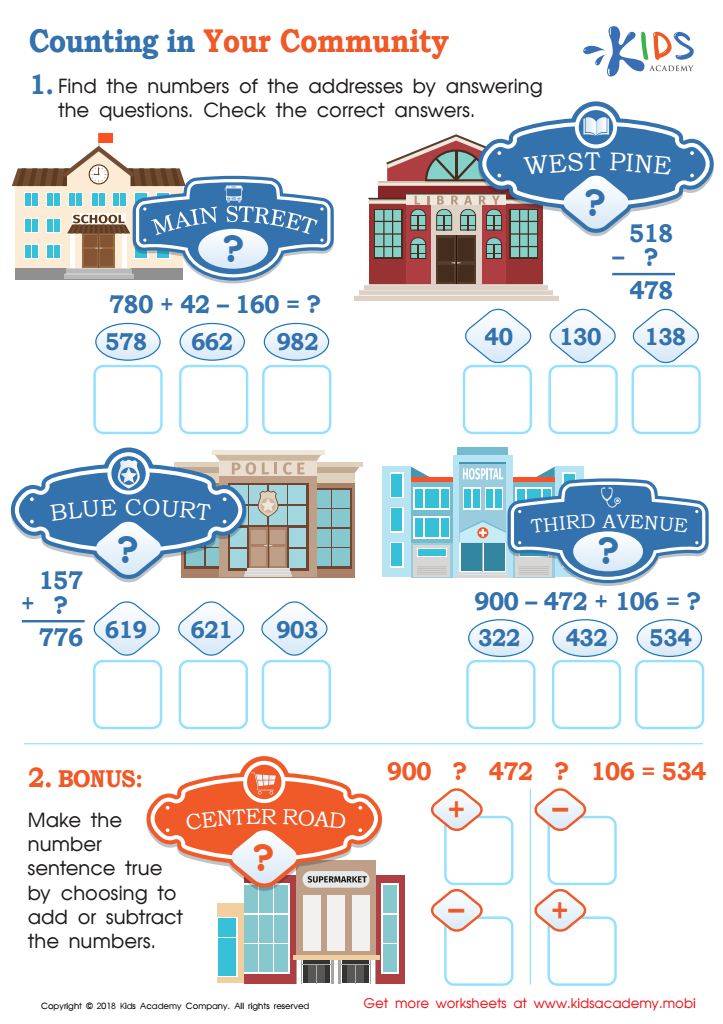
Counting in Your Community Worksheet

Introduce your kids to the idea of a community, where different people and buildings co-exist, each playing their part for the community's progress. Ask them to name the buildings they see in their community. Then work through this worksheet to find the numbers of the addresses by answering the questions. Check the answers once they've solved the equations.
Counting in Your Community Worksheet
Worksheet
Magic Fives Worksheet

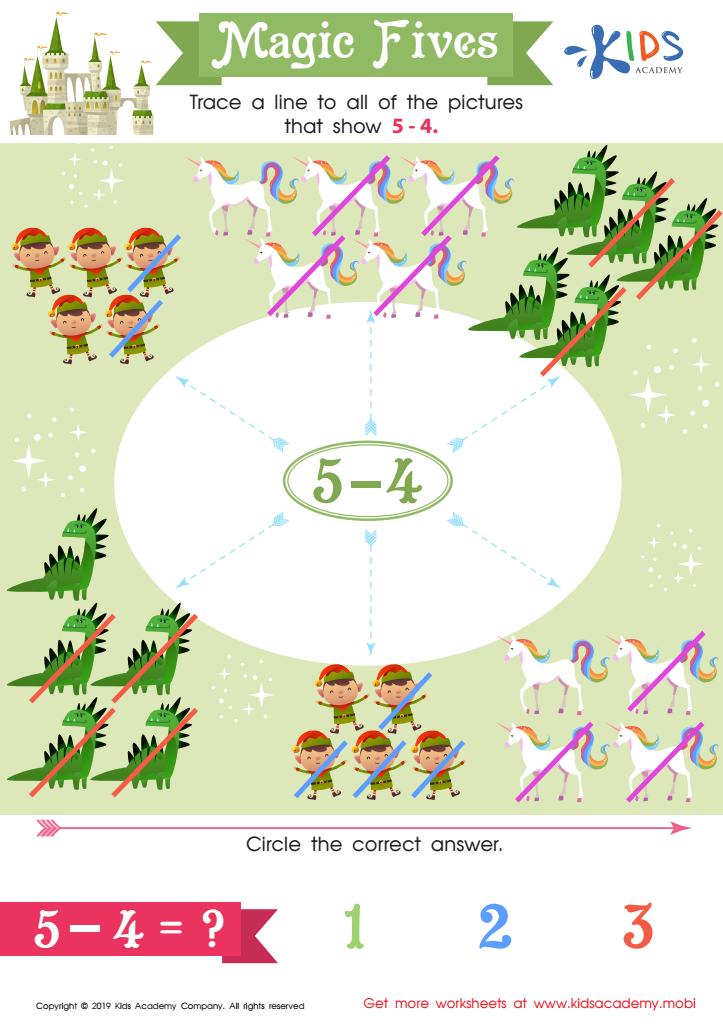
Magic Fives Worksheet

Help your students identify the objects & people in the worksheet. Point to the equation 5 -4 in the center, then get them to count the items and trace a line connecting those that add up to 5 - 4.
Magic Fives Worksheet
Worksheet
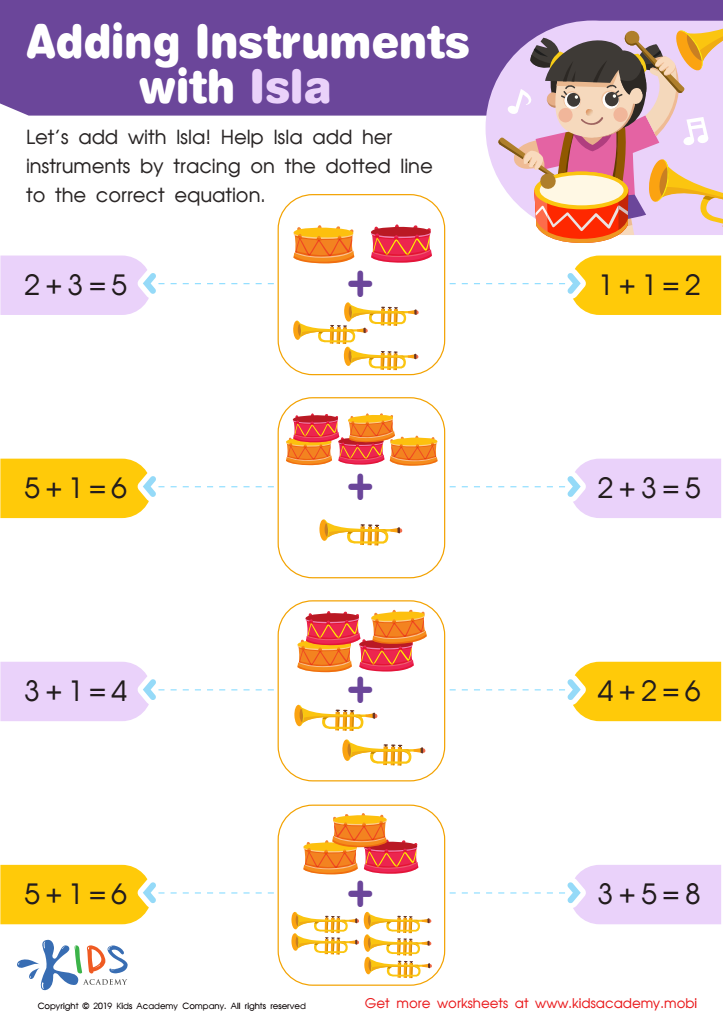
Adding Instruments with Isla Worksheet


Adding Instruments with Isla Worksheet

Your kids can have fun helping Isla add her musical instruments. With colorful pics and one-to-one representation, they can pick the correct addition sentence. They can connect each pic with traceable lines and get to the right sum up to 10.
Adding Instruments with Isla Worksheet

Worksheet


Counting practice and mastering basic addition and subtraction are crucial foundational skills for children ages 6-7, setting the stage for future mathematical understanding and success. At this developmental stage, children typically transition from rote counting to more complex numerical concepts, and early proficiency can greatly influence their academic trajectory.

For parents and teachers, prioritizing these skills helps ensure that children build a solid arithmetic foundation. Counting practice enhances number recognition, improves memory, and fosters a sense of numerical order, which are essential for understanding larger mathematical ideas. By practicing normal addition and subtraction, children learn to think logically, solve problems, and develop mental math abilities.

Early fluency in these areas also boosts a child’s confidence in their academic abilities. Mastery of these skills typically results in positive attitudes towards mathematics, reducing anxiety and apprehension about tackling new math challenges. This strong numerical sense translates into better performance across other STEM subjects, providing significant educational advantages.

Additionally, these skills are not confined to academic settings; they are used in everyday activities such as telling time, handling money, and following recipes. By ensuring consistent counting practice and basic arithmetic proficiency, parents and teachers equip children with essential life skills that contribute to their overall development and future success.