Fine Motor Skills Normal Counting Worksheets for Ages 6-7
3 filtered results
-
From - To
Discover our collection of Fine Motor Skills Normal Counting Worksheets designed specifically for children aged 6-7! These engaging worksheets combine essential counting practice with fun activities that strengthen hand-eye coordination and fine motor skills. As children count objects, trace numbers, and engage in various interactive tasks, they enhance their cognitive development while honing their dexterity. Ideal for classroom use or at-home learning, these worksheets promote active learning through creativity and play. Encourage your child's math confidence and motor skills growth with our expertly crafted worksheets that make learning a joyful experience. Start your journey with us today!

8 Petals Worksheet
 Assign to My Students










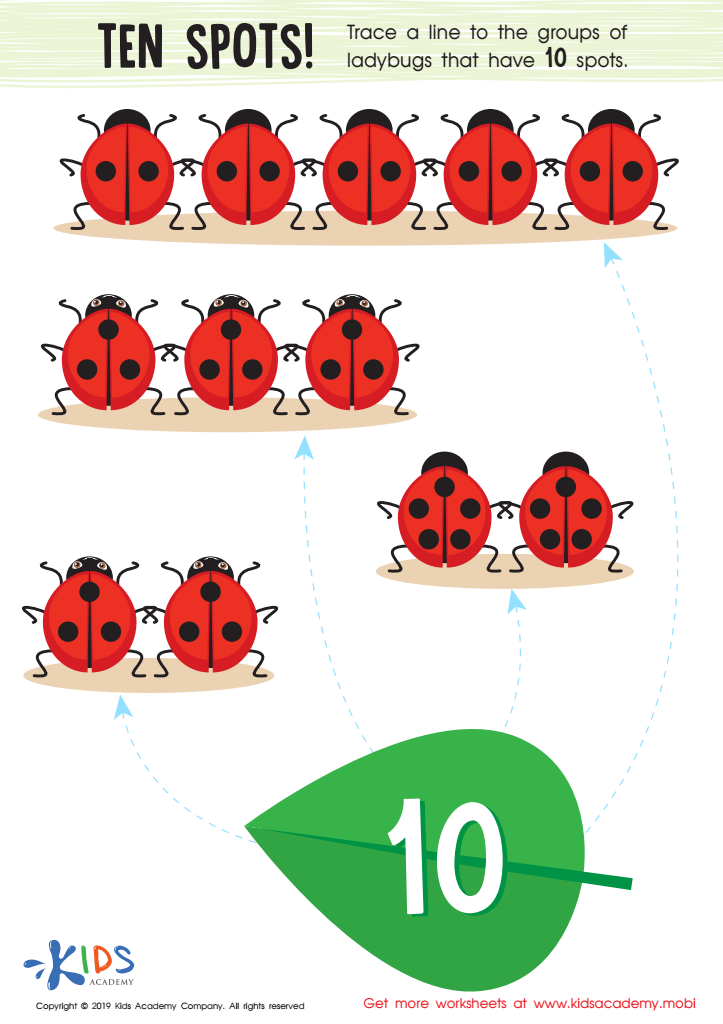
Ten Spots Worksheet
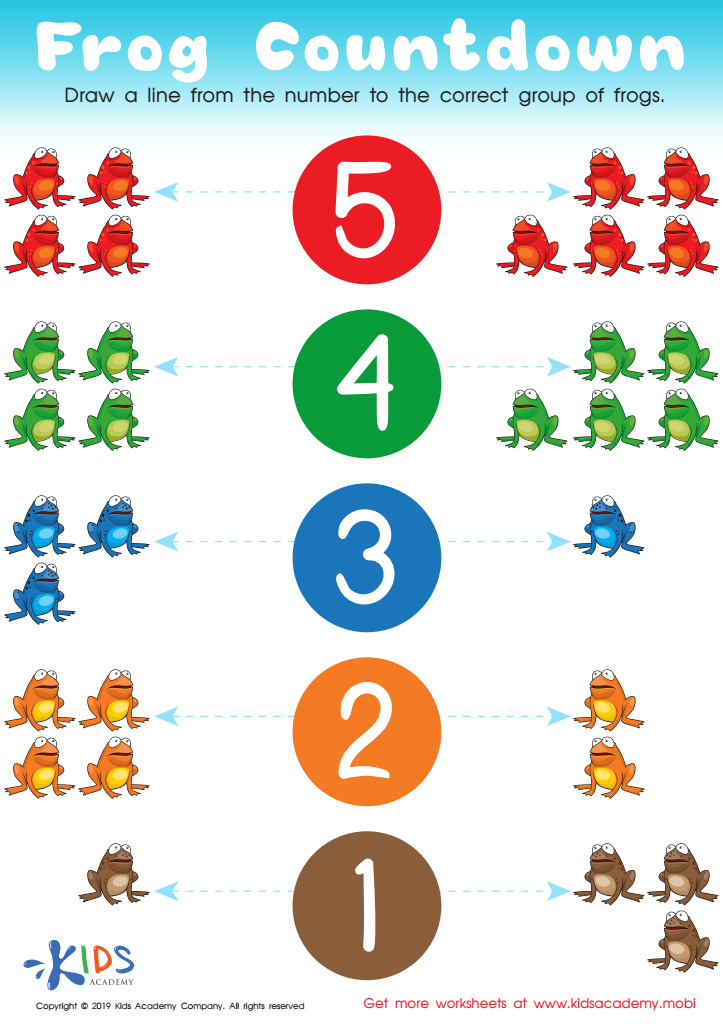
Frog Countdown Worksheet





%20(1).jpg)


Fine motor skills and normal counting are integral components of early childhood development, particularly for children aged 6-7. During this age, children are refining their ability to manipulate small objects, control hand movements, and build the intricate coordination necessary for writing, drawing, and engaging in countless daily activities. Strong fine motor skills enable children to hold pencils correctly, form letters, and cut shapes, all of which are essential for academic success and self-confidence.
In tandem with fine motor development, counting skills are foundational for numerous aspects of mathematics and logical reasoning. At this age, children should progress from simple counting to understanding number relationships, performing basic addition and subtraction, and recognizing patterns. These abilities lay the groundwork for complex problem-solving skills.
Parents and teachers play a pivotal role in fostering these skills through engaging activities such as arts and crafts, puzzles, and interactive games that promote hand-eye coordination and numeracy. By supporting children's fine motor skills and counting proficiency, they are not only preparing them academically but also instilling valuable life skills that readily execute in practical situations. Thus, nurturing these skills is crucial for holistic child development, enabling children to thrive both in school and beyond.








