Counting practice Normal Geometry Worksheets for Ages 6-7
3 filtered results
-
From - To
Enhance your child's math skills with our "Counting Practice Normal Geometry Worksheets," designed specifically for ages 6-7. These engaging, printable worksheets combine the fundamentals of counting and geometry, helping young learners build a strong foundation in mathematical concepts. Through fun activities and colorful visuals, children will explore shapes, numbers, and counting tactics in an interactive way. Our resources promote critical thinking while ensuring an enjoyable learning experience. Perfect for classrooms or at-home practice, these worksheets encourage mastery of essential skills while nurturing a love for math. Access our collection today and make counting and geometry exciting for your young learner!
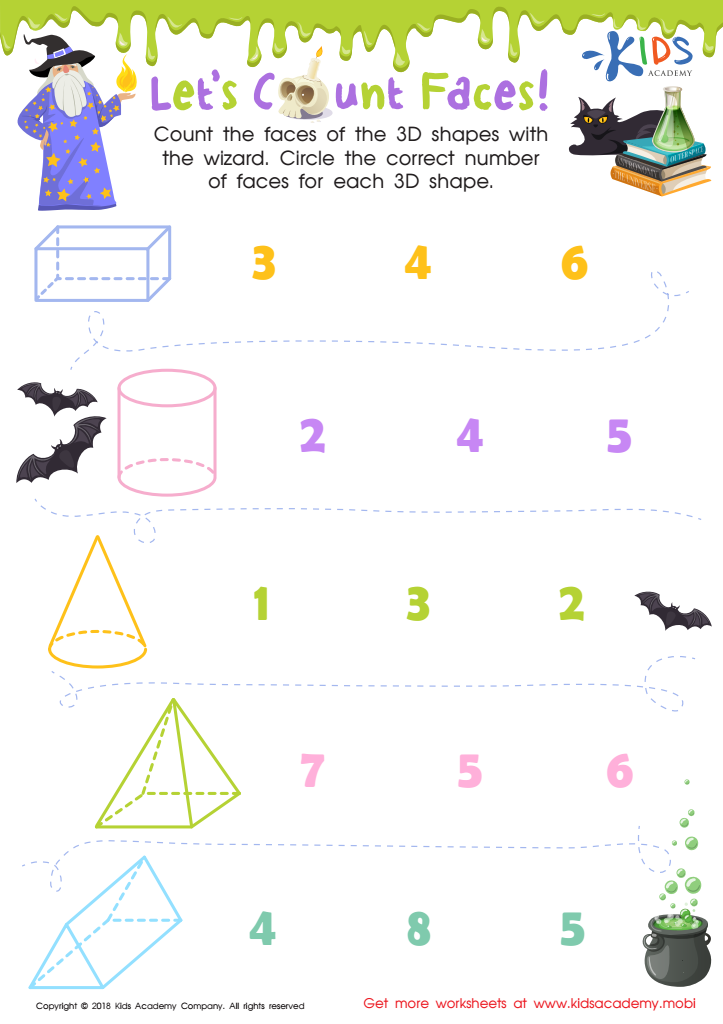
Let's Count Faces! Worksheet
 Assign to My Students











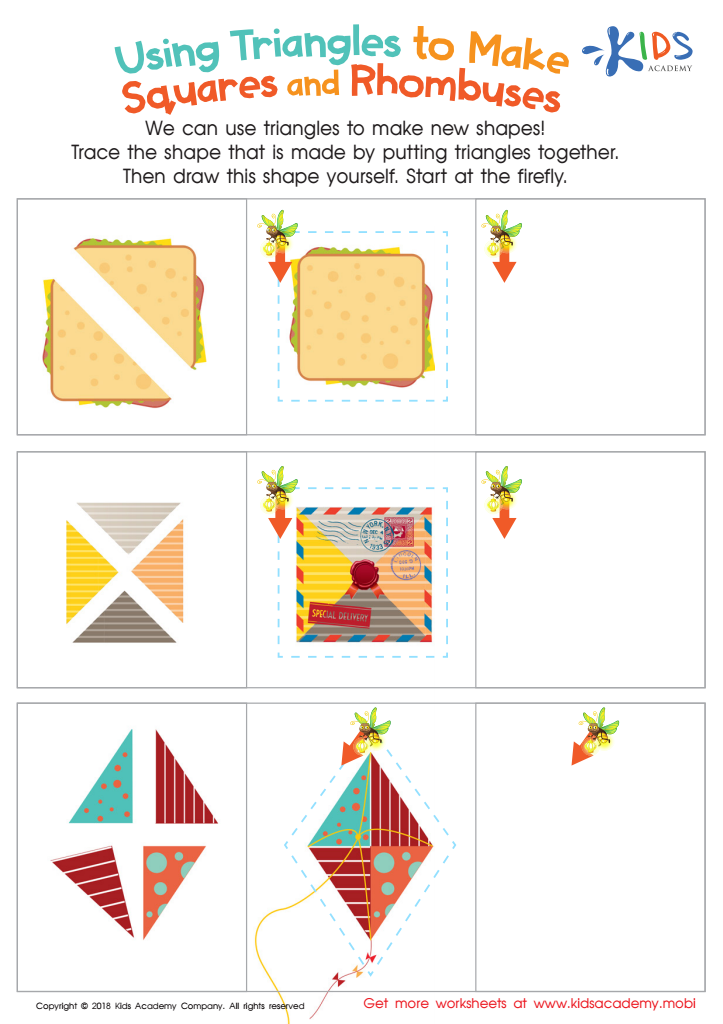
Using Triangles to Make Squares and Rhombuses Worksheet
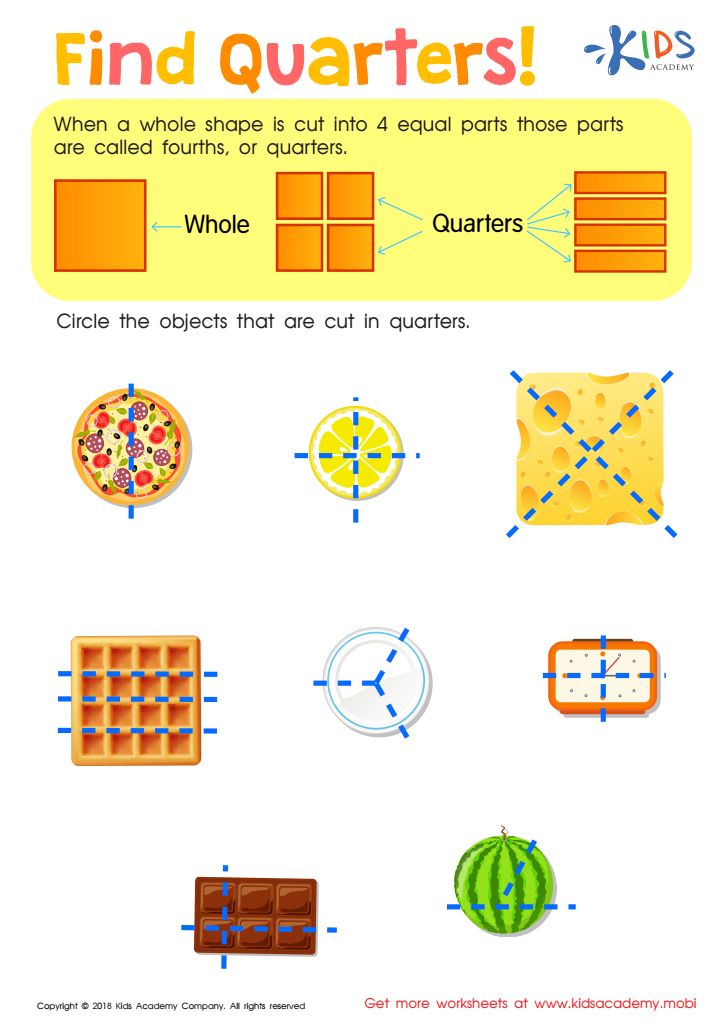
Find Quarters Worksheet








Counting practice and an understanding of normal geometry are crucial components of a child’s early education, especially for ages 6-7. At this developmental stage, children are not only learning numbers but also becoming familiar with shapes, spatial relationships, and the basics of measurement.
Effective counting skills lay a solid foundation for mathematical concepts, allowing children to perform simple arithmetic, which is essential for their future learning. Engaging children in counting games can enhance their numeracy skills, boost their confidence, and develop critical thinking abilities.
Simultaneously, normal geometry introduces children to shapes, sizes, and the arrangement of objects in space. Recognizing shapes — such as circles, squares, and triangles — is more than a basic skill; it helps in understanding more complex mathematical concepts later on. Moreover, geometry encourages observational skills and enhances creativity through spatial reasoning activities.
Parents and teachers play a pivotal role in fostering a supportive environment for these skills. Combined, counting practice and an introduction to geometry promote problem-solving and logical thinking. Furthermore, they prepare children for academic success and instill a lifelong appreciation for math and science, making it imperative for adults to prioritize these foundational skills in early childhood education.








