Understanding patterns Normal Numbers Worksheets for Ages 6-7
3 filtered results
-
From - To
Discover our engaging "Understanding Patterns Normal Numbers Worksheets" tailored for children aged 6-7! These interactive worksheets are designed to help young learners recognize and analyze patterns in numbers, enhancing their numerical fluency and critical thinking skills. Through a variety of fun activities, kids will practice identifying patterns, completing sequences, and extending series, fostering a strong foundational understanding of mathematics. Perfect for classroom use or home learning, these worksheets support early math education and keep students motivated. Join us in making math enjoyable and accessible with our comprehensive resources that align with early learning standards! Explore the world of patterns today!
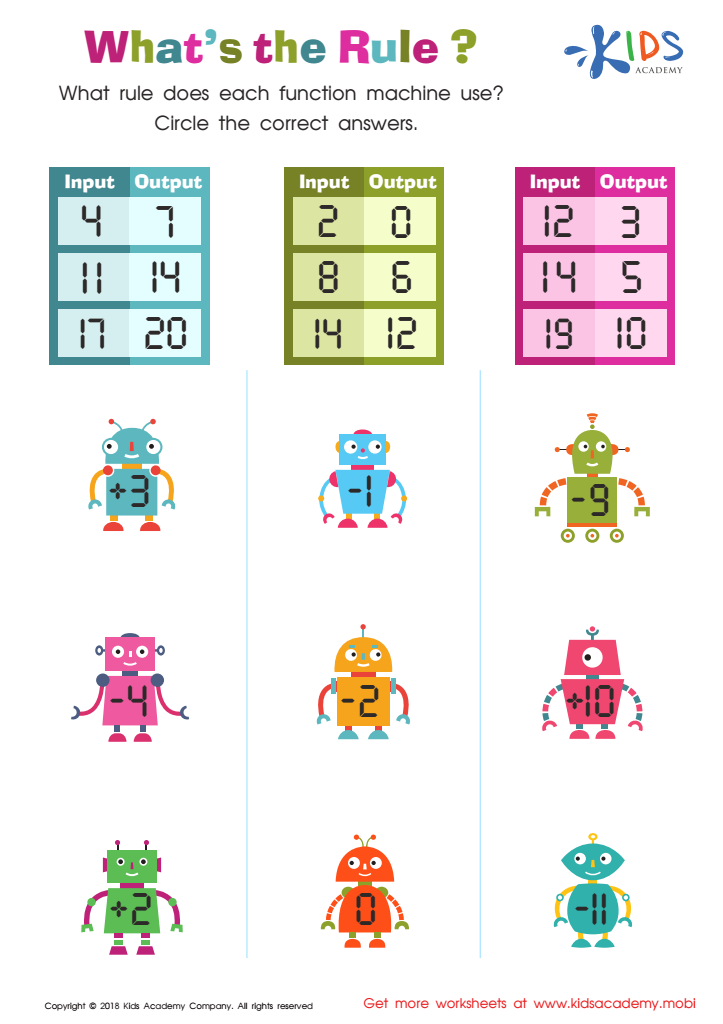
What's the Rule Worksheet
 Assign to My Students
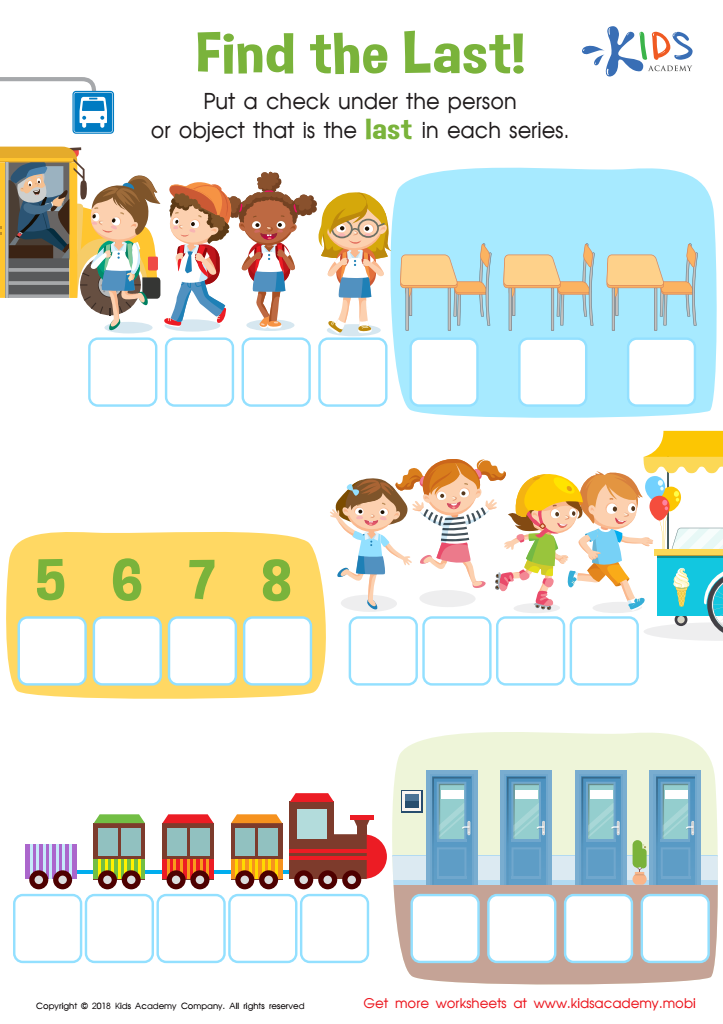
Find the Last! Worksheet
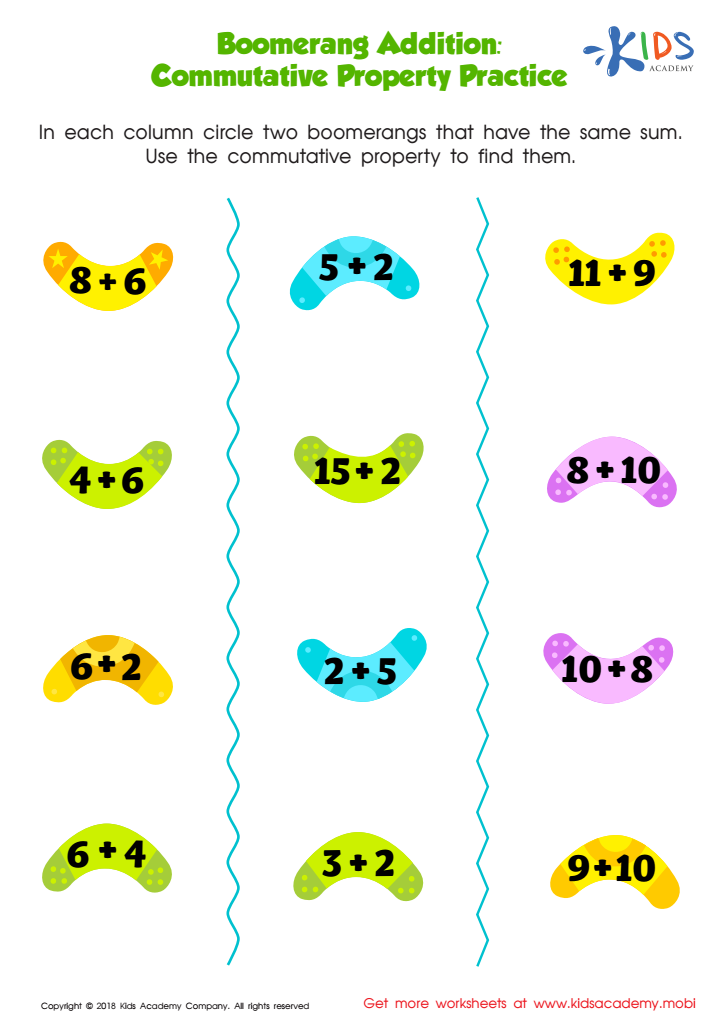
Boomerang Addition Worksheet






.jpg)

Understanding patterns and normal numbers is crucial for children aged 6-7, as these concepts form the foundation for their mathematical development. At this age, children begin to grasp the basics of number identification, sequencing, and relationships between numbers. Recognizing patterns helps them make predictions and understand the world around them, enhancing critical thinking skills. For example, by observing number sequences or shapes, children learn to identify rules and develop mathematical reasoning.
Moreover, mastering normal numbers, which represent a sequence of integers, helps children develop number sense and the ability to perform simple calculations. Familiarity with these concepts aids in reinforcing their skills in addition, subtraction, and even early multiplication concepts, seamlessly tying into later mathematical disciplines. When parents and teachers emphasize these patterns and number recognition, they provide children with tools that foster confidence in their problem-solving abilities.
Promoting interest in patterns and numbers not only prepares children for advanced mathematical concepts but also enhances cognitive development and logical reasoning. Thus, nurturing these skills in early education can set a strong foundation for lifelong learning and academic success. As such, both parents and teachers play a vital role in engaging children with these crucial concepts.








