
Enhancing calculation skills Normal Math Worksheets for Ages 6-7
3 filtered results
Difficulty Level
Grade
Age
-
From - To
Subject
Activity
Standards
Enhancing calculation skills for young learners is crucial for building a strong mathematical foundation. Our Normal Math Worksheets for Ages 6-7 on Kids Academy provide engaging and interactive exercises designed to boost your child's addition, subtraction, and problem-solving abilities. Tailored to meet the educational needs of 6 to 7-year-olds, these worksheets offer a perfect blend of fun and learning, ensuring your child stays motivated and enjoys math practice. With colorful visuals and age-appropriate challenges, Kids Academy makes mastering math concepts enjoyable and effective, paving the way for academic success and a lifelong love of numbers.
Favorites
With answer key
Interactive
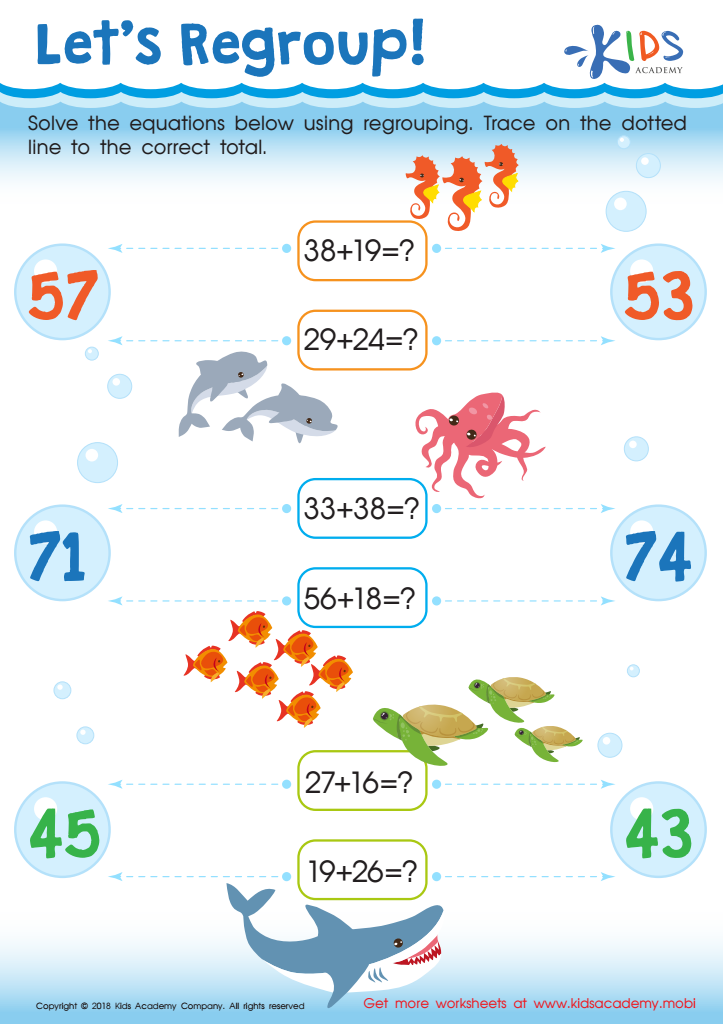
Let's Regroup! Worksheet
Your child will love completing this easy tracing sheet! The bright colors and simple equations will encourage them to solve problems by regrouping methods. Guide their hands as they trace the dotted lines to the correct answers. When they're done, check how many they got right!
 Assign to My Students
Let's Regroup! Worksheet
Worksheet
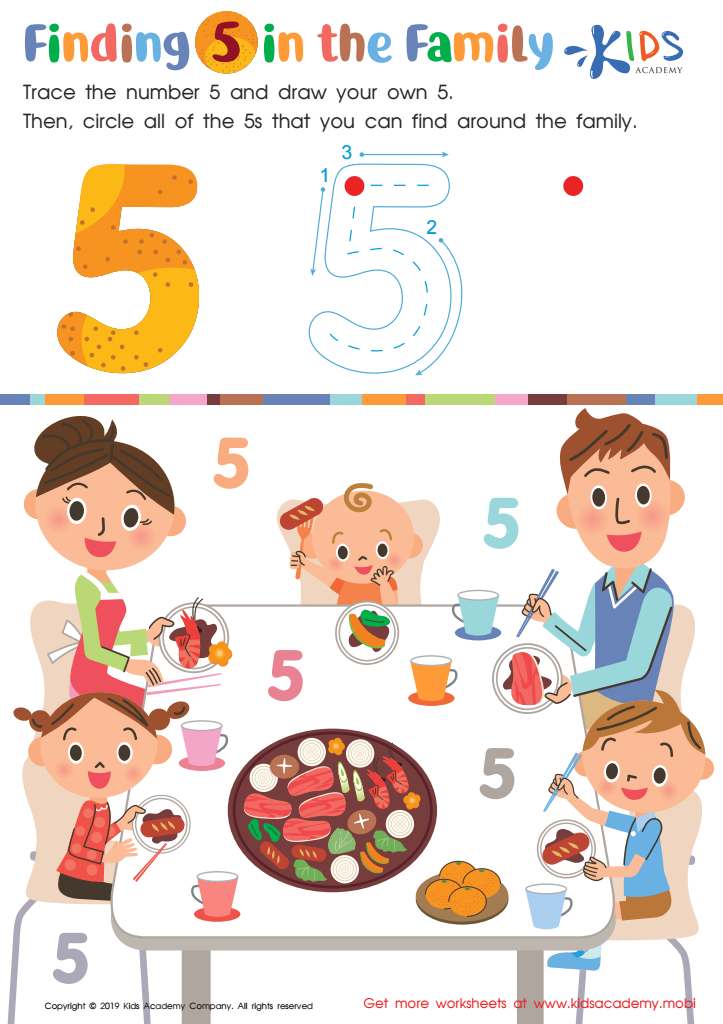
Finding 5 in the Family Worksheet
This worksheet helps kids identify and write the number 5. Ask what the family is doing and who the family members are. Help them trace and draw the 5, then have them circle all 5s in the picture.
Finding 5 in the Family Worksheet
Worksheet
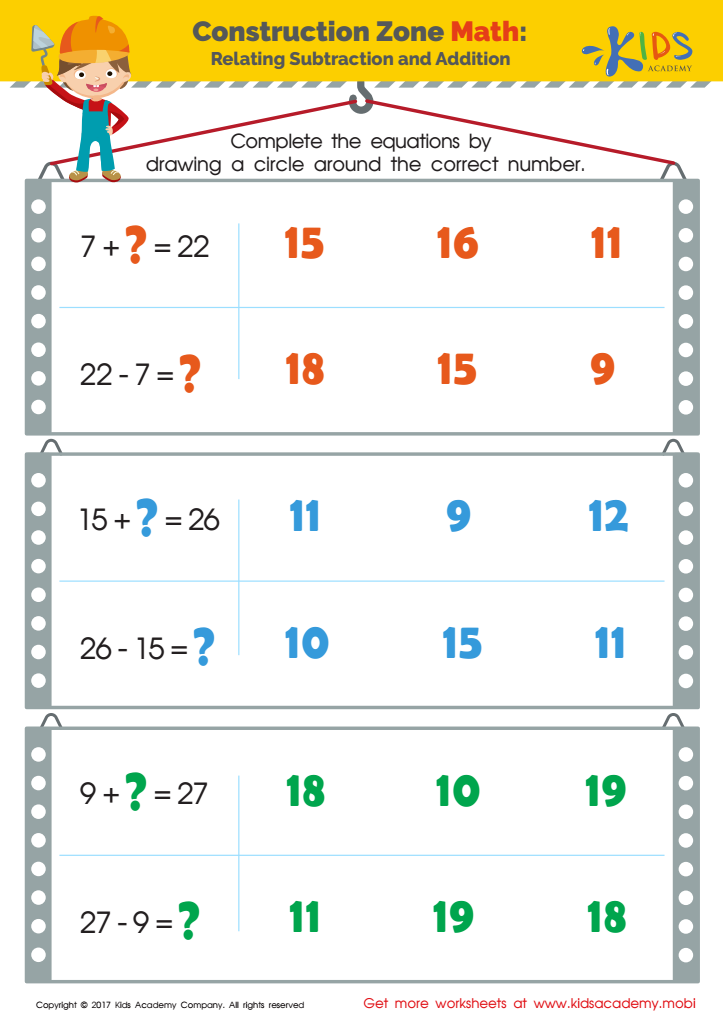
Related Addition and Subtraction Facts Worksheet
Help your child nurture their numeracy skills by introducing them to related addition and subtraction facts. Worksheets like this will give them a fun and easy way to learn how numbers work.
Related Addition and Subtraction Facts Worksheet
Worksheet
Join Kids Academy for Free
Who is primarily going to use this learning content?







Enhancing calculation skills in young children, particularly ages 6-7, is crucial for their overall academic development and confidence in mathematics. At this formative stage, basic arithmetic forms the foundation for more complex problem-solving skills in later years. Improved calculation skills help children perform better in school, fostering a positive attitude toward math and learning in general.
Developing strong numerical abilities early on can also enhance cognitive functions such as logical thinking, pattern recognition, and analytical skills. These cognitive skills are transferable and beneficial across various subjects, not just math. When children become confident in their ability to tackle math problems, this confidence can translate into a greater willingness to engage in and overcome challenges in different areas of life.
For teachers and parents, focusing on enhancing children's calculation skills can also ensure that children do not fall behind. Early detection of difficulties allows for timely intervention, potentially preventing future learning gaps. Additionally, activities that improve calculation skills, such as games and interactive exercises, can create opportunities for bonding and positive reinforcement, making learning enjoyable and motivating.
In summary, prioritizing calculation skills for young children prepares them for future academic success, supports the development of essential cognitive skills, and promotes a lifelong positive mindset toward learning.








