Enhancing observation skills Normal Math Worksheets for Ages 6-7
5 filtered results
-
From - To
Boost your child's observation skills with our engaging Normal Math Worksheets designed for ages 6-7. These worksheets are perfect for young learners, promoting essential cognitive abilities through fun and interactive activities. Each worksheet encourages children to closely examine patterns, shapes, and number relationships while developing critical thinking skills. By fostering a keen eye for detail, these resources will not only support their math proficiency but also enhance their overall learning experience. Whether at home or in the classroom, our worksheets provide a valuable tool for encouraging observation, improving focus, and laying the foundation for future academic success.
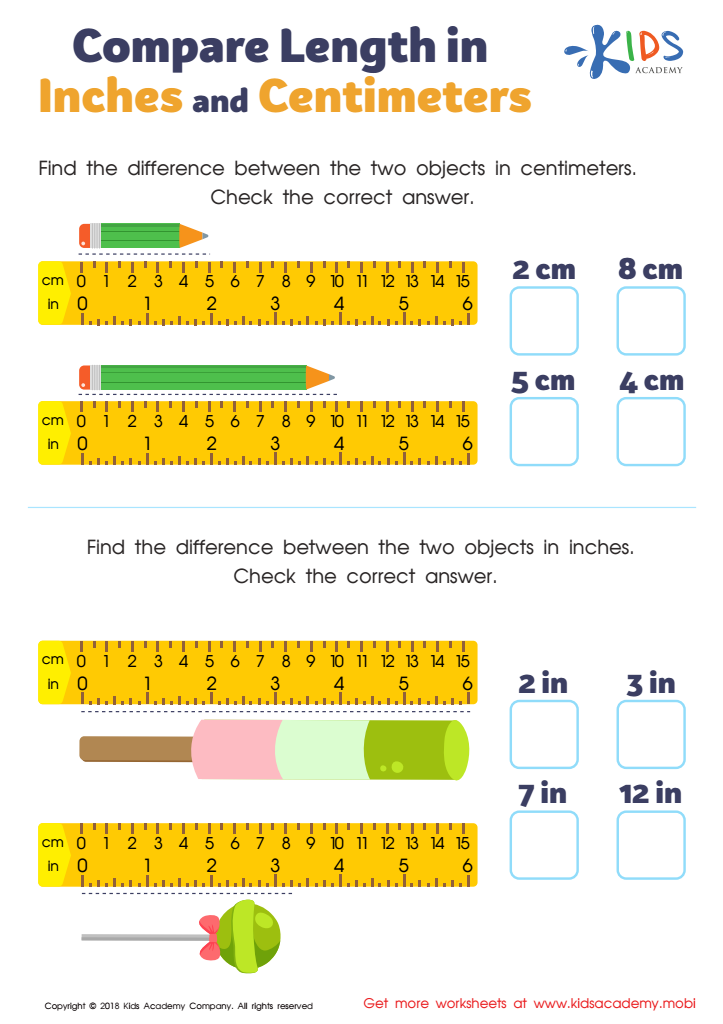
Compare Length in Inches and Centimeters Worksheet
 Assign to My Students
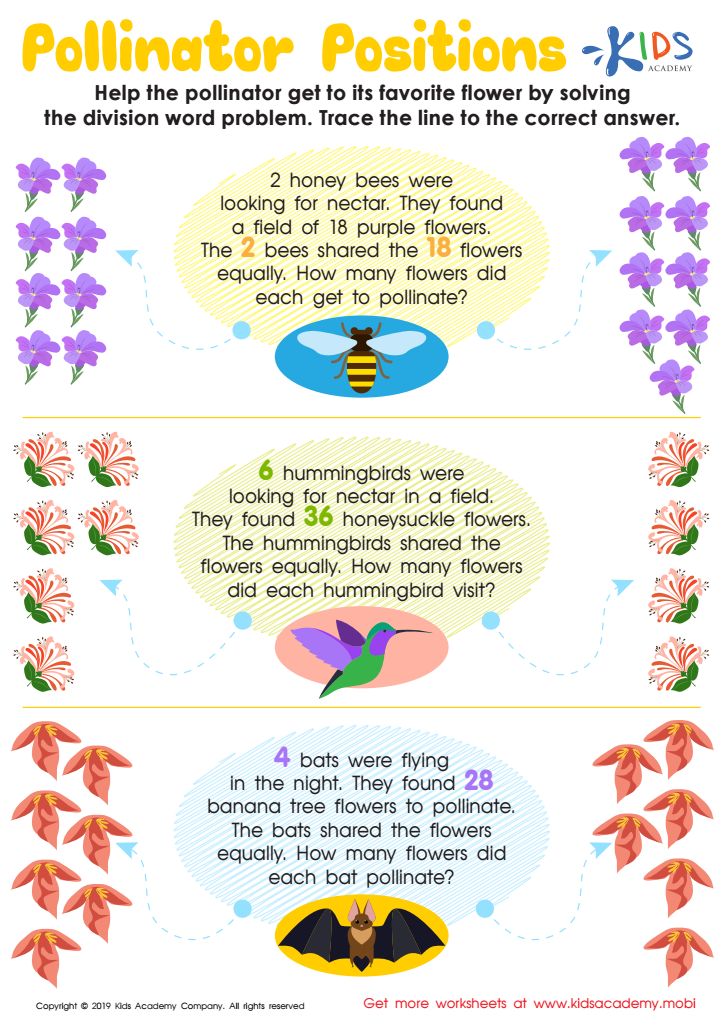
Pollinator Positions Worksheet
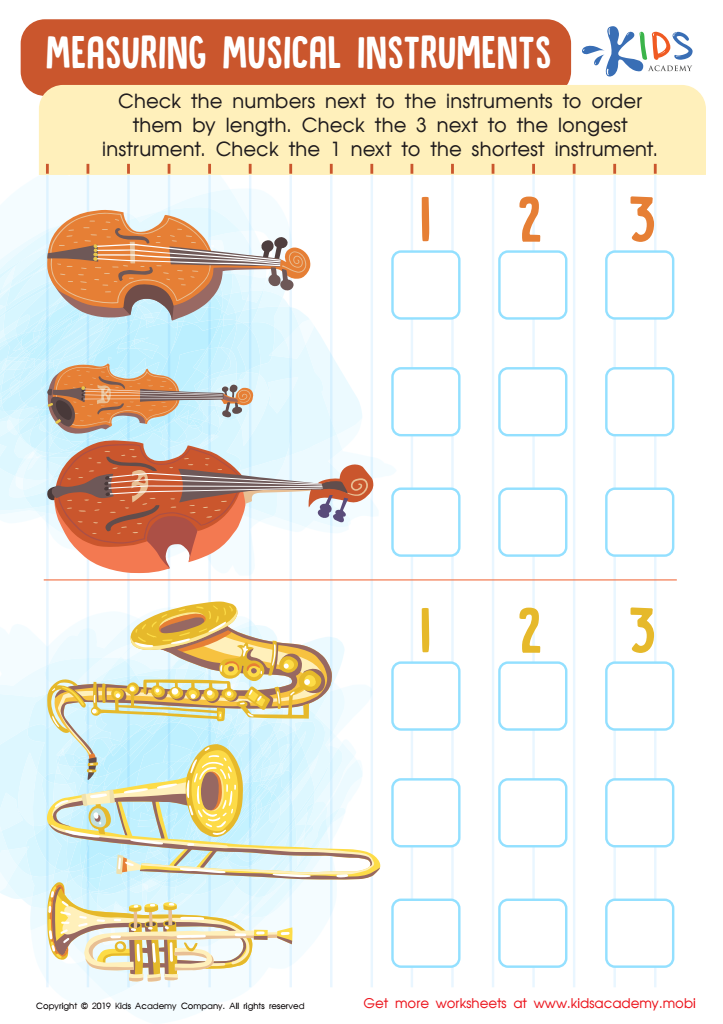
Measuring Musical Instruments Worksheet
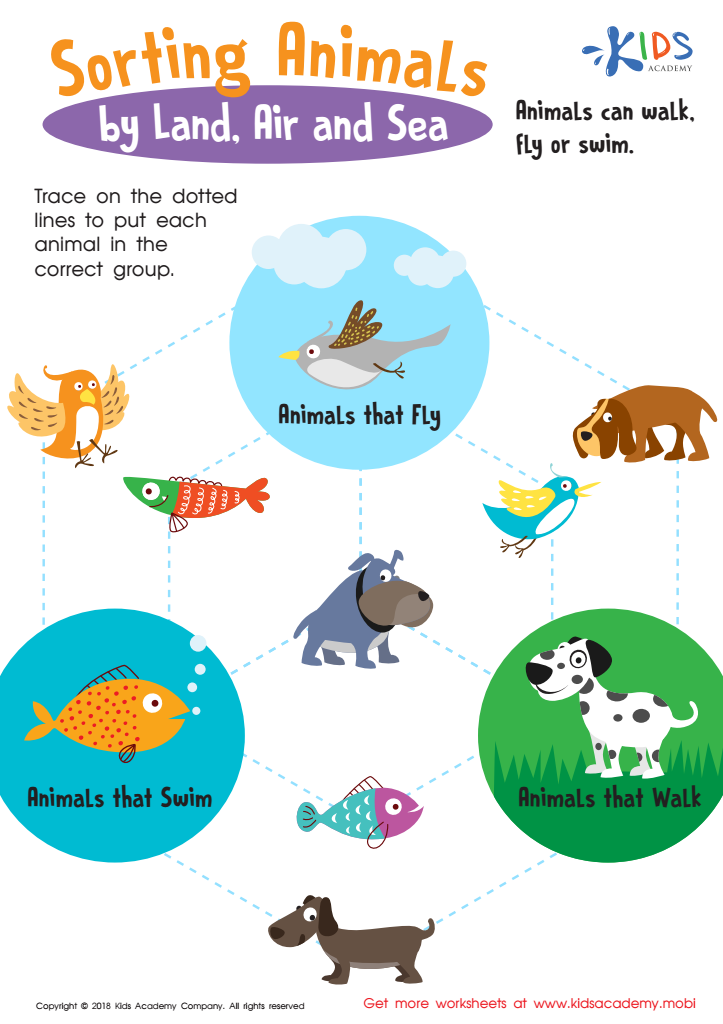
Sorting Animals by Land, Air and Sea Worksheet
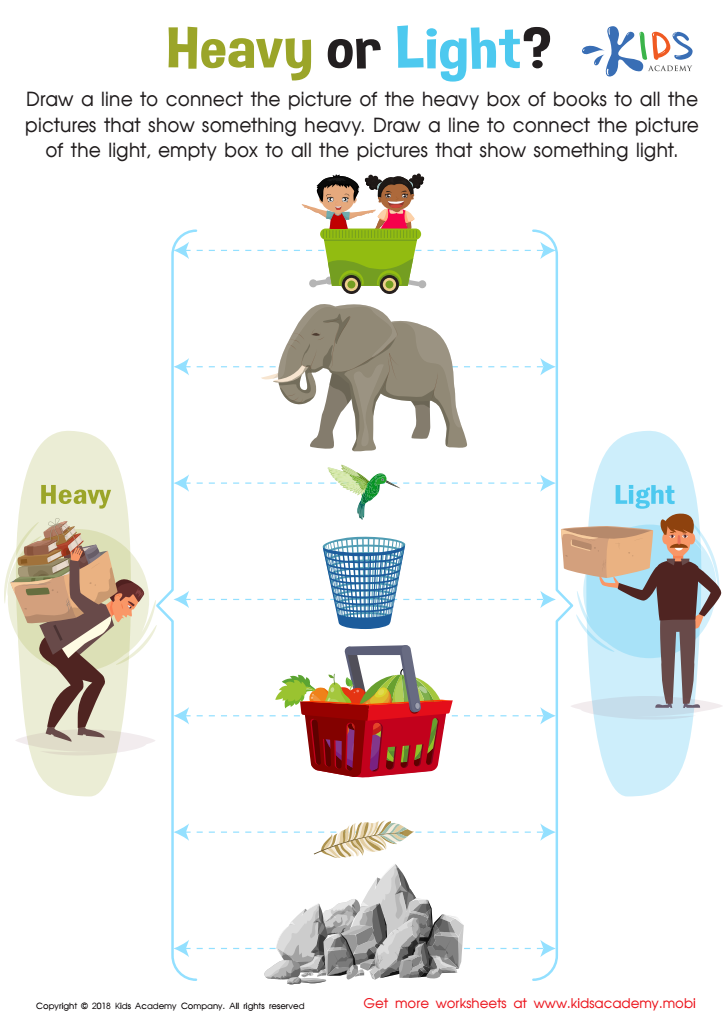
Heavy or Light? Worksheet








Enhancing observation skills in young children, particularly in the context of normal math for ages 6-7, is crucial for their cognitive and social development. At this age, children are beginning to grasp foundational mathematical concepts, and strong observation skills directly support their ability to analyze patterns, shapes, and numerical relationships. By honing these skills, children can develop a deeper understanding of math, overcoming misconceptions and building a solid foundation for more complex concepts later.
Additionally, observation is integral for problem-solving. Teaching children to observe carefully allows them to gather essential information, recognize mathematical patterns, and make informed decisions, which are vital skills in both math and daily life. Enhanced observation skills also promote critical thinking and creativity, as children learn to question, hypothesize, and explore various outcomes based on their observations.
Parents and teachers play a pivotal role in fostering these skills through engaging activities that encourage exploration and inquiry. By prioritizing observation in the learning process, educators and caregivers instill confidence and curiosity in young learners, nurturing lifelong skills that extend beyond math into all areas of learning and interaction. This investment in observation skills will pay dividends for children as they advance academically and socially.








