Recognizing Patterns Normal Math Worksheets for Ages 6-7
3 filtered results
-
From - To
Discover engaging "Recognizing Patterns" normal math worksheets designed for children aged 6-7. These worksheets aim to enhance young learners' pattern recognition skills through fun and interactive exercises. By identifying shapes, colors, and sequences, kids develop essential mathematical foundations while boosting their critical thinking and problem-solving abilities. Our carefully curated worksheets align with educational standards, making them a valuable resource for homeschooling or classroom learning. Each activity encourages creativity and ensures hours of enjoyable learning. Explore our collection today and empower your child to recognize and understand patterns in the world around them, laying the groundwork for future math success!
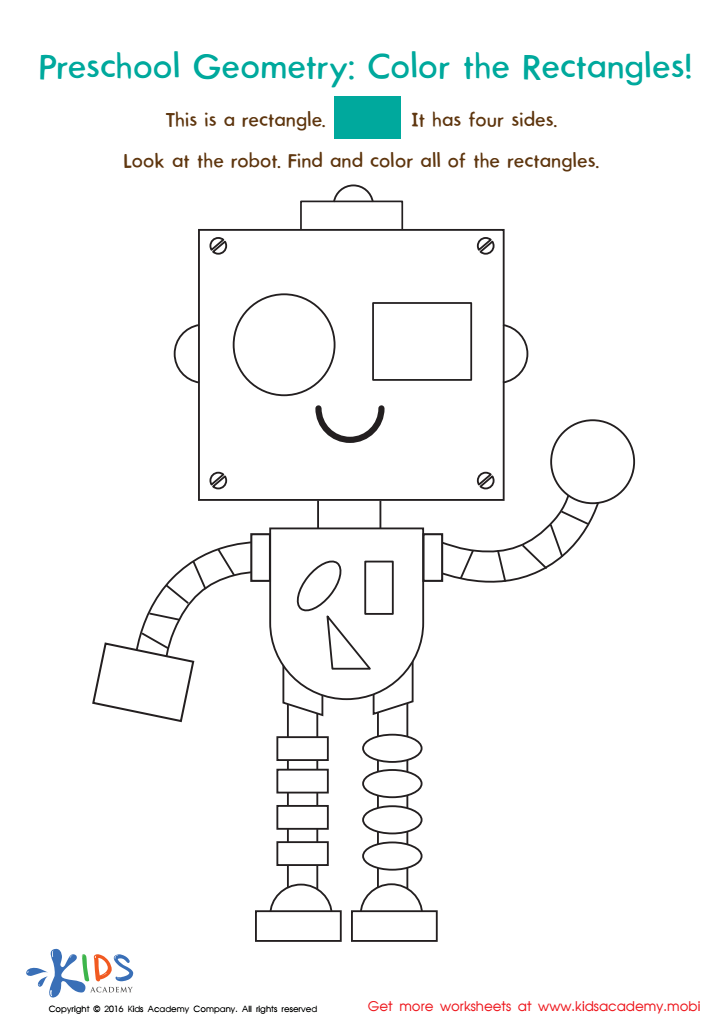
Geometry Worksheet
 Assign to My Students
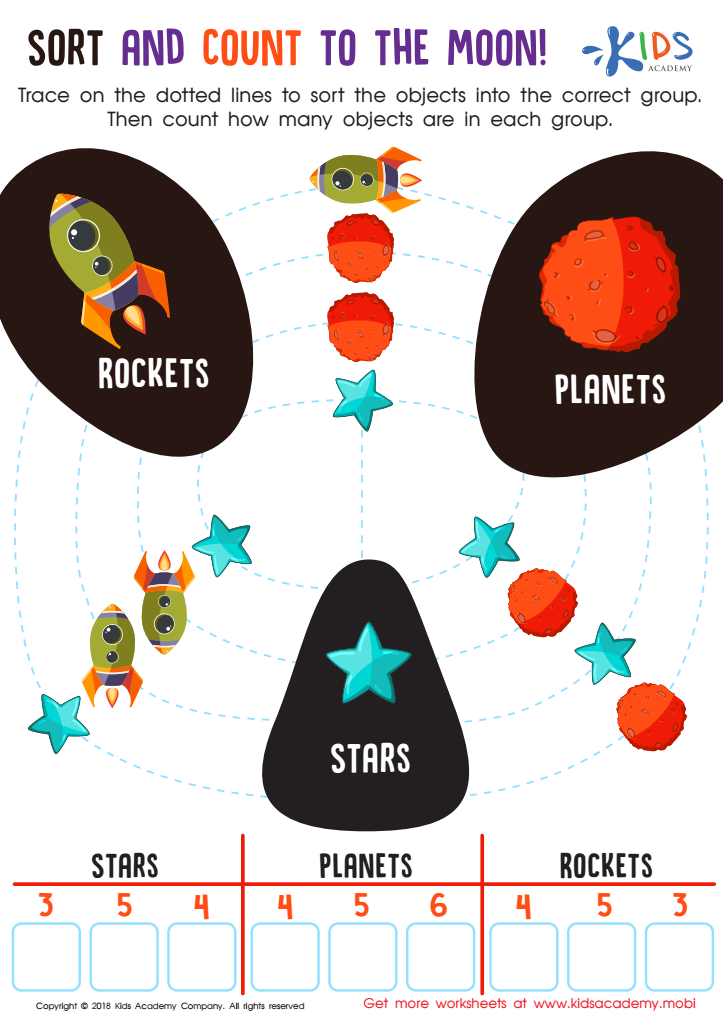
Sort and Count to the Moon Worksheet
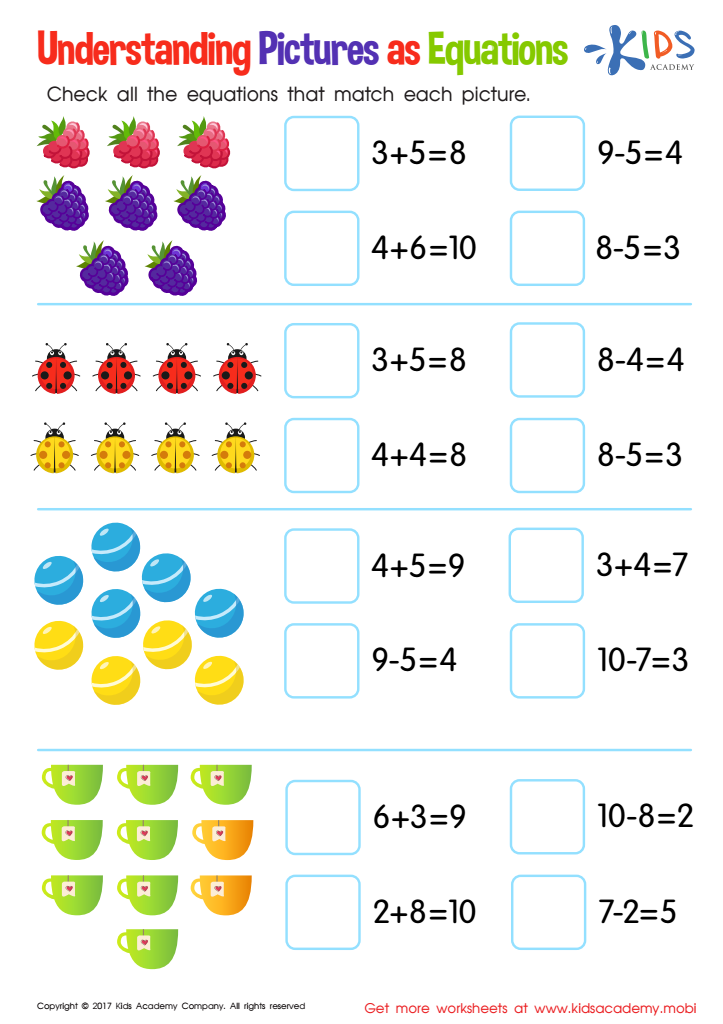
Understanding Pictures as Equations Worksheet







Recognizing patterns is a fundamental skill in mathematics that significantly benefits children aged 6-7. This ability not only fosters mathematical understanding but also enhances critical thinking and problem-solving skills. When parents and teachers encourage pattern recognition, they help children identify relationships and structures within numbers, shapes, and everyday objects, laying a solid foundation for future mathematical concepts.
At this age, children begin to connect the dots between numbers and patterns, which can lead to improved number sense and a greater comprehension of complex topics such as addition, subtraction, and even early algebraic concepts. Recognizing patterns also nurtures creativity and logical reasoning, prompting children to devise strategies for solving new problems.
Additionally, we live in a world filled with patterns, from seasonal changes to routines and behaviors. Teaching children to recognize these patterns helps them make sense of their environment, boosting their confidence and independence.
By focusing on pattern recognition, parents and teachers play a vital role in catalyzing children's cognitive development and fostering a love for math. Ultimately, making patterns fun and engaging encourages a lifelong interest in learning, setting the stage for academic success in the years to come.








