Shape Recognition Normal Math Worksheets for Ages 6-7 - Page 2
26 filtered results
-
From - To
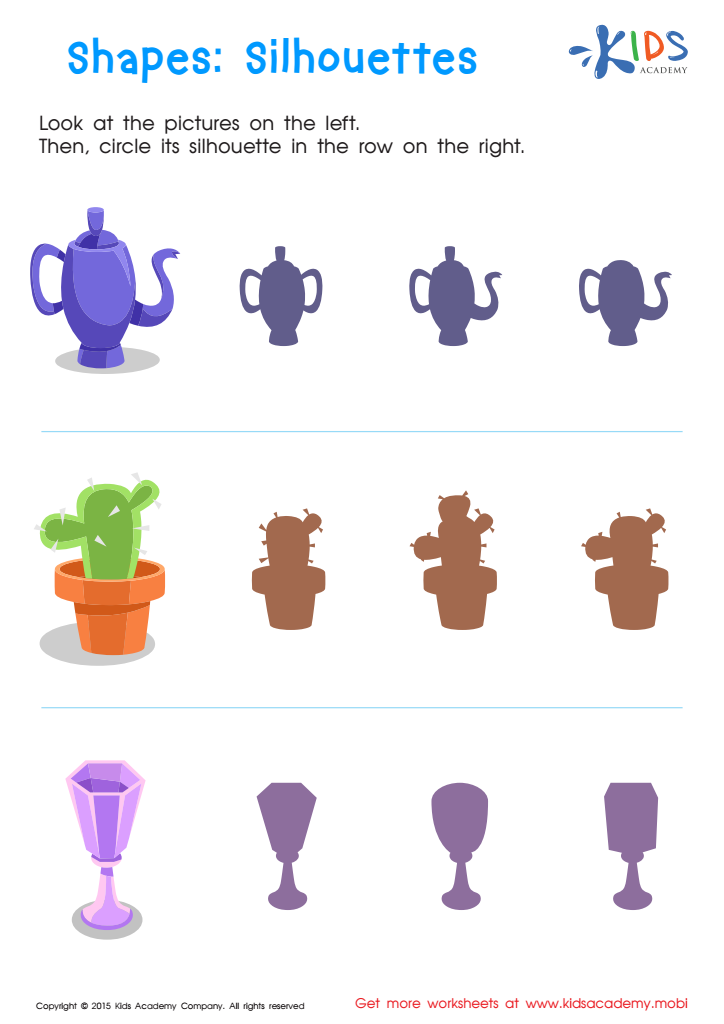
Silhouettes – Shapes Worksheet
 Assign to My Students
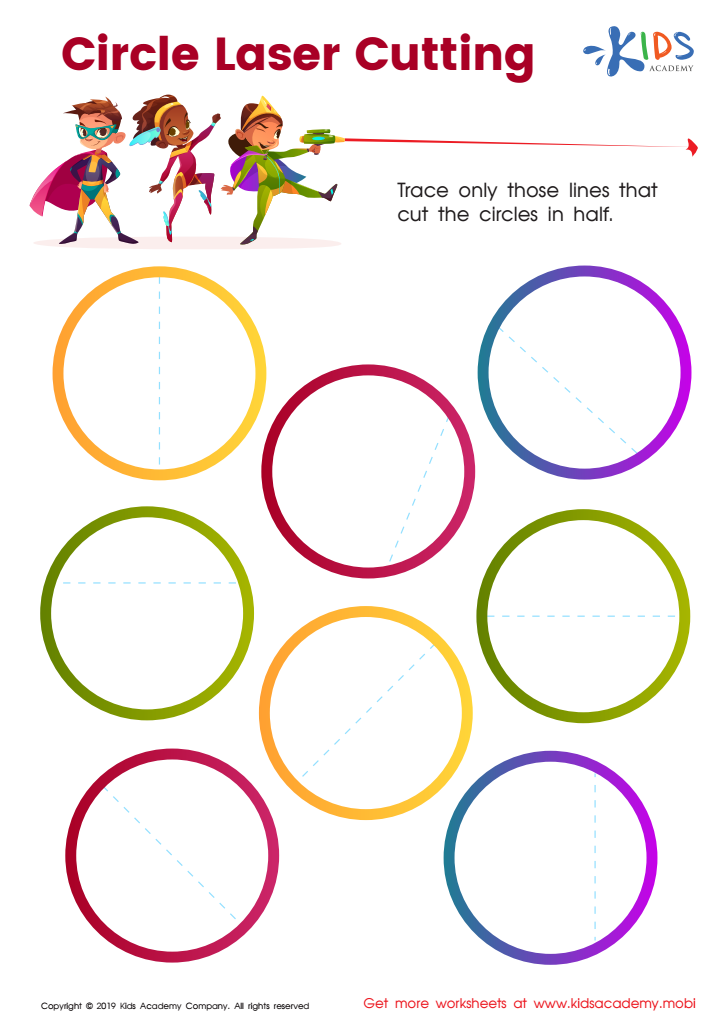
Circle Laser Cutting Worksheet








Shape recognition is a fundamental skill in early education, particularly for children aged 6-7. At this stage, children are developing their understanding of the world through concrete representations, and shape recognition lays a crucial foundation for further learning in mathematics and beyond. Familiarizing children with various shapes helps them identify and categorize objects in their environment, promoting critical thinking and observational skills.
Understanding shapes also supports children in grasping more complex concepts, such as symmetry, geometry, and spatial awareness. It enhances their ability to visualize and manipulate objects mentally, which is essential for problem-solving. Moreover, shape recognition plays a significant role in early literacy. Children learn to recognize patterns and understand how written symbols relate to real-world representations.
For parents and teachers, investing time in shape recognition activities fosters a child's cognitive development and boosts confidence in their mathematical abilities. Engaging in hands-on activities, such as art projects or interactive games, can make this learning enjoyable and meaningful. Ultimately, cultivating shape recognition skills in young learners not only equips them for future math challenges but also sharpens their overall analytical and reasoning strengths, making it a vital focus for early education.








