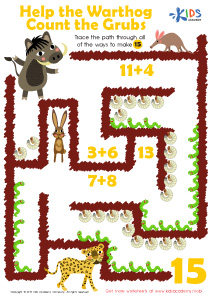
Mathematical reasoning Normal Subtraction Worksheets for Ages 6-7
4 filtered results
-
From - To
Unlock the world of mathematical reasoning for your child with our expertly crafted Normal Subtraction Worksheets designed for ages 6-7. These engaging worksheets help children master subtraction through a variety of fun activities that sharpen their analytical skills and build a strong numerical foundation. Each worksheet is thoughtfully designed to facilitate independent learning and to boost confidence in solving subtraction problems. With visually appealing and interactive exercises, children will enjoy learning subtraction while developing critical thinking skills essential for future math success. Enhance your child's math abilities today with our premium subtraction resources!
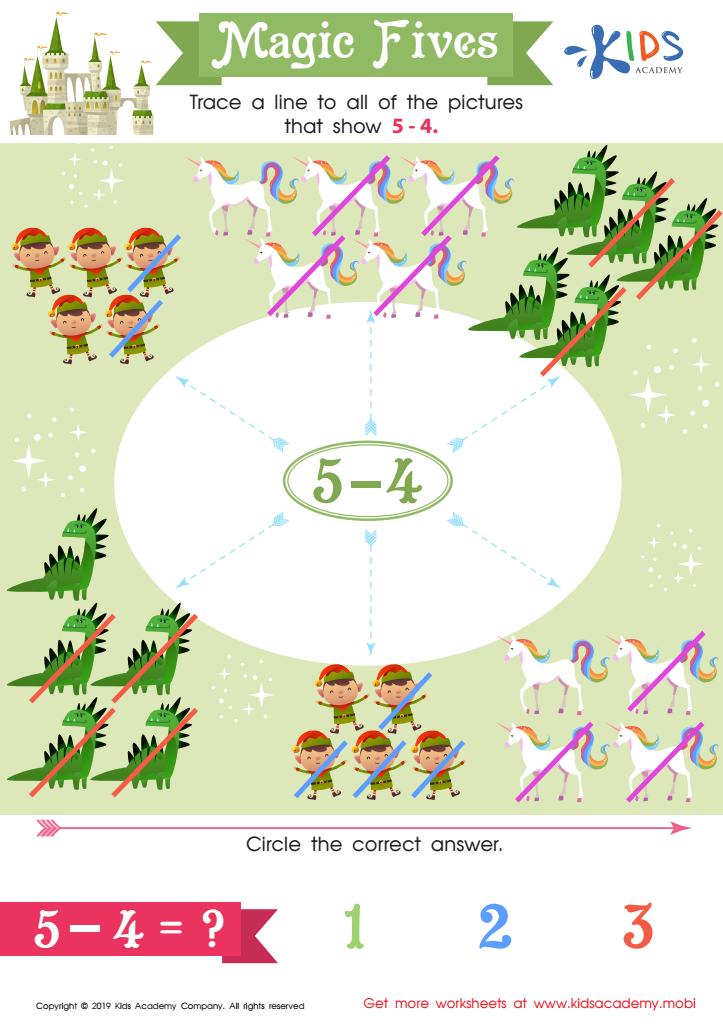
Magic Fives Worksheet
 Assign to My Students
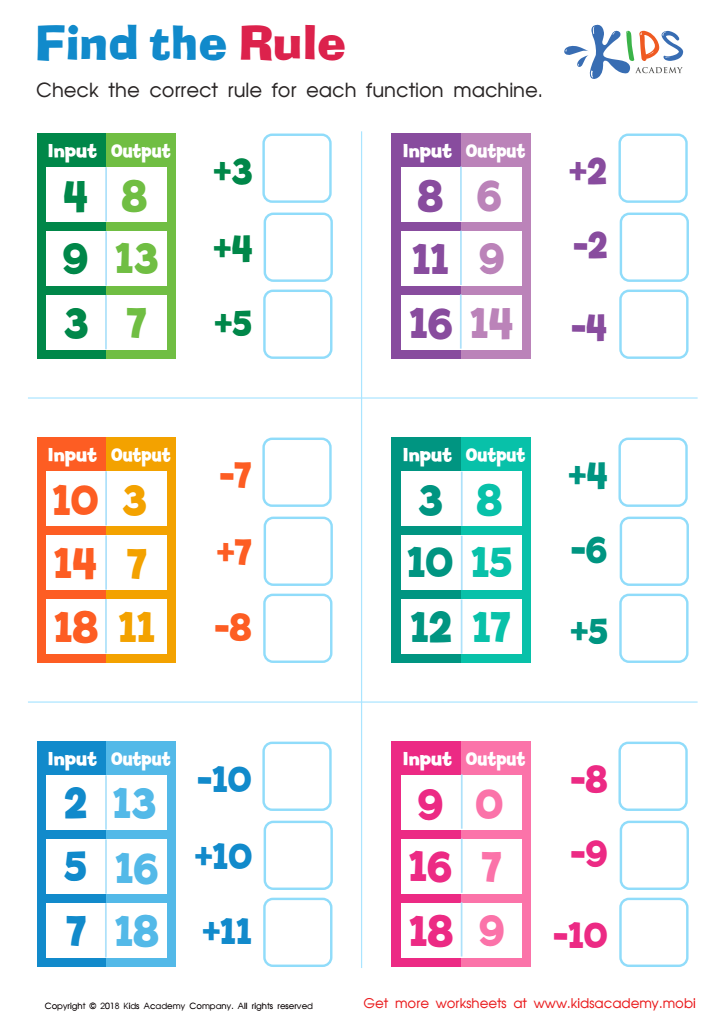
Find the Rule Worksheet
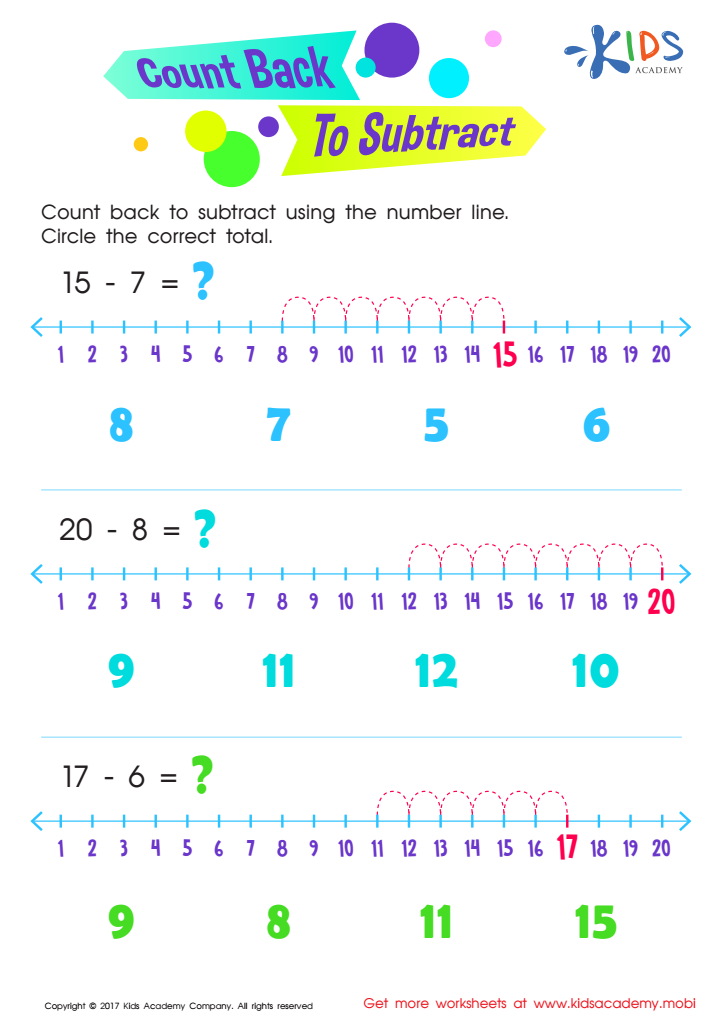
Count Back to Subtract Substraction Worksheet
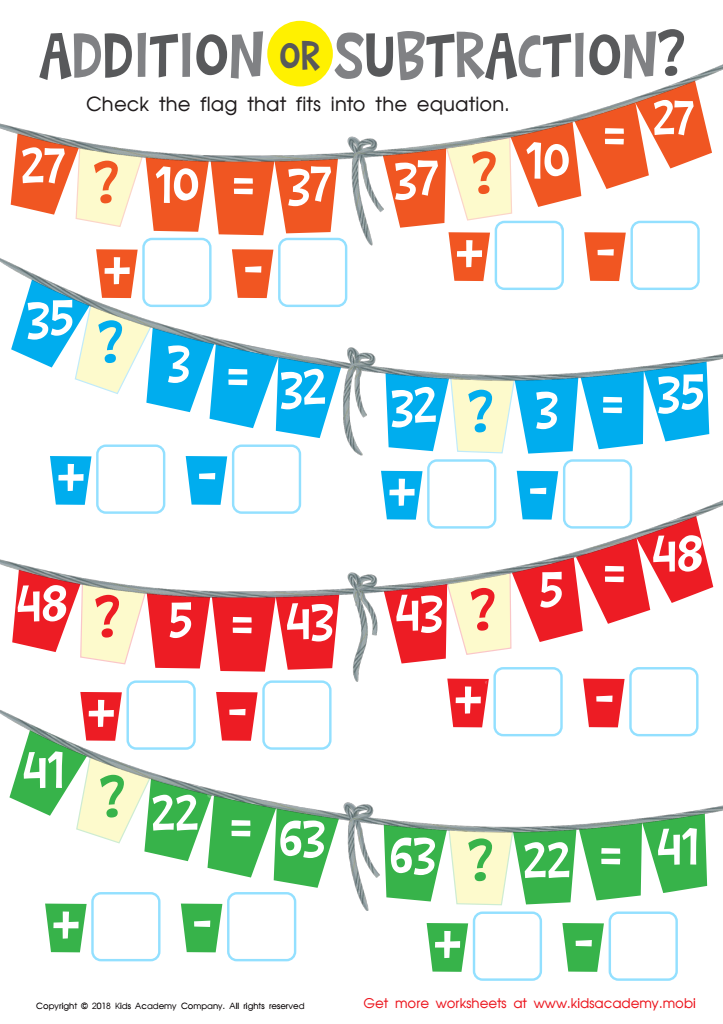
Addition or Subtraction? Worksheet








Mathematical reasoning and normal subtraction are fundamental skills for children aged 6-7, laying the foundation for their future success in math and critical thinking. At this age, students transition from basic counting to more complex arithmetic operations, making it crucial for parents and teachers to ensure they grasp these concepts early on.
Subtraction is more than just taking away numbers; it develops logical thinking and problem-solving skills. When children understand how subtraction works, they can better comprehend relationships between numbers and recognize patterns. This builds their confidence and encourages a positive attitude towards math.
Furthermore, mathematical reasoning improves overall cognitive development. It enhances children’s ability to think logically and analytically, skills that are transferable to other subjects and real-life situations. Subtracting numbers in a variety of contexts helps children learn to approach problems from different angles, fostering flexibility in thinking.
Supporting children in mastering subtraction and mathematical reasoning also strengthens their preparation for advanced coursework. As math concepts become progressively complex, a solid grasp of basic arithmetic is vital for more sophisticated problem-solving tasks.
In conclusion, parents and teachers should prioritize teaching and reinforcing mathematical reasoning and normal subtraction for young learners to build a strong foundation, nurture critical thinking, and pave the way for lifelong learning and achievement.