Vocabulary enhancement Normal Building Vocabulary Worksheets for Ages 6-7 - Page 2
27 filtered results
-
From - To
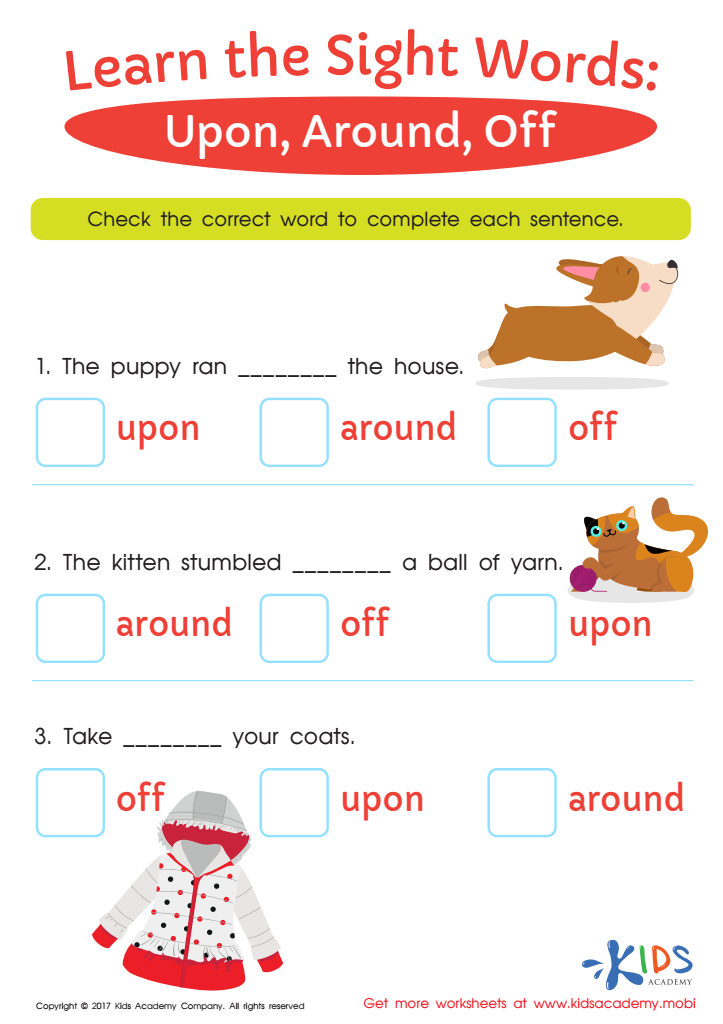
Upon, Around, Off Sight Words Worksheet
 Assign to My Students











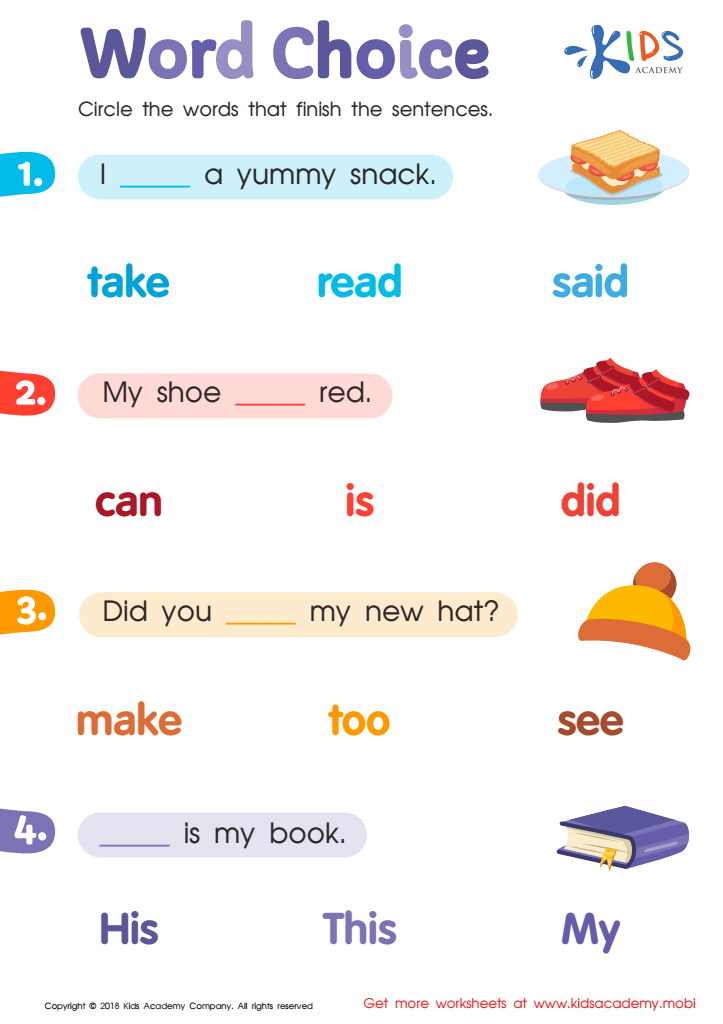
Word Choice Worksheet
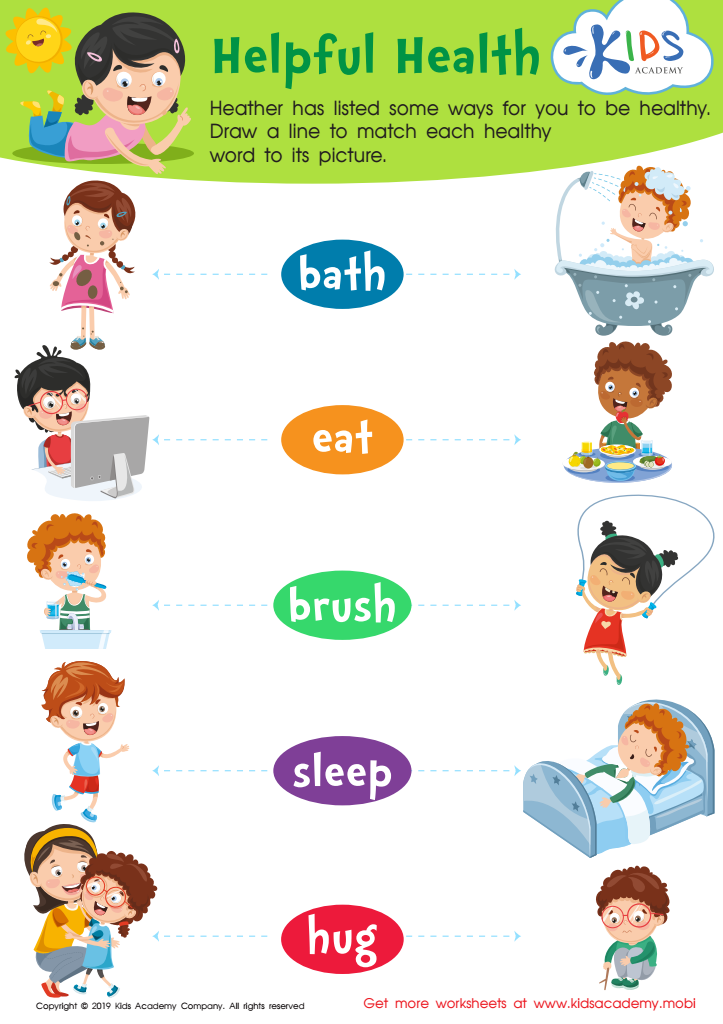
Helpful Health Worksheet



.jpg)

.jpg)


Vocabulary enhancement is crucial for children aged 6-7, as it forms the foundation for effective communication and literacy skills. At this stage, children are not just learning words; they are beginning to connect these words to their thoughts, feelings, and understanding of the world around them. When parents and teachers prioritize vocabulary building, they ignite a child's curiosity and expand their cognitive abilities, facilitating deeper learning across subjects.
A robust vocabulary empowers children to express themselves more clearly and confidently, boosting their self-esteem and encouraging participation in discussions, both in the classroom and at home. Furthermore, vocabulary influences reading comprehension; the more words children know, the better they can understand texts, which sets the stage for academic success.
Engaging in vocabulary-enhancing activities—like reading aloud, storytelling, or interactive games—makes learning enjoyable and memorable. Parents and teachers should foster a rich linguistic environment, filled with diverse words, context, and meaningful conversations. As children build their vocabulary, they not only improve their academic performance but also develop essential life skills that will benefit them throughout their education and into adulthood. In essence, prioritizing vocabulary enhancement is investing in a child's future success.








