Critical Thinking Normal Reading Worksheets for Ages 6-7 - Page 2
29 filtered results
-
From - To
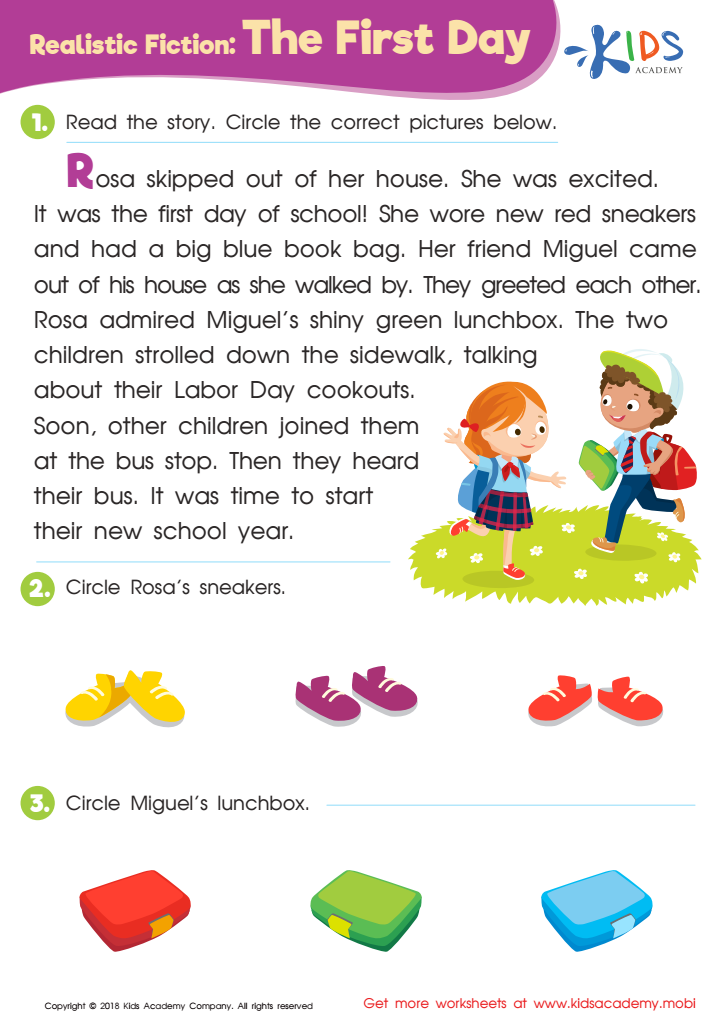
Realistic Fiction: The First Day Worksheet
 Assign to My Students
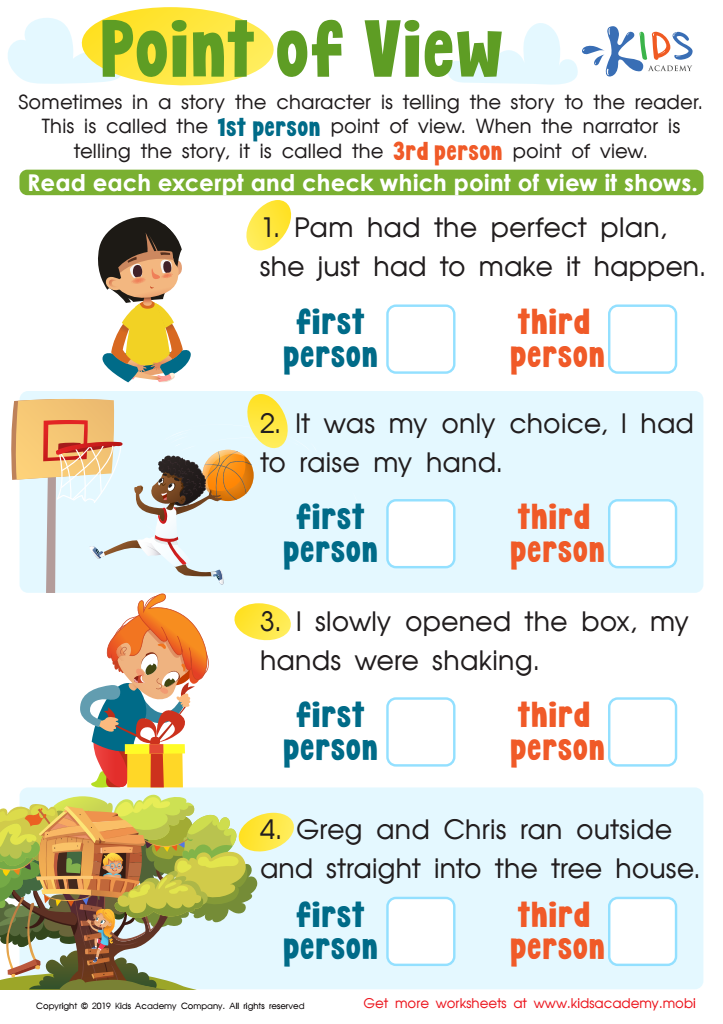
Point of View Printable
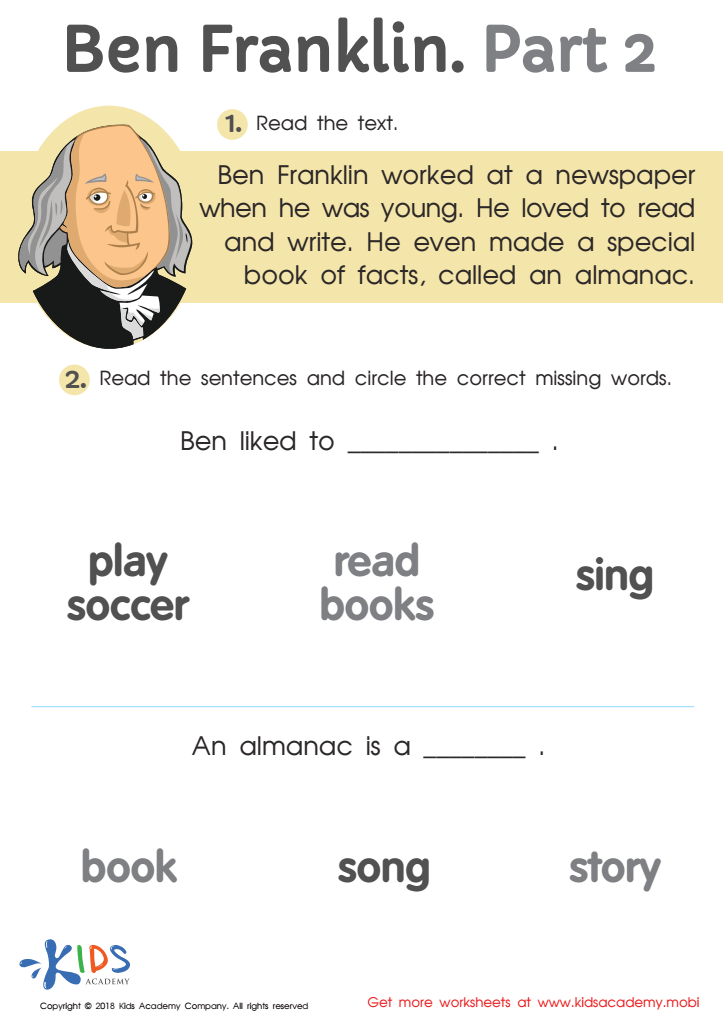
Ben Franklin Part 2 Worksheet
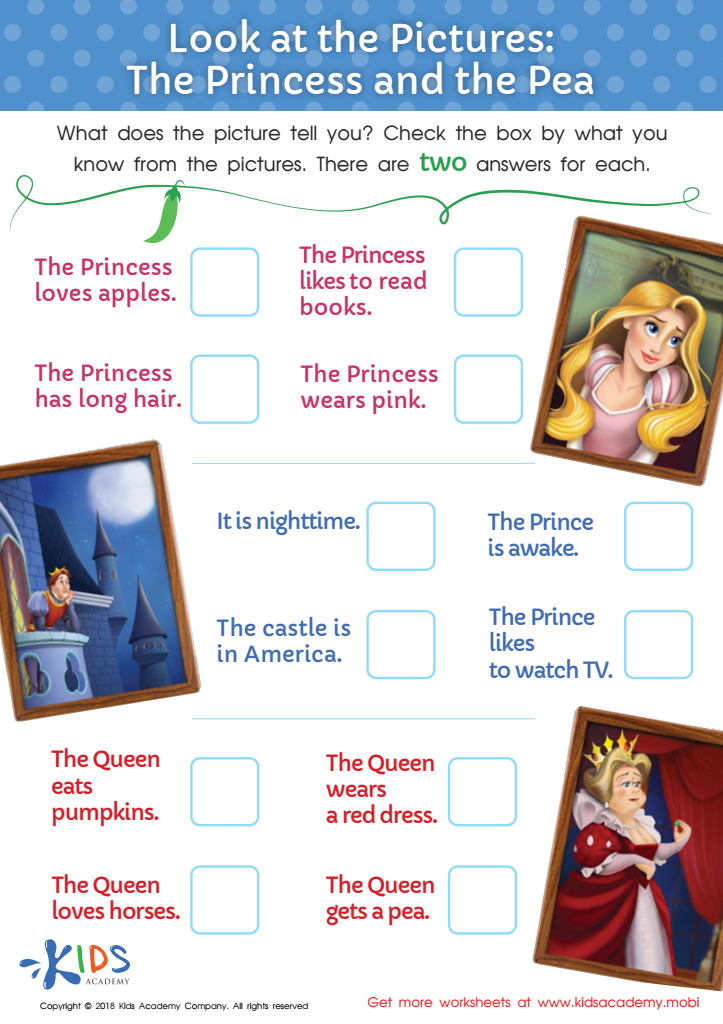
Look at the Pictures: The Princess and the Pea Worksheet
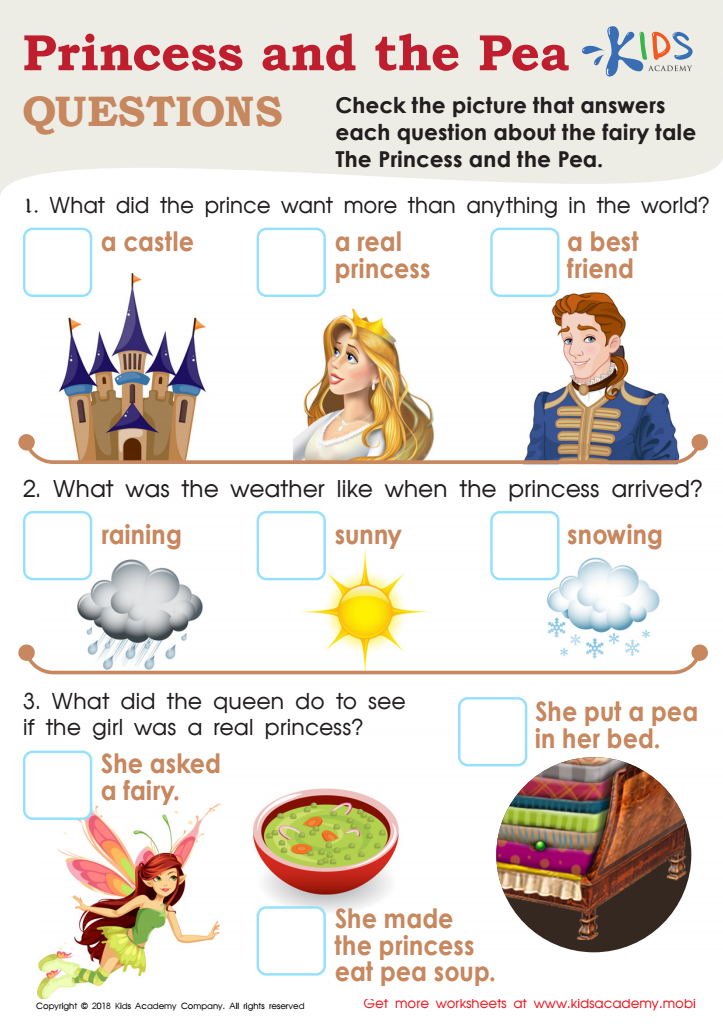
Princess and the Pea Questions Worksheet








Critical thinking skills are essential for children, particularly during the ages of 6-7, a pivotal time for cognitive development. As early grade teachers and parents, fostering these skills through normal reading activities can significantly enhance a child’s overall learning experience. Critical thinking encourages children to analyze, evaluate, and synthesize information, moving them beyond mere memorization to a deeper understanding of the material.
At this age, children begin to engage with texts more analytically. When they read stories, asking open-ended questions, making predictions, and discussing characters' motivations strengthens their comprehension skills. This not only promotes literacy but also instills a lifelong love for reading.
Additionally, critical thinking helps children navigate the complexities of social interactions and problem-solving. Being able to think critically empowers them to assess situations and make informed decisions—skill sets that are incredibly valuable academically and socially.
Engaging in critical reading lays the groundwork for creativity and innovation, enabling children to express themselves more effectively and confidently in various contexts. Ultimately, prioritizing critical thinking in reading cultivates independent thinkers who are capable of tackling future challenges, not just in academics but in their everyday lives.








