Identifying story elements Normal Reading Worksheets for Ages 6-7
3 filtered results
-
From - To
Enhance your child's reading skills with our engaging "Identifying Story Elements" worksheets designed for ages 6-7. These worksheets provide a fun and interactive way for young learners to explore key components of storytelling, including characters, setting, plot, and conflict. By analyzing simple texts, kids will improve their comprehension and critical thinking abilities, developing the foundational skills necessary for proficient reading. Perfect for classroom use or at-home learning, our resources encourage creativity and make reading exciting. Dive into the world of stories and help your child become a confident reader with our expertly crafted worksheets!
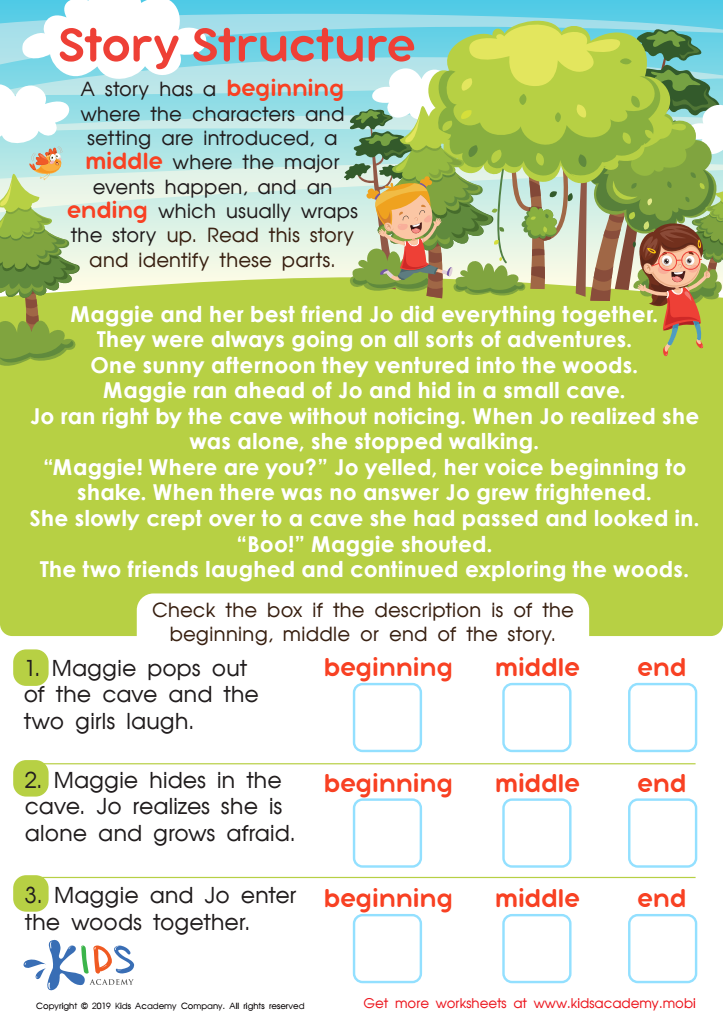
Story Structure Worksheet
 Assign to My Students
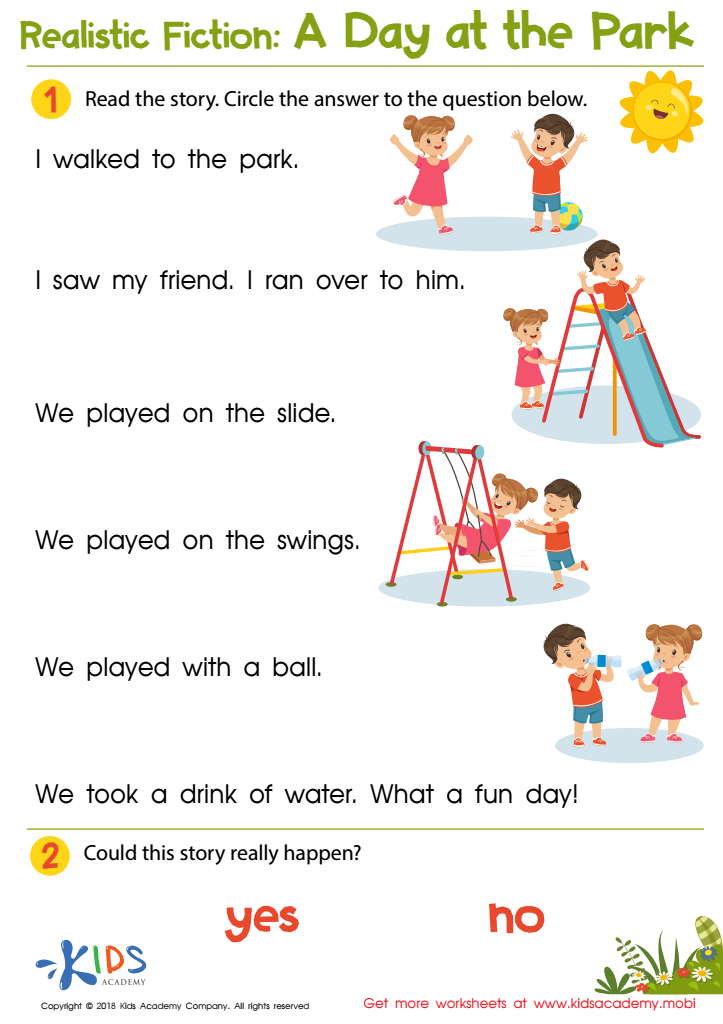
A Day at the Park Worksheet
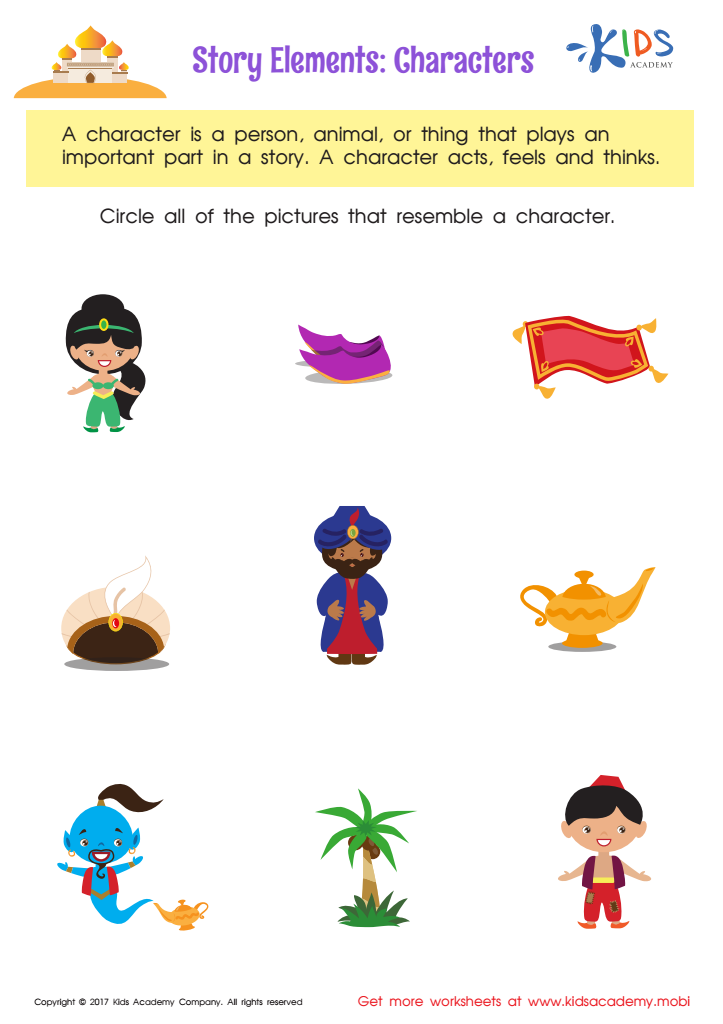
Story Elements Printable








Identifying story elements is crucial for children aged 6-7 because it lays the foundation for strong reading comprehension skills. At this age, children are developing their ability to understand and interpret narratives, and recognizing key story elements—such as characters, setting, plot, conflict, and resolution—helps them grasp the overall structure of a story. This awareness enhances their engagement with the text, making reading more enjoyable and less daunting.
When parents or teachers emphasize story elements, they equip children with essential tools for making predictions, asking questions, and summarizing stories—all vital skills for successful reading. Understanding characters and their motivations, for instance, fosters empathy and critical thinking. Similarly, recognizing the setting enhances children’s visualization skills, allowing them to immerse themselves in different worlds.
Encouraging children to identify these elements can also inspire creativity in their storytelling and writing, as they learn to convey coherent narratives. Moreover, a solid foundation in story comprehension aids in their future academic success across subjects—reading is fundamental in learning everything from social studies to science. Ultimately, helping children identify story elements nurtures their love for reading and develops lifelong learning habits.








