Moral understanding Normal Reading Worksheets for Ages 6-7
4 filtered results
-
From - To
Discover our engaging Moral Understanding Normal Reading Worksheets designed specifically for children aged 6-7. These worksheets foster essential values by promoting empathy, kindness, and social awareness through relatable stories and characters. Our carefully crafted activities encourage young readers to explore moral lessons, enhancing their comprehension and critical thinking skills. With vibrant illustrations and age-appropriate language, these resources make learning enjoyable and impactful. Perfect for homeschooling, classroom use, or extra practice at home, our worksheets provide a solid foundation in moral reasoning while improving literacy. Download now to inspire your child’s growth and understanding of important life lessons in a fun way!
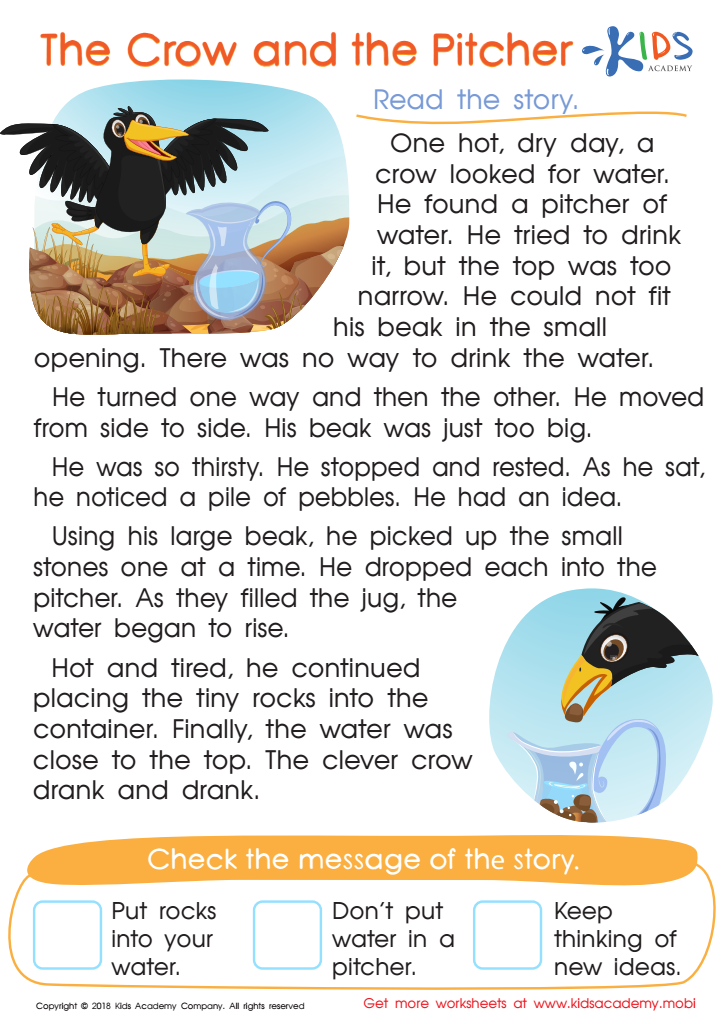
The Crow and the Pitcher Worksheet
 Assign to My Students
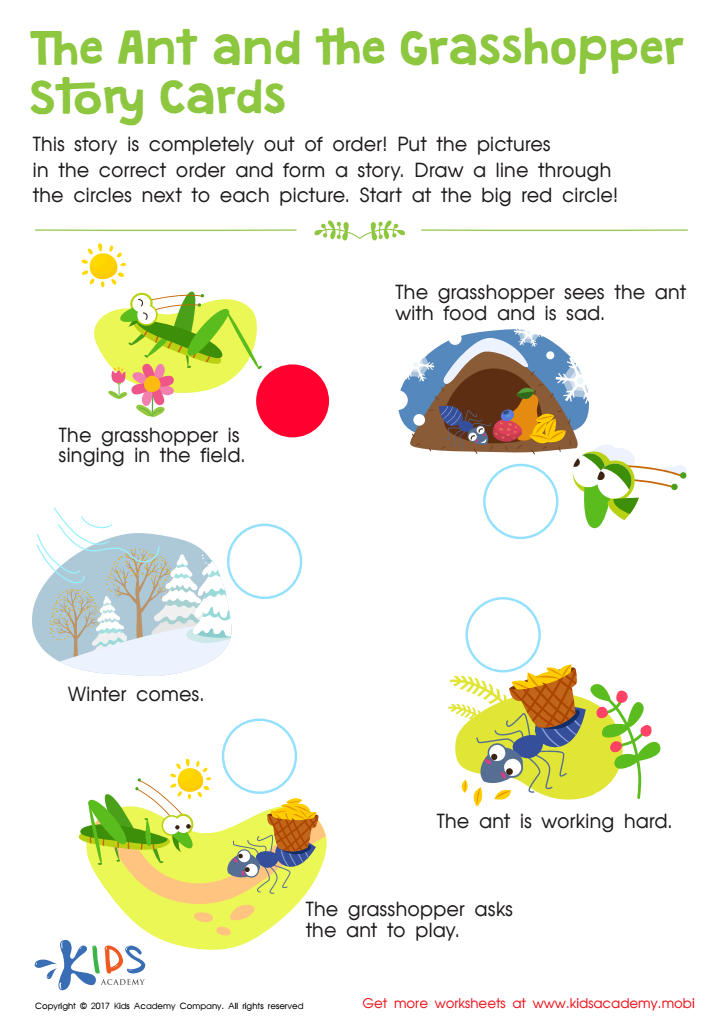
The Ant and The Grasshopper Worksheet
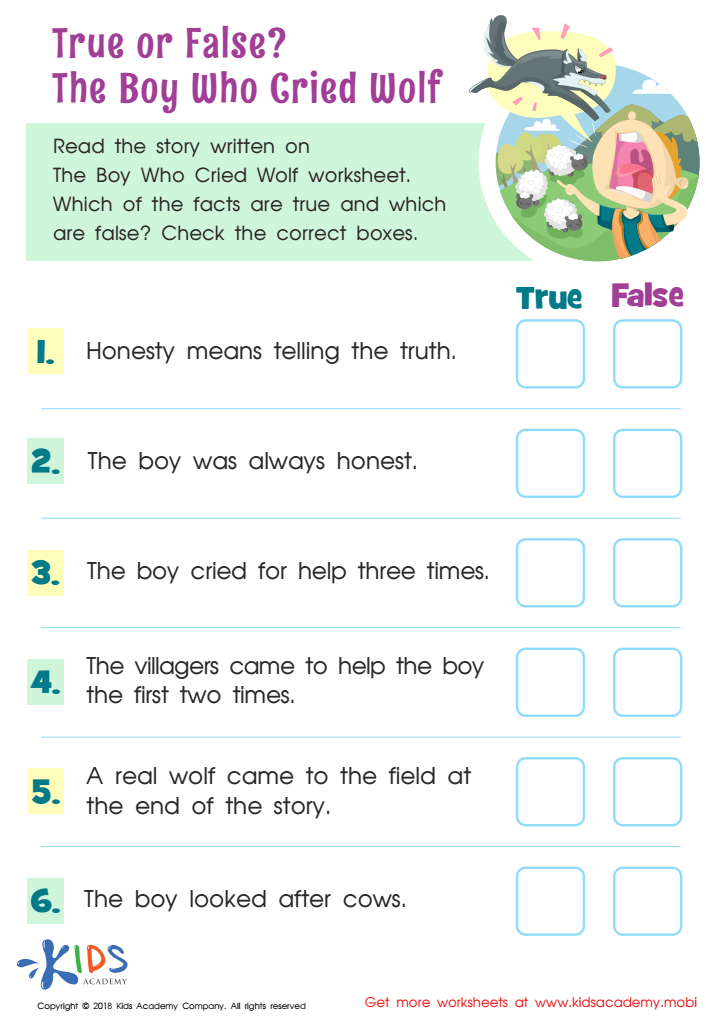
True or False? The Boy Who Cried Wolf Worksheet
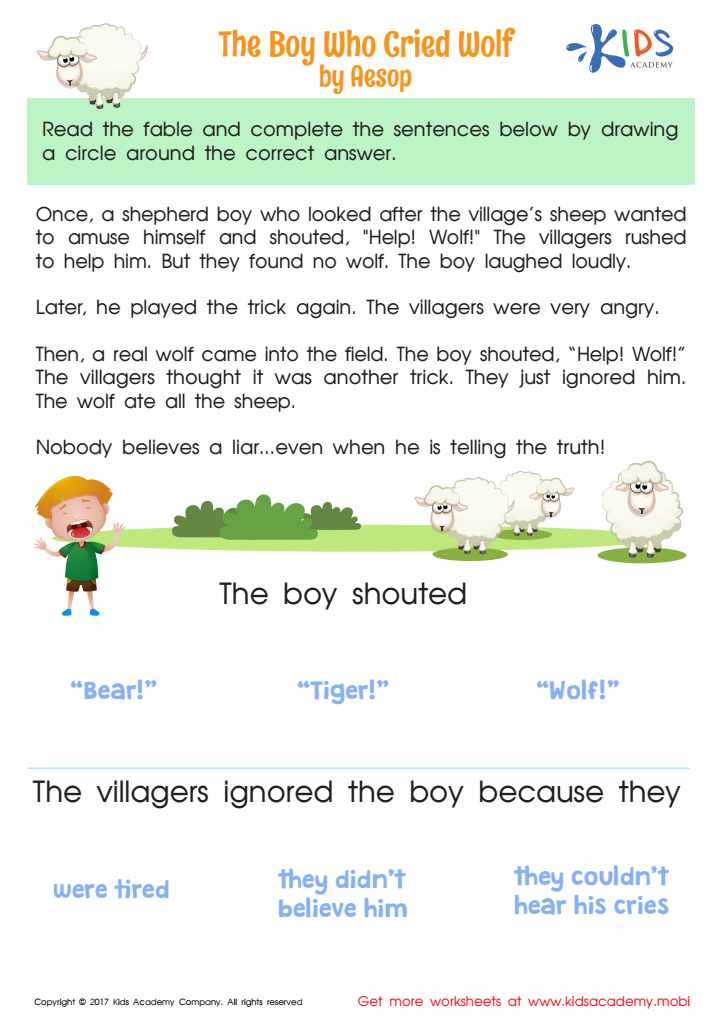
The Boy Who Cried Wolf Worksheet








Moral understanding is a crucial aspect of a child’s development, particularly for ages 6-7. At this stage, children are beginning to recognize and interpret right from wrong, develop empathy, and understand the importance of values like honesty and kindness. Parents and teachers play a fundamental role in nurturing this moral understanding, as it sets the foundation for social interactions and decision-making in the future.
By caring about moral understanding, parents and teachers can help children navigate complex social dynamics and foster positive relationships with their peers. Engaging children in discussions about stories or events that highlight moral dilemmas allows them to think critically and empathize with others, promoting a sense of community and responsibility.
Moreover, building a strong moral framework encourages resilience and ethical behavior, which can lead to increased confidence and independence. Children who understand moral values are more likely to make choices that benefit themselves and those around them.
Ultimately, parents and teachers who prioritize moral understanding contribute to shaping compassionate, responsible individuals who will grow into respectful, thoughtful adults. Investing time and effort in nurturing this aspect of a child's education leads to a brighter, more ethical future for everyone.








