
Understanding vowel sounds Normal Reading Worksheets for Ages 6-7
3 filtered results
Difficulty Level
Grade
Age
-
From - To
Subject
Activity
Standards
Discover the joy of learning with our "Understanding Vowel Sounds" worksheets, specially designed for children ages 6-7. This comprehensive set of normal reading worksheets focuses on enhancing young learners' grasp of vowel sound concepts. Through engaging exercises and colorful illustrations, students will identify, practice, and apply different vowel sounds in various words. Tailored for early readers, these worksheets promote phonemic awareness and boost confidence in reading skills. Ideal for home or classroom use, our resources help educators and parents support children’s literacy journey. Unlock your child’s potential and make learning vowels an exciting adventure!
Favorites
With answer key
Interactive
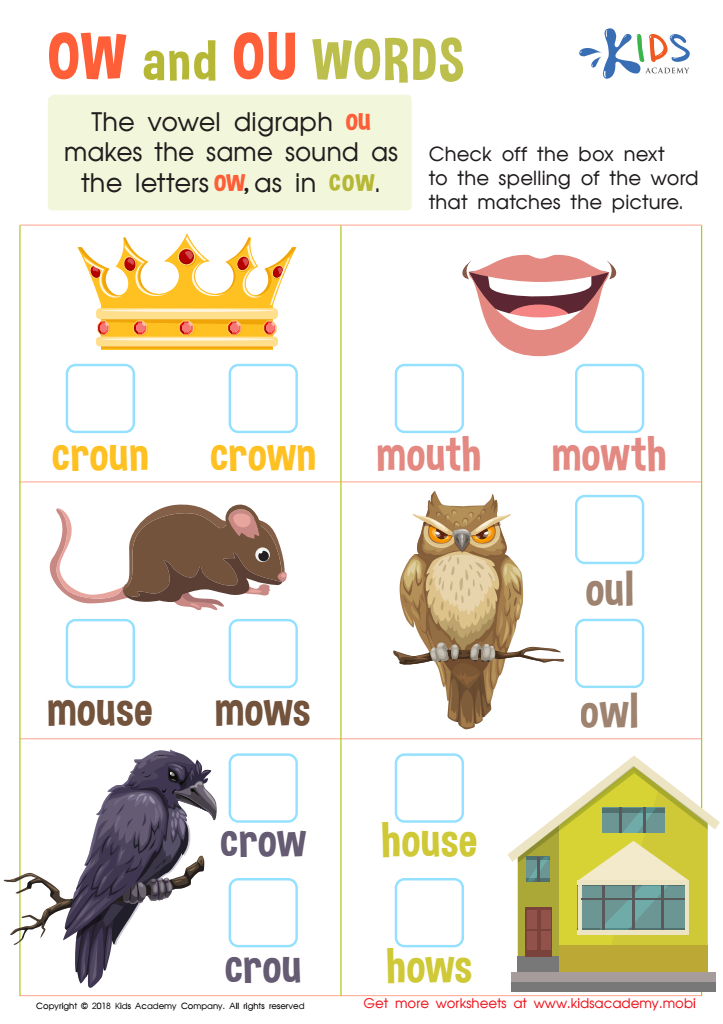
Reading: OW and OU Words Worksheet
Help your kids learn phonetics! Explain the different sounds and long/short variations. Emphasize that some vowel sounds are the same, e.g. ou = ow in cow. For practice, have them read aloud the words in the worksheet and check the box next to the spelling that matches the picture.
Reading: OW and OU Words Worksheet
Worksheet
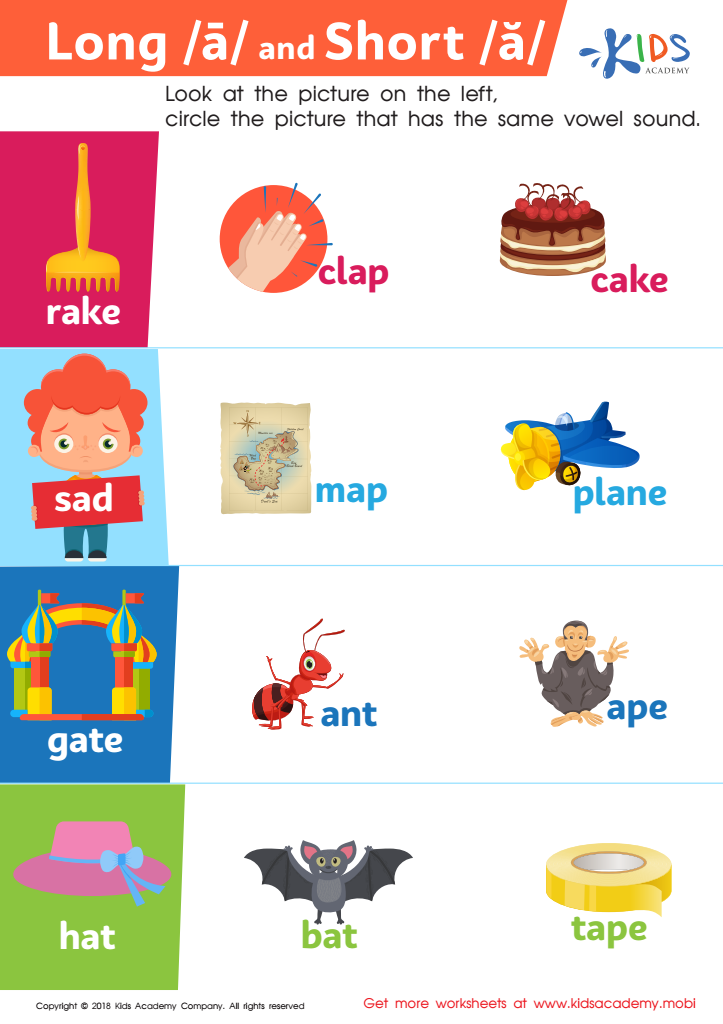
Reading: Long a and Short a Worksheet
This printable helps students practice distinguishing the long and short A sound. Pictures provide clues to read each word and students identify if it has a short or long sound. By completing this worksheet, children gain mastery of the phonics skill.
Reading: Long a and Short a Worksheet
Worksheet
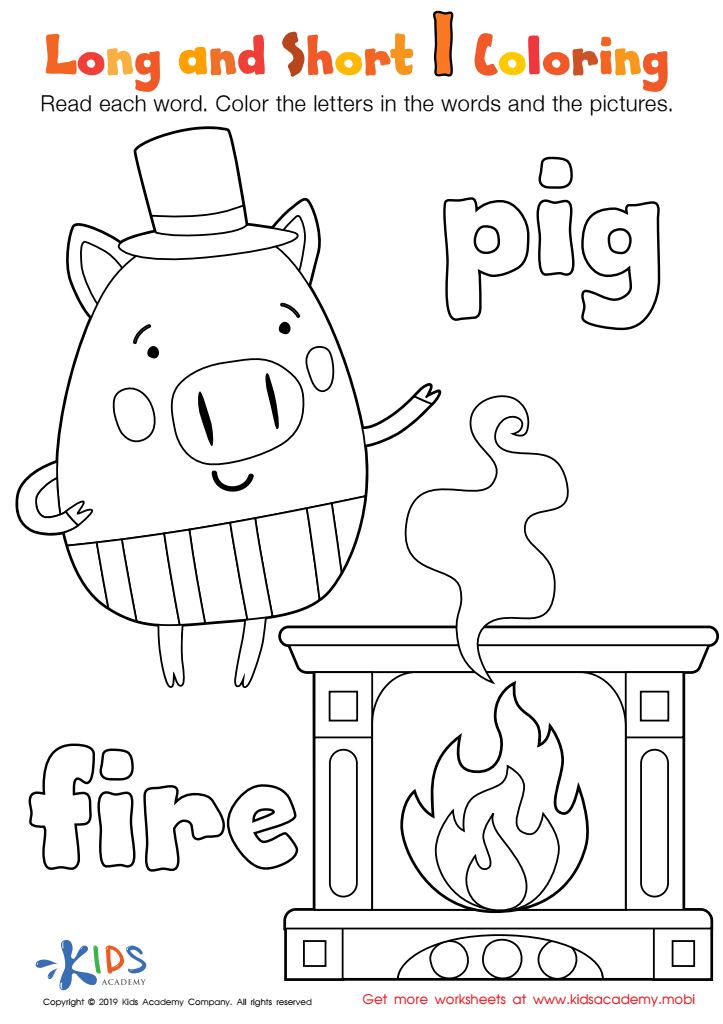
Long and Short I Worksheet
Print the worksheet and have the students read "pig" and "fire". Check for understanding the difference between long and short vowels. Color in words and pictures to make learning phonics fun! This exercise is perfect for introducing the topic to your students.
Download (PDF)
 Assign to My Students
Assign to My Students
Long and Short I Worksheet
Worksheet
Join Kids Academy for Free
Who is primarily going to use this learning content?








Understanding vowel sounds is crucial for children aged 6-7 as it lays the foundation for proficient reading and language development. Vowels are fundamental components of words, and their sounds can change based on context, influencing pronunciation and meaning. When children learn to recognize and decode these sounds early, they become more confident readers.
Parents and teachers should prioritize teaching vowel sounds because they greatly enhance phonemic awareness, which is essential for effective reading. This awareness helps children blend and segment sounds, allowing them to decode unfamiliar words independently. Mastery of vowel sounds promotes better spelling skills, aiding in the formation of words both in writing and reading since vowels are often the heart of word structure.
Moreover, understanding vowel sounds contributes to overall literacy development, enhancing vocabulary acquisition and comprehension skills, which are critical in academic growth. Children who master vowel sounds tend to read more fluently, resulting in increased enjoyment and motivation to read, which directly impacts their academic performance.
In a world rich with information, ensuring that children possess strong reading abilities grounded in vowel mastery empowers them for future learning endeavors and supports lifelong communication skills. This makes it imperative for both parents and teachers to emphasize this aspect of literacy education.








