Identifying story elements Normal Reading Fiction Worksheets for Ages 6-7
3 filtered results
-
From - To
Unlock your child's reading potential with our "Identifying Story Elements" worksheets for ages 6-7. Designed to build foundational literacy skills, these worksheets help young readers identify key elements of fiction, such as characters, settings, and plot. Through engaging activities and vibrant illustrations, children will enhance their comprehension and analytical abilities. Ideal for both classroom and home use, our worksheets are a fun and effective way to develop essential reading skills. Give your child the tools they need to become confident, independent readers with our expertly crafted resources tailored for normal reading levels.
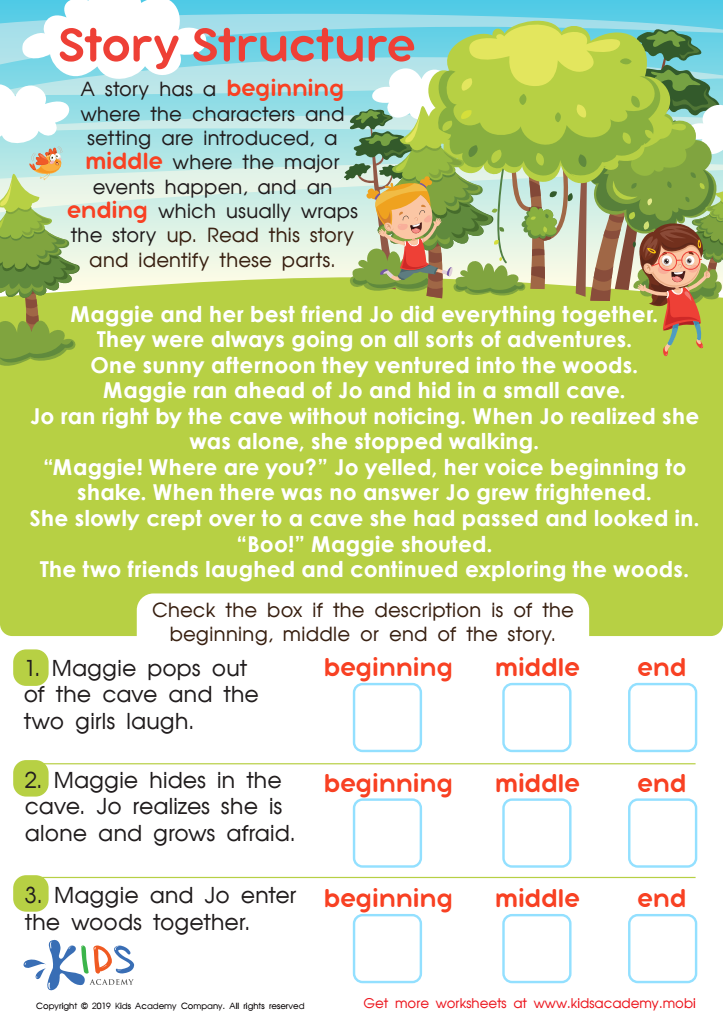
Story Structure Worksheet
 Assign to My Students
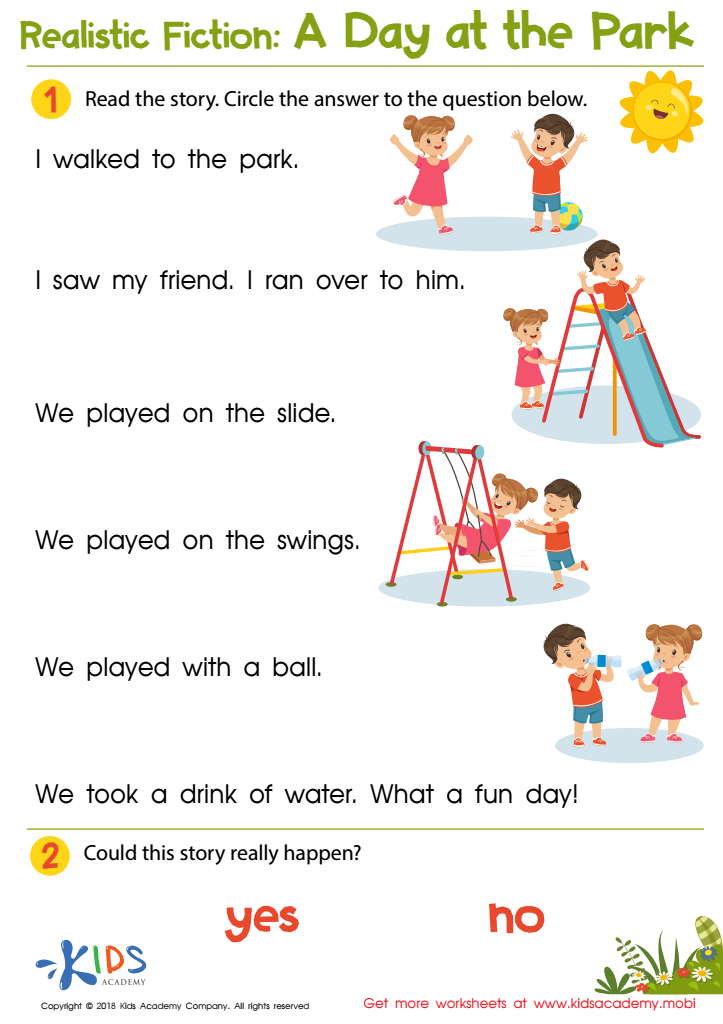
A Day at the Park Worksheet
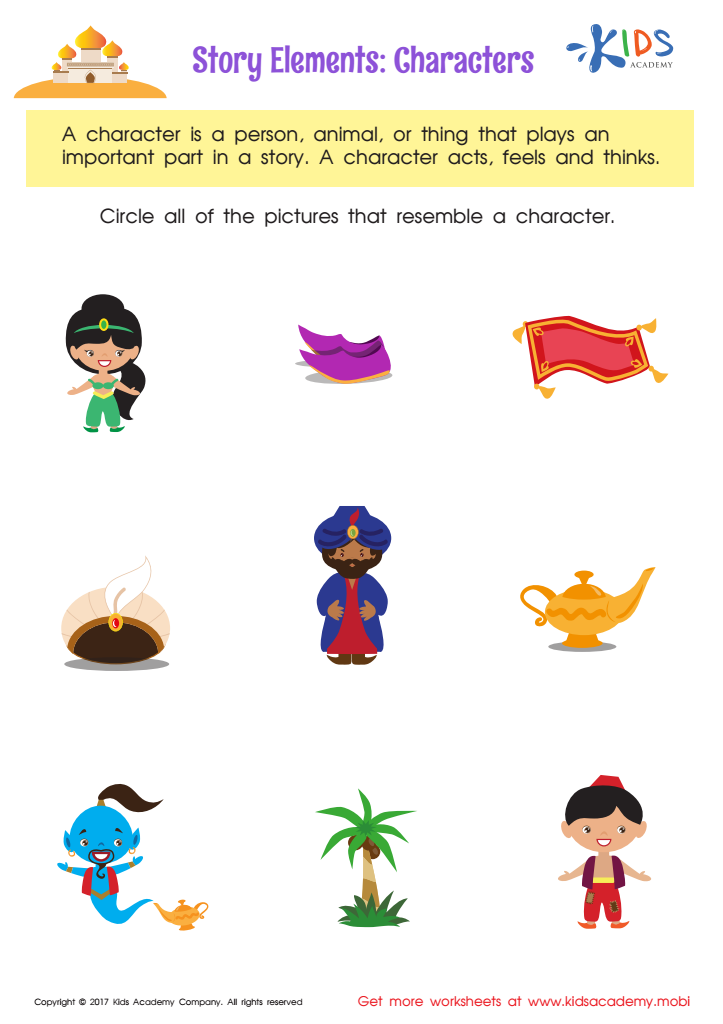
Story Elements Printable








Identifying story elements in fiction for children ages 6-7 is crucial for their early literacy and cognitive development. The basic components – characters, setting, plot, conflict, and resolution – form the building blocks of understanding literature. When young readers grasp these elements, they enhance their comprehension and retention abilities, paving the way for more complex reading skills in the future.
For parents and teachers, focusing on story elements can foster a child's analytical thinking and creativity. Recognizing characters and their traits helps children empathize and relate to different perspectives, fostering emotional intelligence. Understanding the setting provides context, helping them visualize and make sense of the story, while examining the plot encourages logical thinking and sequential processing.
Moreover, discussing conflicts and resolutions can teach problem-solving skills and demonstrate cause-and-effect relationships. It is also an opportunity to instill moral values and better decision-making abilities by reflecting on the outcomes of the story.
Engaging with these elements together can deepen the bond between parents, teachers, and children, as it encourages meaningful conversations and shared experiences. By prioritizing the identification of story elements, adults can greatly contribute to a child’s academic success and love for reading.







