Visual interpretation Normal Reading Fiction Worksheets for Ages 6-7
4 filtered results
-
From - To
Enhance your child's reading skills with our engaging Visual Interpretation Normal Reading Fiction Worksheets designed for ages 6-7. These printable worksheets facilitate a deeper understanding of stories by encouraging young readers to analyze illustrations, make connections, and interpret visual cues. Each activity is crafted to spark creativity and critical thinking, helping children to enhance their comprehension and storytelling abilities. With themes aligned to popular children's literature, our resources promote interactive learning by blending reading with visual art. Perfect for classroom or home use, these worksheets provide the ideal foundation for developing independent readers who can visualize and interpret narratives effectively!
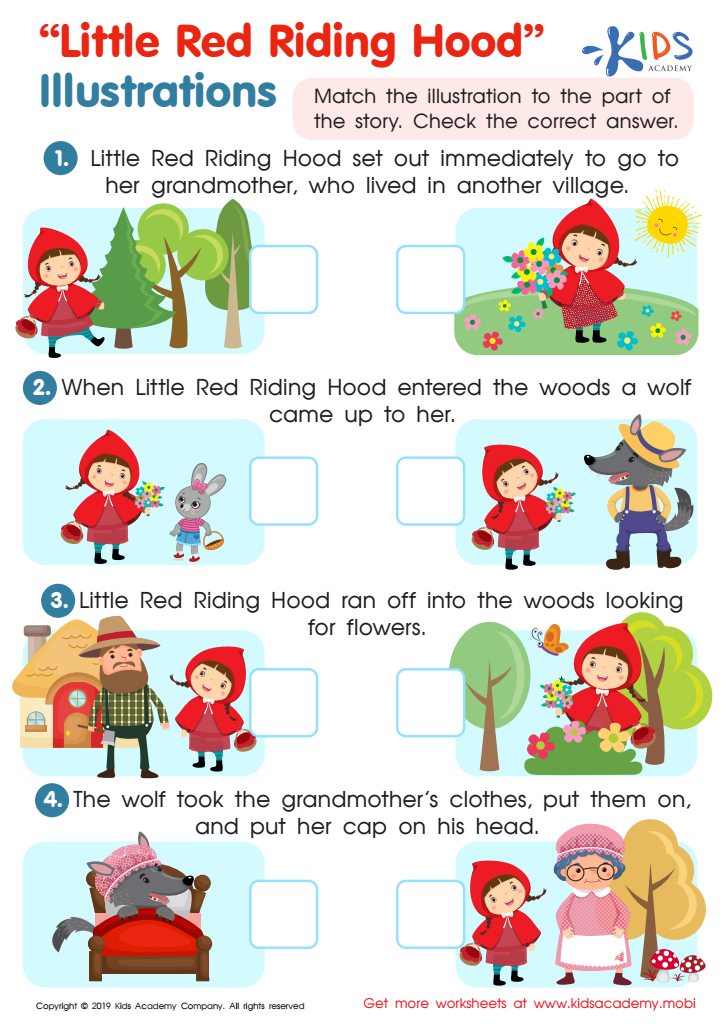
Little Red Riding Hood: Illustrations Worksheet
 Assign to My Students
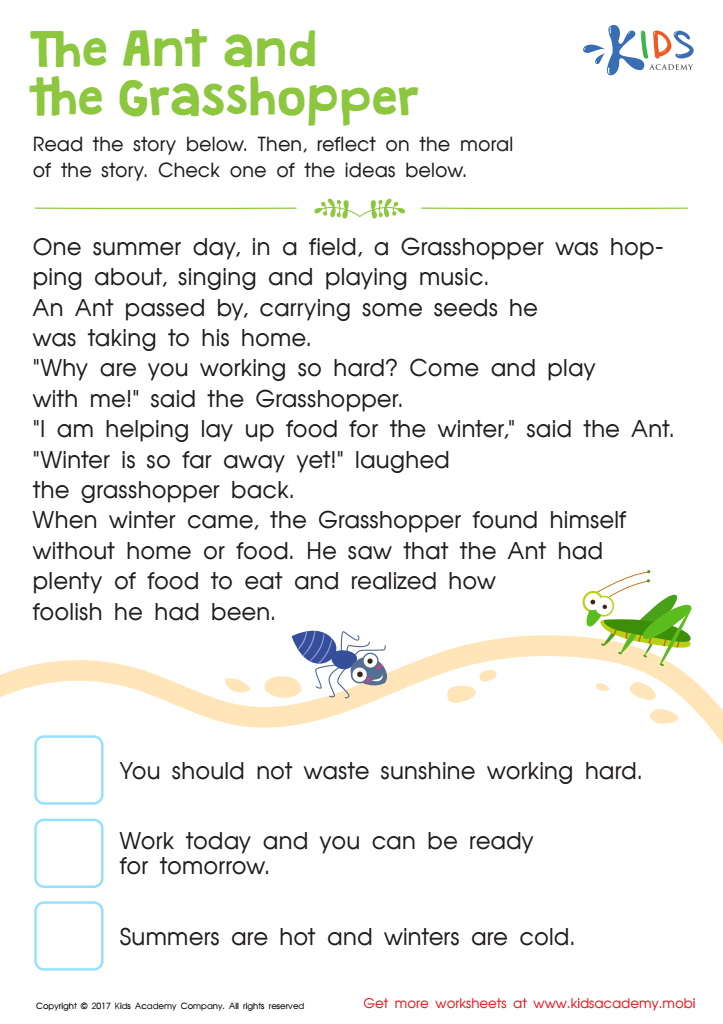
The Ant and The Grasshopper Printable
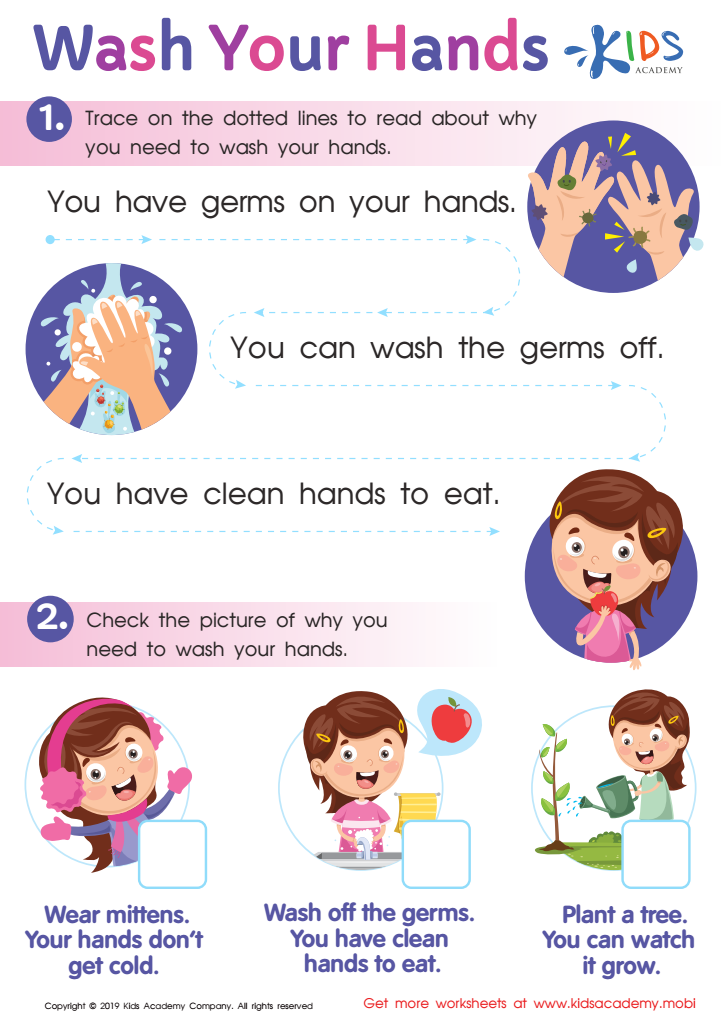
Wash Your Hands Worksheet
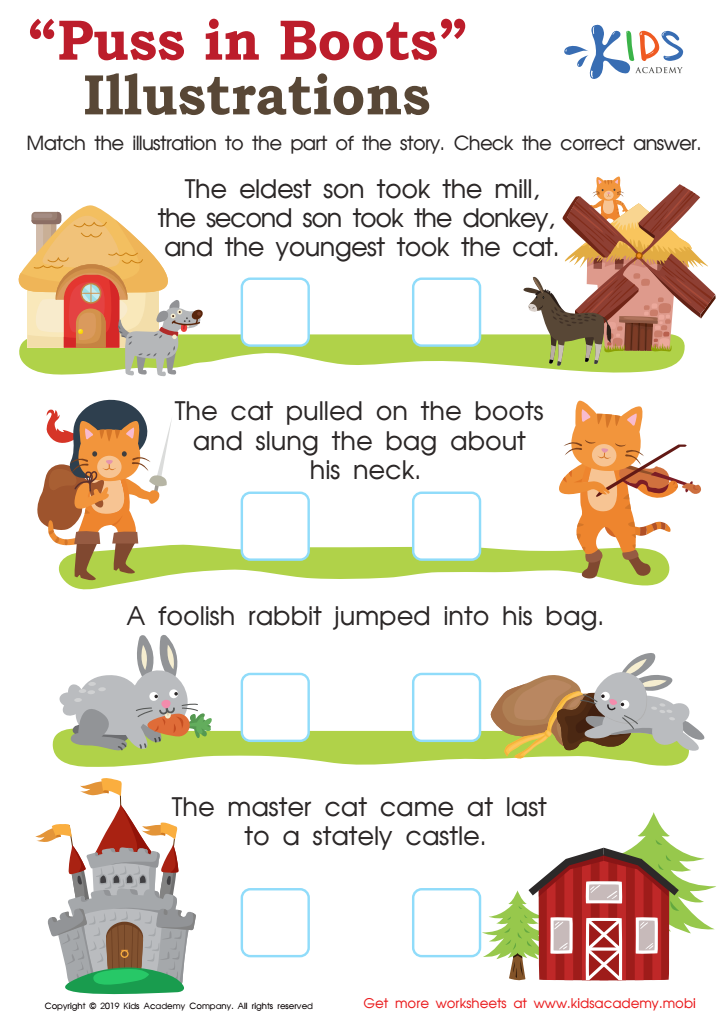
Puss in Boots Illustrations Worksheet


.jpg)





Understanding visual interpretation in reading fiction is crucial for children ages 6-7, as it significantly enhances their literacy skills and cognitive development. At this age, children are becoming more independent readers, and engaging with visual elements—such as illustrations, diagrams, and graphic formats—helps them make connections between text and imagery. This process not only aids comprehension but also fosters critical thinking as children learn to analyze how visuals support or enhance the narrative.
Parents and teachers should care about this aspect of reading because visual literacy encourages children to decode information in various formats, a skill increasingly important in our visually-driven world. Children who recognize how illustrations convey mood, setting, and character can enhance their understanding and enjoyment of stories, which can spark a lifelong love of reading.
Moreover, visual interpretation cultivates creativity, as children learn to envision scenes and scenarios in their minds. This practice encourages them to express their own ideas visually, promoting a holistic approach to learning that bridges art and language.
By emphasizing visual interpretation in fiction reading, adults can support children's overall literacy development and prepare them for the diverse ways in which stories and information are shared in today's society.







