Filters

7 filtered results

Clear all filters
Favorites
With answer key
Interactive

7 filtered results

Difficulty Level

Grade


Enhance your child's language skills with our Vocabulary Building Normal Reading Fiction Worksheets, designed specifically for ages 6-7. These engaging worksheets promote reading comprehension and vocabulary development through fun and relatable stories. Each activity encourages kids to explore new words in context, fostering an early love for reading. With diverse themes and colorful illustrations, children will enjoy the process of learning. Ideal for both classroom settings and at-home practice, our worksheets are perfect to support literacy growth. Help your young readers expand their vocabulary and thrive in their educational journey with our thoughtfully crafted resources! Start exploring today!

Check out this FREE Trial Lesson on Reading Fiction for age 6-7!

Mystery and Fantasy Stories

Favorites
With answer key
Interactive
  • 6-7
  • Vocabulary Building
  • Reading Fiction
  • Normal
Poem: My New Kite Worksheet

Poem: My New Kite Worksheet

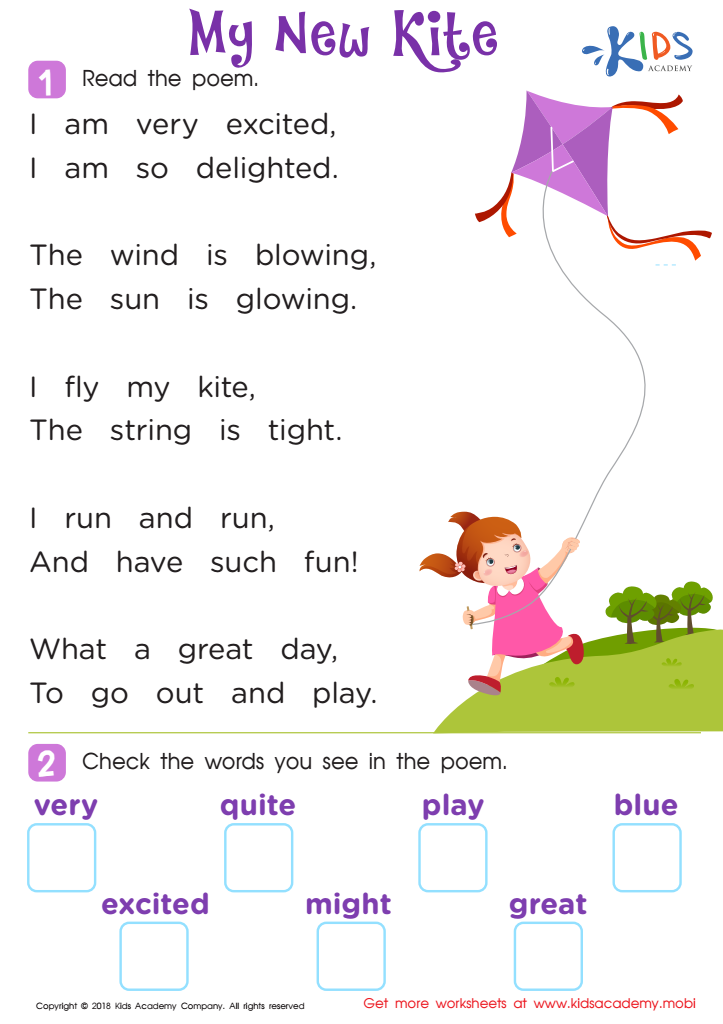
Read a cheerful poem with your child and have them check the boxes next to the words that appear. Then, ask them to identify rhyming words, noting that these won't appear at the bottom of the page. This is a delightful reading activity to help your child remember what they read.
Poem: My New Kite Worksheet
Worksheet
What Am I? Worksheet

What Am I? Worksheet

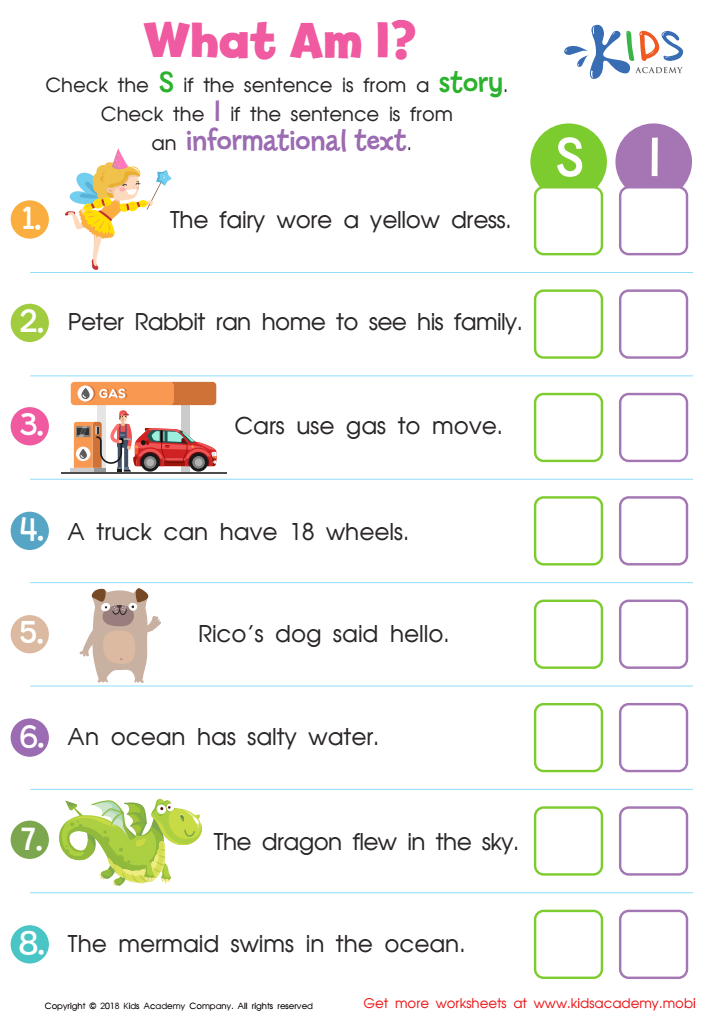
This worksheet assesses students' ability to differentiate between stories and texts they read for facts. Students learn to distinguish between reading for pleasure and reading for information. It includes statements from both a story and an informational text, and students must decide what type of text it is.
What Am I? Worksheet
Worksheet
Three Little Pigs Vocabulary Worksheet

Three Little Pigs Vocabulary Worksheet

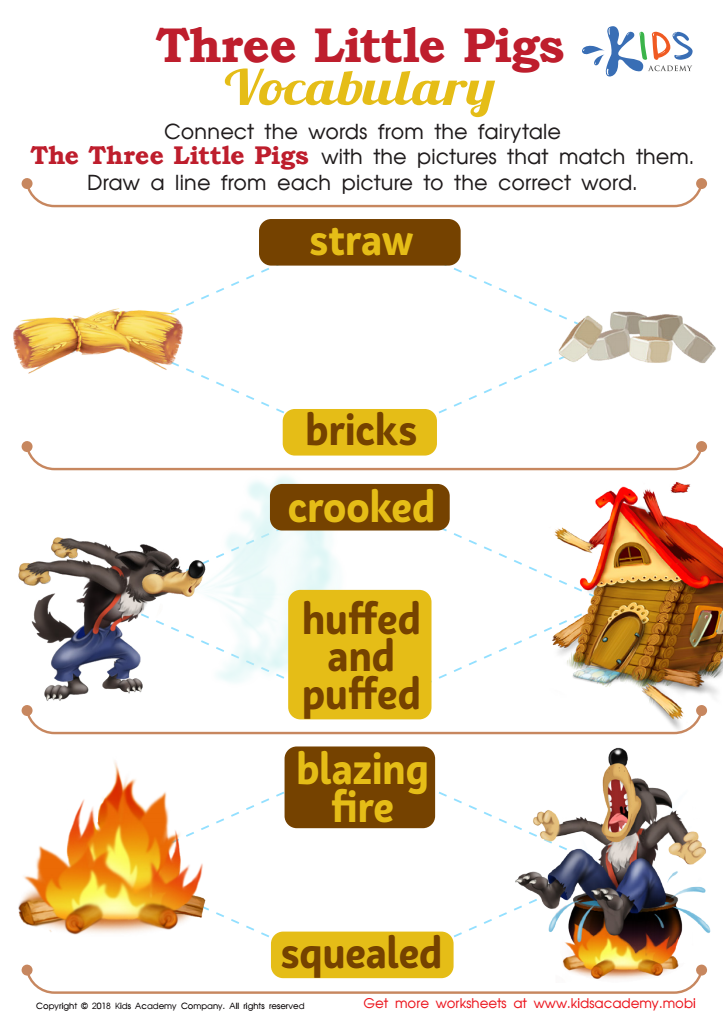
Read the Three Little Pigs to your children. Have them use the tracing sheet to connect the story words with the pictures. This is a fun and educational way to help them build their vocabulary.
Three Little Pigs Vocabulary Worksheet
Worksheet
Little Elephant's Birthday Worksheet

Little Elephant's Birthday Worksheet

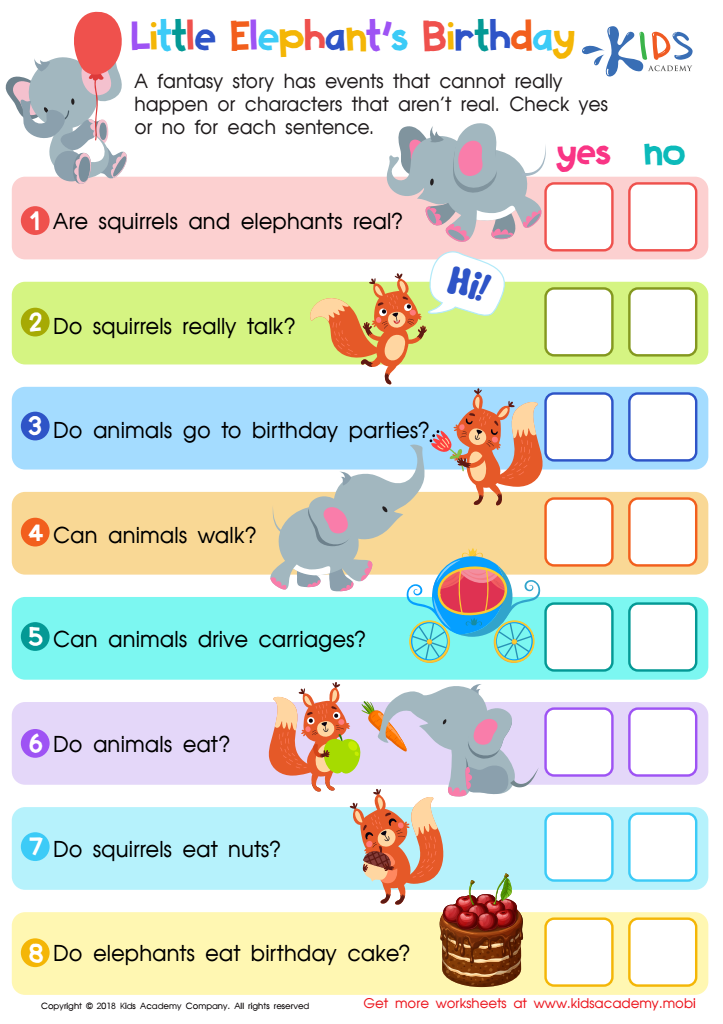
It's Little Elephant's birthday! Help your students celebrate with this fun worksheet full of colors and pictures. Deciding which questions are facts and which are fiction will help them differentiate between fantasy stories and reality. Let them have fun learning why certain elements of fantasy can't be true!
Little Elephant's Birthday Worksheet
Worksheet
The Boy Who Cried Fox Worksheet

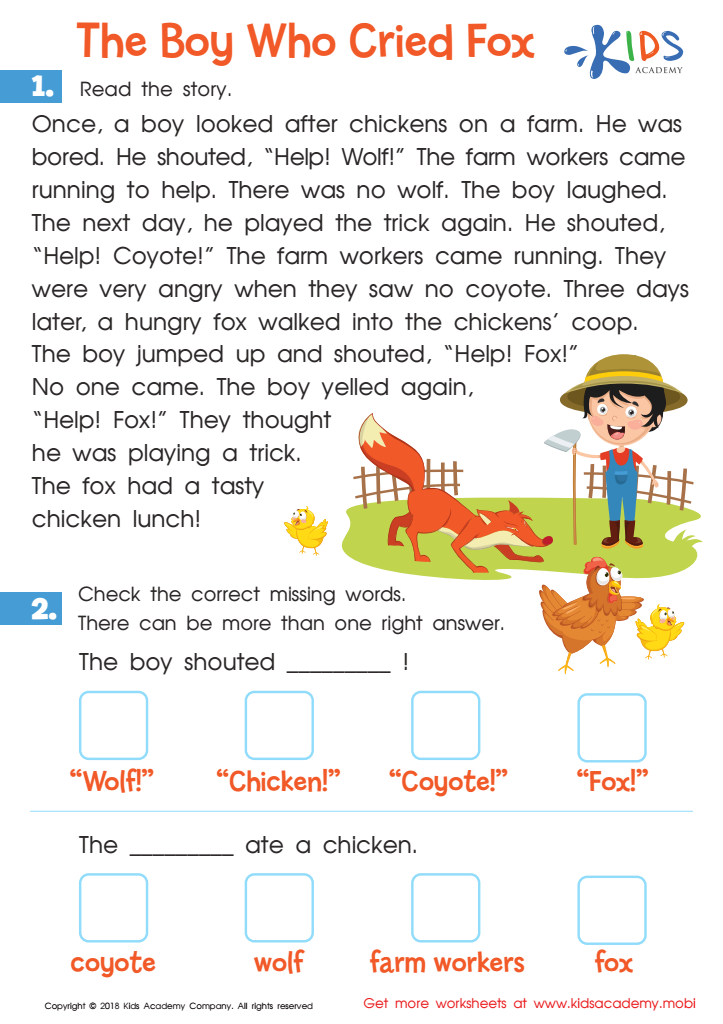
The Boy Who Cried Fox Worksheet

This worksheet encourages students to recall details from a story and answer questions to test their comprehension. Perfect for reading lessons, enrichment, or extra help.
The Boy Who Cried Fox Worksheet
Worksheet
Sight Words: A Day at the Park Worksheet

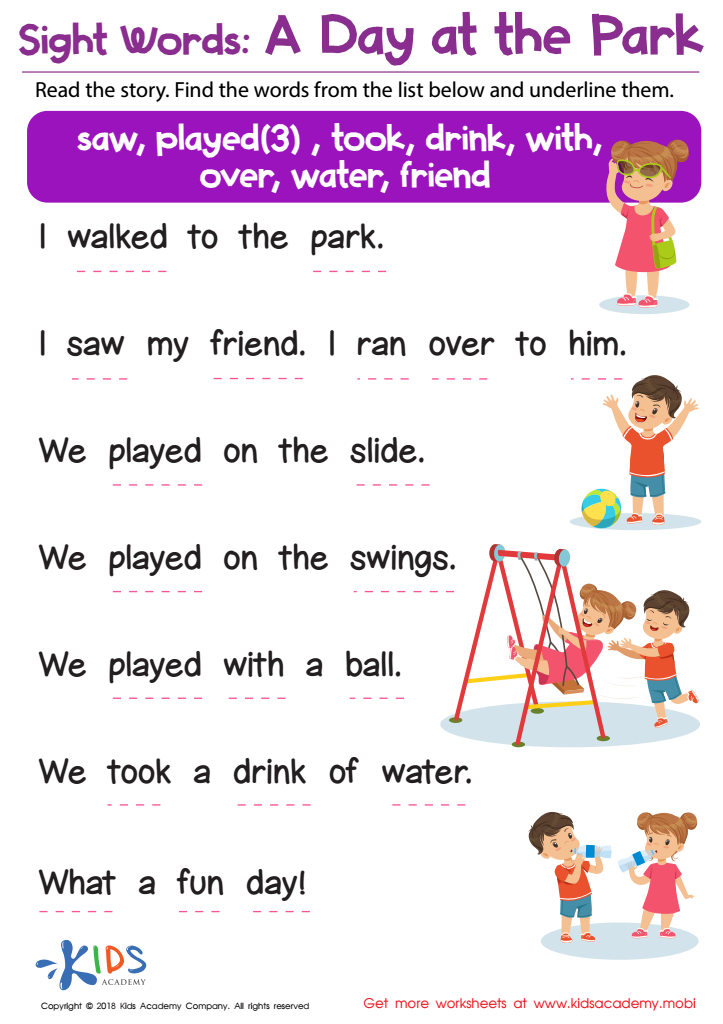
Sight Words: A Day at the Park Worksheet

This worksheet offers kids practice reading sight words in a story. With picture clues and repetitive wording, they'll work with words that can't be sounded out to reinforce their learning. This is an important step in the reading process that helps kids become more confident readers.
Sight Words: A Day at the Park Worksheet
Worksheet
Worksheet: The Boy Who Cried Wolf

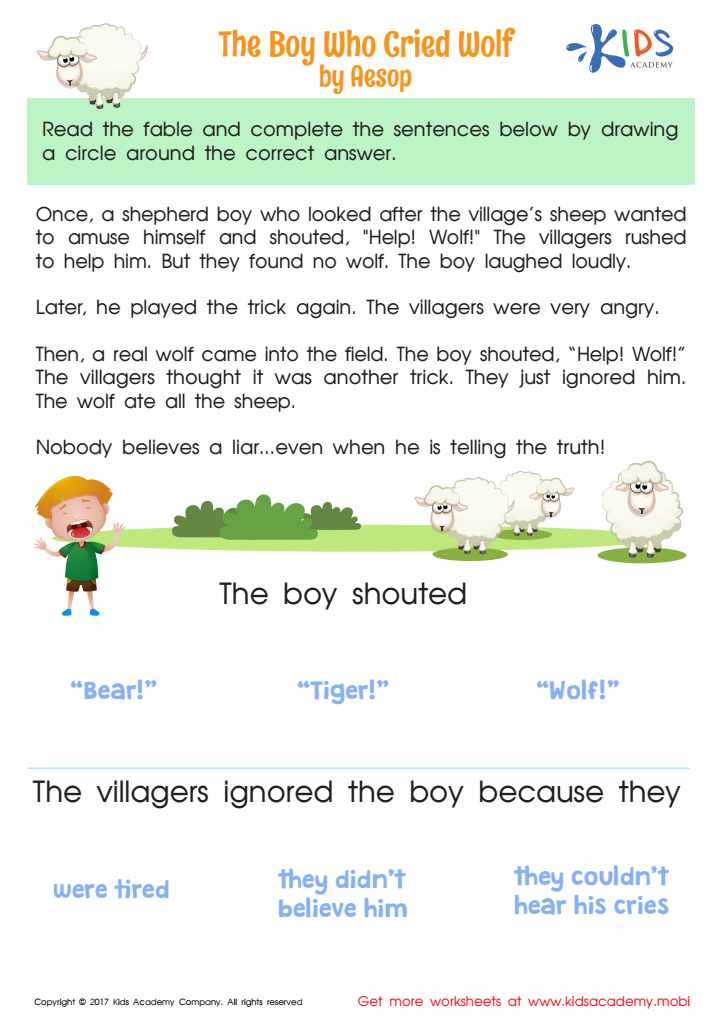
The Boy Who Cried Wolf Worksheet

Test your child's reading comprehension with The Boy Who Cried Wolf worksheet. Read the fable, then answer the questions. Use the text to help your child check their answers are correct. Boost reading skills in a fun, interactive way!
The Boy Who Cried Wolf Worksheet

Worksheet


Vocabulary building through reading fiction for children aged 6-7 is essential for their overall language development and academic success. At this age, children are becoming more confident readers and are ready to engage with diverse narratives. Fictional stories provide rich contexts that introduce new words and phrases, enhancing comprehension and expressive skills.

When parents and teachers focus on vocabulary building in reading, they open doors to improved literacy skills. Strong vocabulary enhances listening, speaking, reading, and writing abilities, which are critical for effective communication. Fiction offers opportunities for children to encounter words in context, making it easier for them to grasp meanings and uses.

Moreover, engaging with stories fosters imagination and critical thinking, helping children to make connections between words and their meanings. This not only boosts literacy but also nurtures empathy and emotional intelligence as they explore different characters and situations.

In addition, building vocabulary at an early age lays a strong foundation for later academic achievements. Children with robust vocabularies typically excel in standardized tests, reading comprehension, and writing, which can positively impact their overall educational journey. By prioritizing vocabulary development through fiction, parents and teachers are contributing to a well-rounded and successful learning experience.