Rhyming skills development Normal Rhyming Words Worksheets for Ages 6-7
3 filtered results
-
From - To
Enhance your child's reading abilities with our Rhyming Skills Development worksheets designed specifically for ages 6-7. These engaging and interactive activities help children recognize and produce rhyming words, a vital skill for early literacy. Our normal rhyming words worksheets feature fun exercises that not only stimulate learning but also foster creativity and language play. Perfect for classroom settings or at-home practice, these worksheets encourage kids to explore sounds, reinforcing phonemic awareness and vocabulary. Empower your young learners to become confident readers and writers with our thoughtfully crafted rhyming activities that make learning enjoyable! Download now and watch their skills soar!
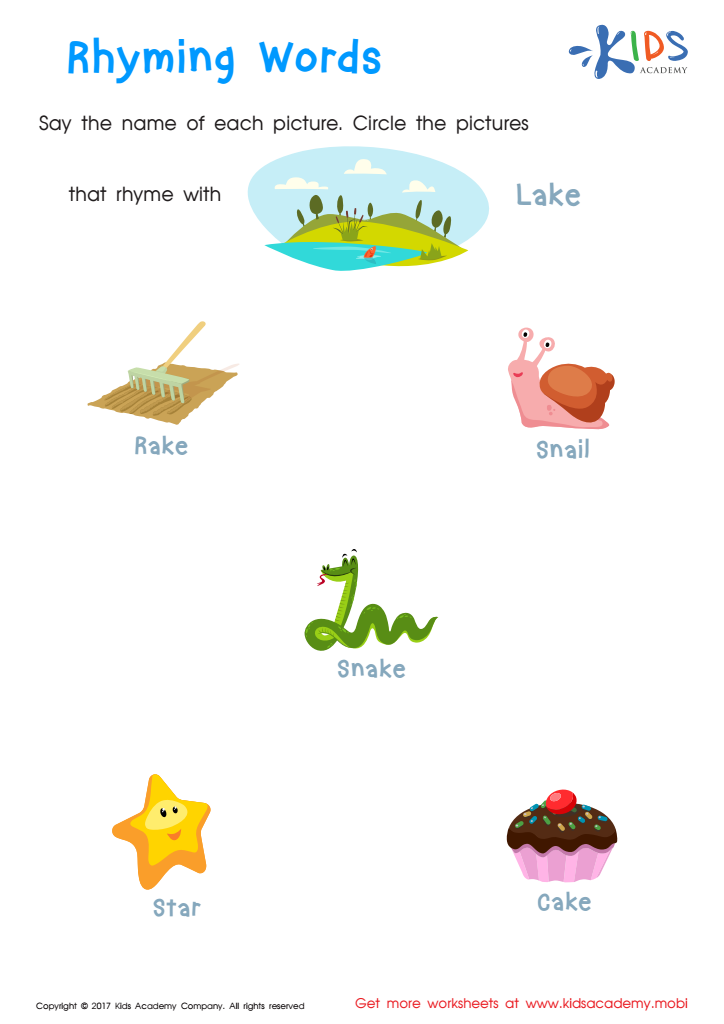
Rhyming Words Rhyming Worksheet
 Assign to My Students
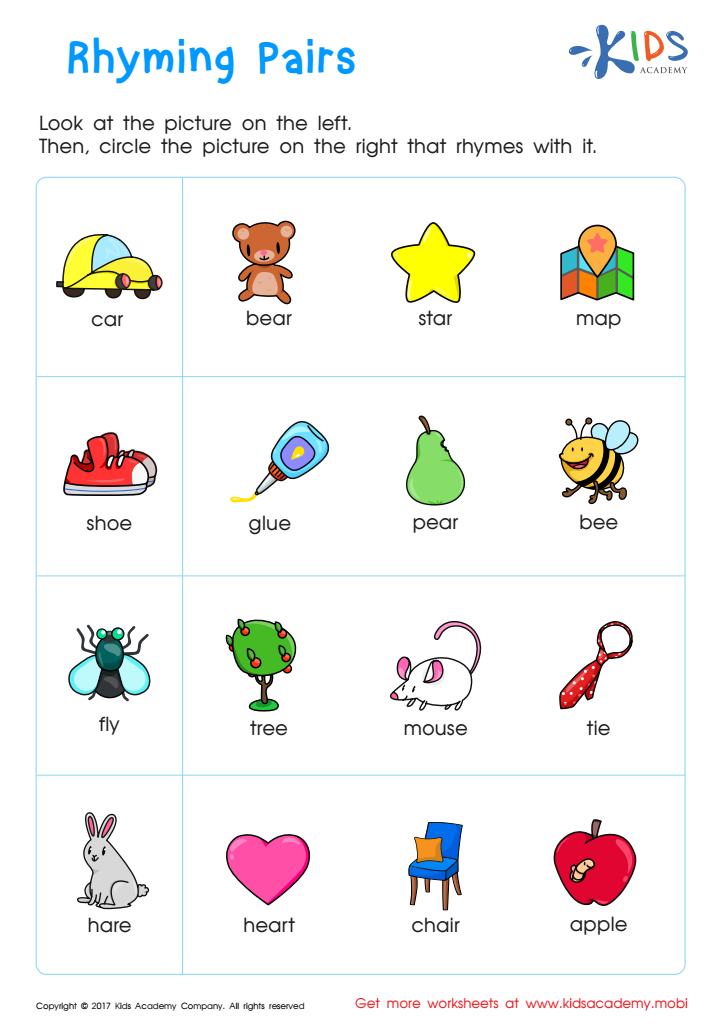
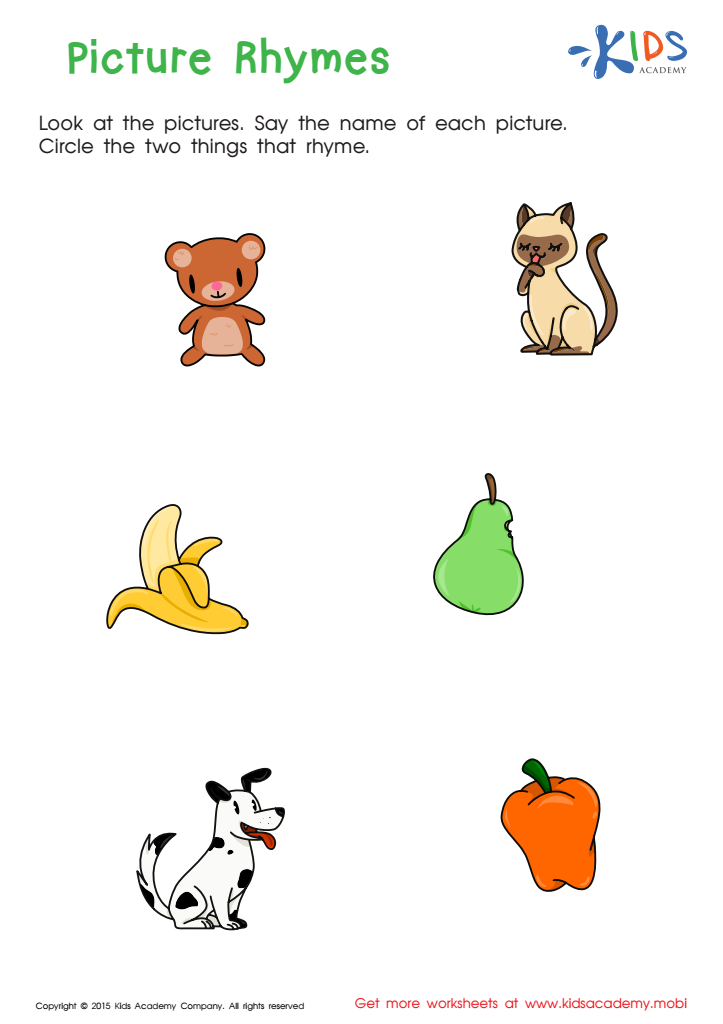
First Words: Picture Rhymes Worksheet







Rhyming skills development is vital for children aged 6-7, as it significantly impacts their literacy and language skills. At this age, children are refining their phonemic awareness, which is the ability to recognize and manipulate sounds in spoken words. Understanding rhymes helps children to hear similarities and differences in sounds, thus improving their spelling and reading abilities.
Engaging in rhyming activities—such as songs, poems, or playful games—enhances vocabulary development, as it introduces new words in a fun and memorable way. When children recognize and produce rhymes, they build critical thinking and cognitive skills as they uncover patterns in language.
Moreover, rhyming fosters creativity and expression, allowing children to experiment with language in a playful manner. It can also promote social interactions when done in group settings, as children work collaboratively to create rhymes or engage in rhyming games.
Ultimately, parents and teachers should prioritize rhyming skills development because it lays a strong foundation for reading and writing proficiency. By incorporating rhyming into daily activities, caregivers can nurture a child’s enthusiasm for learning and help them develop essential language skills that will benefit them throughout their academic journey.








