Knowledge application Normal Science Worksheets for Ages 6-7
3 filtered results
-
From - To
Discover our engaging "Knowledge Application Normal Science Worksheets" designed specifically for ages 6-7. These worksheets encourage young learners to apply their scientific knowledge in fun and interactive ways. Featuring colorful illustrations and age-appropriate activities, they help reinforce critical thinking and comprehension skills while exploring fundamental science concepts. Each worksheet promotes hands-on learning, enabling children to experiment, observe, and inquire, fostering a love for science from an early age. Perfect for classroom settings or home learning, these resources support teachers and parents in inspiring the next generation of curious minds. Visit our site to download and spark your child's scientific imagination today!
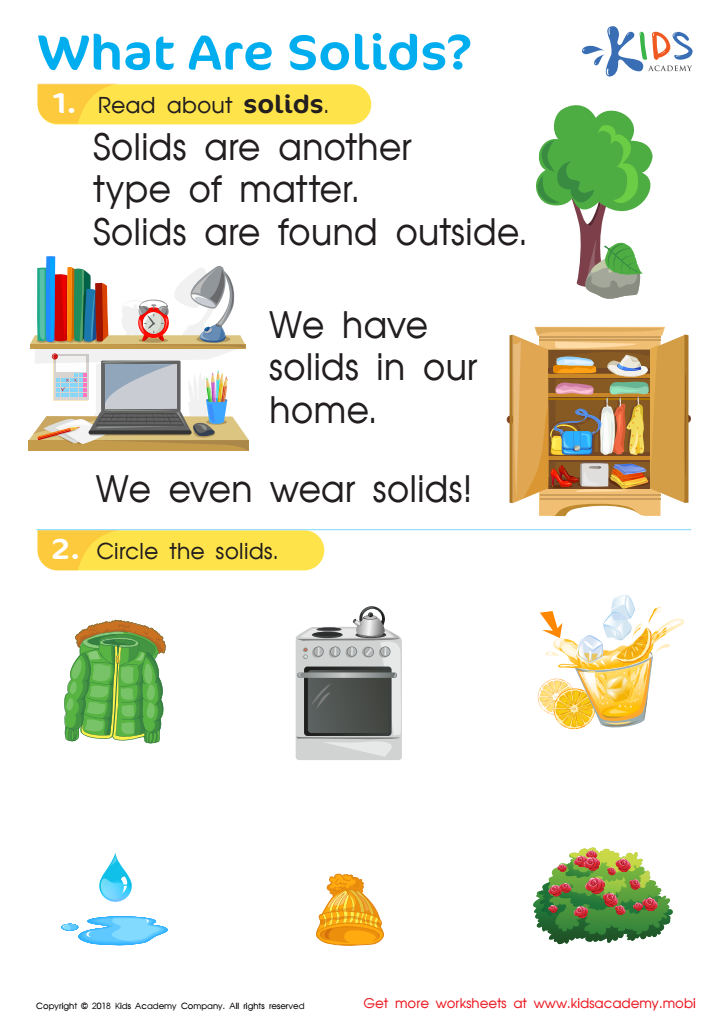
What Are Solids? Worksheet
 Assign to My Students
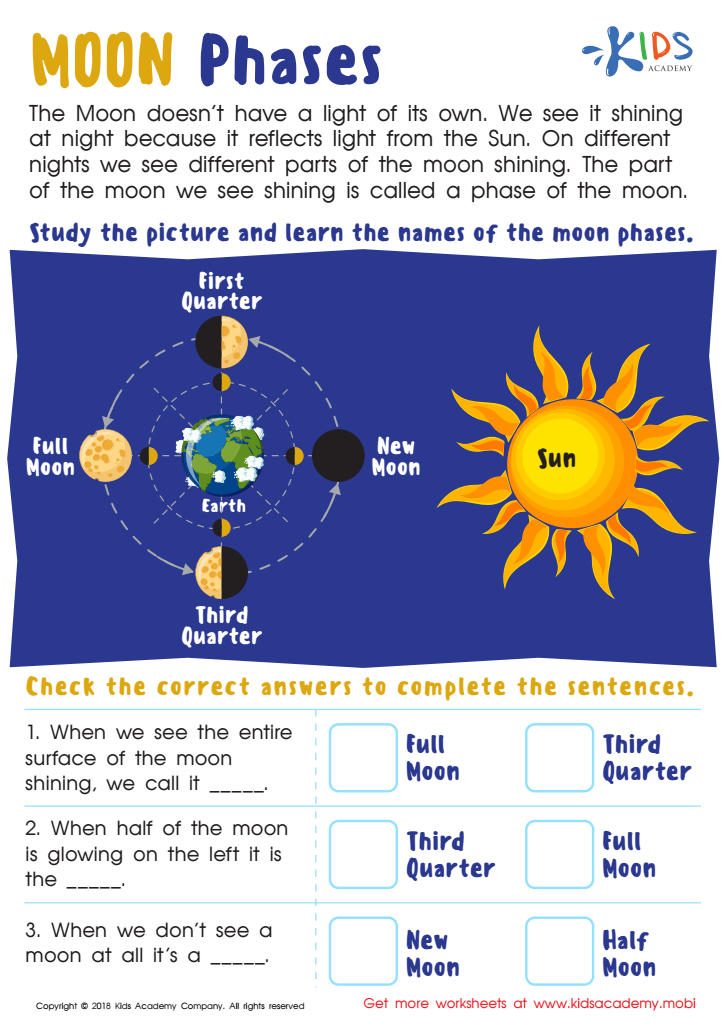
Moon Phases Worksheet
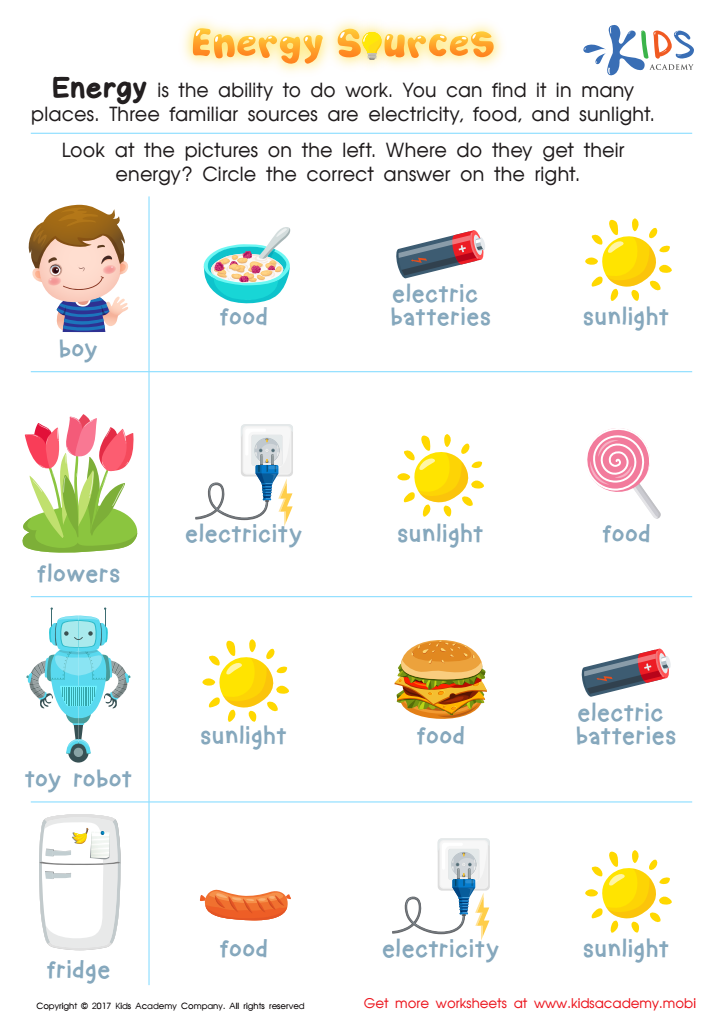
Energy Sources Printable







Knowledge application in normal science for ages 6-7 is crucial for fostering a child's understanding of the world around them. At this developmental stage, children are naturally curious and eager to explore. This period provides an excellent opportunity for parents and teachers to nurture this curiosity through science by encouraging children to ask questions, conduct simple experiments, and explore phenomena.
Grassroots learning encourages critical thinking and problem-solving skills essential for later academic success and everyday life. When children apply knowledge learned in the classroom to real-world situations, they develop a deeper understanding of scientific concepts and reinforce their learning through hands-on experiences. This age group thrives on engaging activities that promote exploration, observation, and reasoning.
Moreover, early exposure to normal science builds a foundational appreciation for science that can inspire future pursuits in scientific fields or STEM careers. Effective science education in these formative years fosters a love of learning and empowers children to become confident thinkers and creators. For parents and teachers, supporting knowledge application lays the groundwork for a well-rounded education, ensuring children grow into inquisitive adults capable of engaging with complex global issues. Investing in early scientific learning is investing in a child's cognitive and emotional development.







