Plant identification Normal Science Worksheets for Ages 6-7
4 filtered results
-
From - To
Unlock the wonders of nature with our Plant Identification Normal Science Worksheets designed for ages 6-7. These engaging worksheets help young learners recognize and name common plants while developing crucial observational skills. Perfectly tailored for inquisitive minds, each activity combines fun illustrations with easy-to-follow instructions, fostering a love for science and nature from a young age. Through hands-on exercises, children will not only learn to identify various plants but also understand simple ecological concepts. Ideal for home or classroom use, our worksheets make science learning enjoyable and interactive. Explore now and cultivate a budding interest in botany!
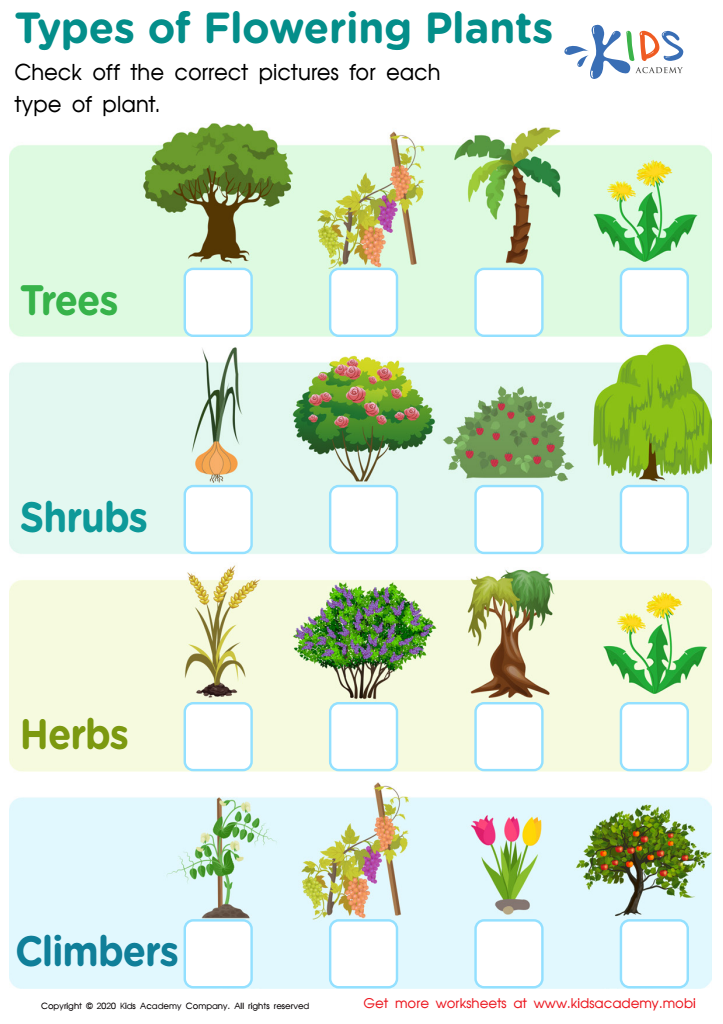
Types of Flowering Plants Worksheet
 Assign to My Students
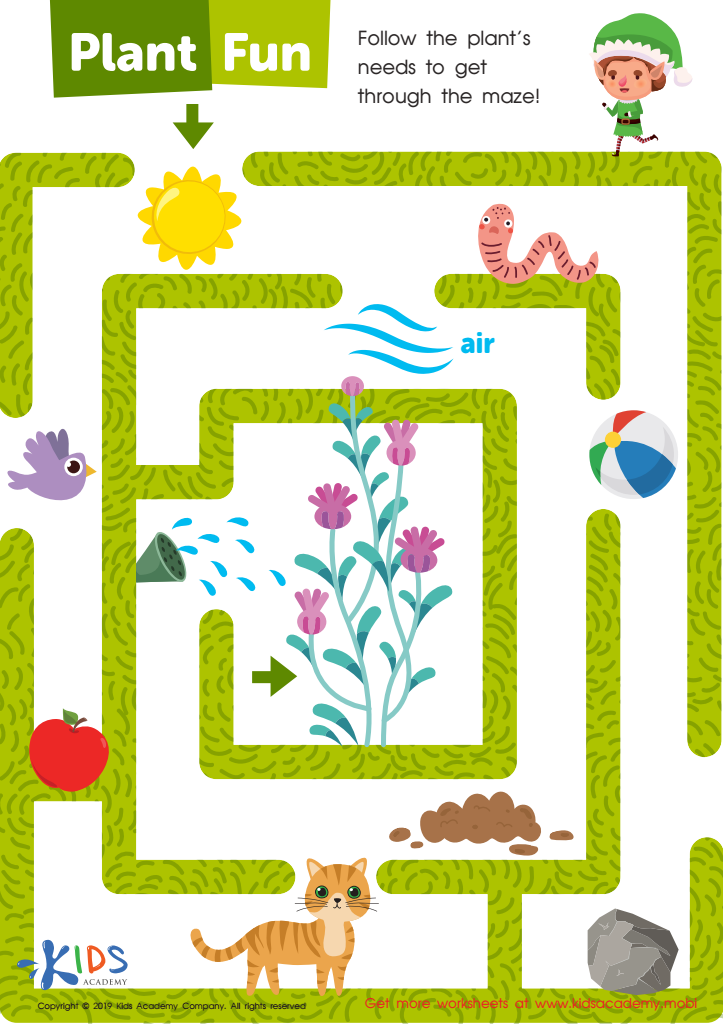
Plant Fun Worksheet
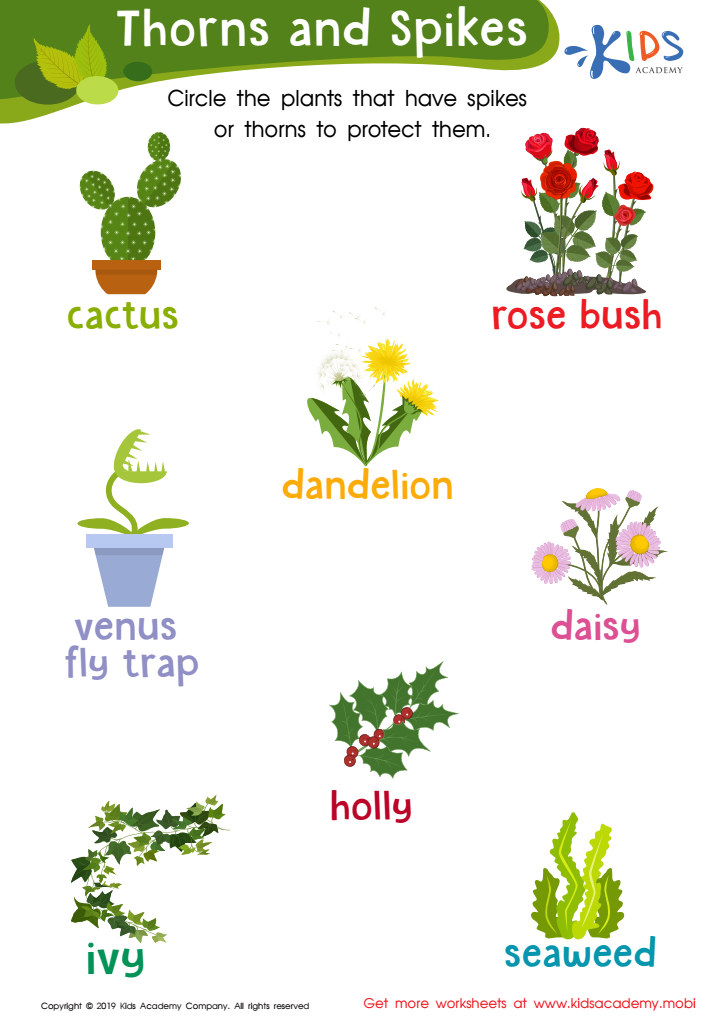
Thorns and Spikes Worksheet
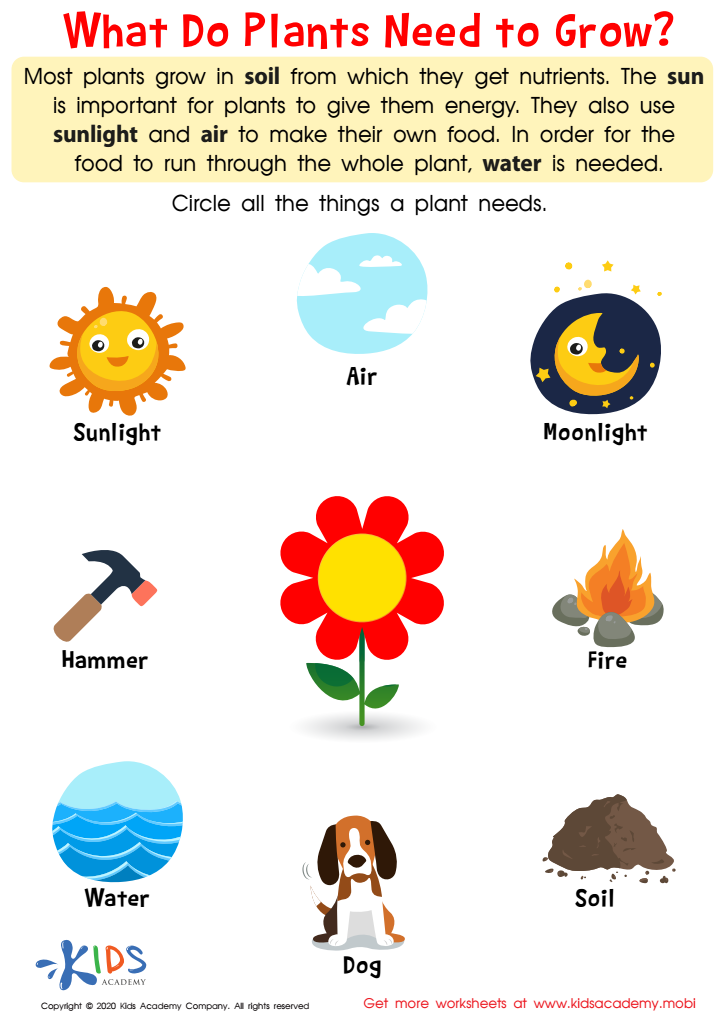
What Do Plants Need to Grow Worksheet








Plant identification is an important skill that offers numerous benefits for young children, and there's a compelling case for why parents and teachers of 6-7-year-olds should prioritize it. At this tender age, children are naturally curious about the world around them, and exposing them to plant identification taps into this curiosity while providing valuable educational experiences.
Firstly, learning to identify plants enhances a child’s observational skills and attention to detail. Recognizing differences in leaves, stems, flowers, and fruits teaches them to observe closely and appreciate the diversity in nature.
Secondly, plant identification fosters a connection to the natural environment, cultivating a sense of responsibility and appreciation for the Earth's ecosystems. This early engagement lays the groundwork for environmentally conscious behaviors later in life.
Additionally, studying plants supports foundational knowledge in biology and science, helping young learners grasp basic concepts such as growth, photosynthesis, and ecosystems. These lessons align well with early science curricula and can spark an interest in STEM subjects.
Finally, plant identification activities often involve outdoor exploration, encouraging physical activity and reducing screen time. This can improve overall well-being, mental health, and happiness in children.
In summary, plant identification for young children not only enhances their academic and observational skills but also nurtures their environmental awareness and physical well-being.







