Observational skills Normal Our Planet and Environment Worksheets for Ages 6-7
6 filtered results
-
From - To
Enhance your child's observational skills with our engaging "Our Planet and Environment Worksheets," designed specifically for ages 6-7. These thoughtfully crafted worksheets foster curiosity about the natural world, encouraging young learners to explore their surroundings. Through hands-on activities, children will develop critical observation techniques while learning about ecosystems, weather patterns, and the importance of protecting our planet. Our resources promote interactive learning, making science fun and accessible. Perfect for parents and teachers, these worksheets inspire a sense of wonder and responsibility for the environment, all while sharpening essential skills. Dive into the world of discovery today!
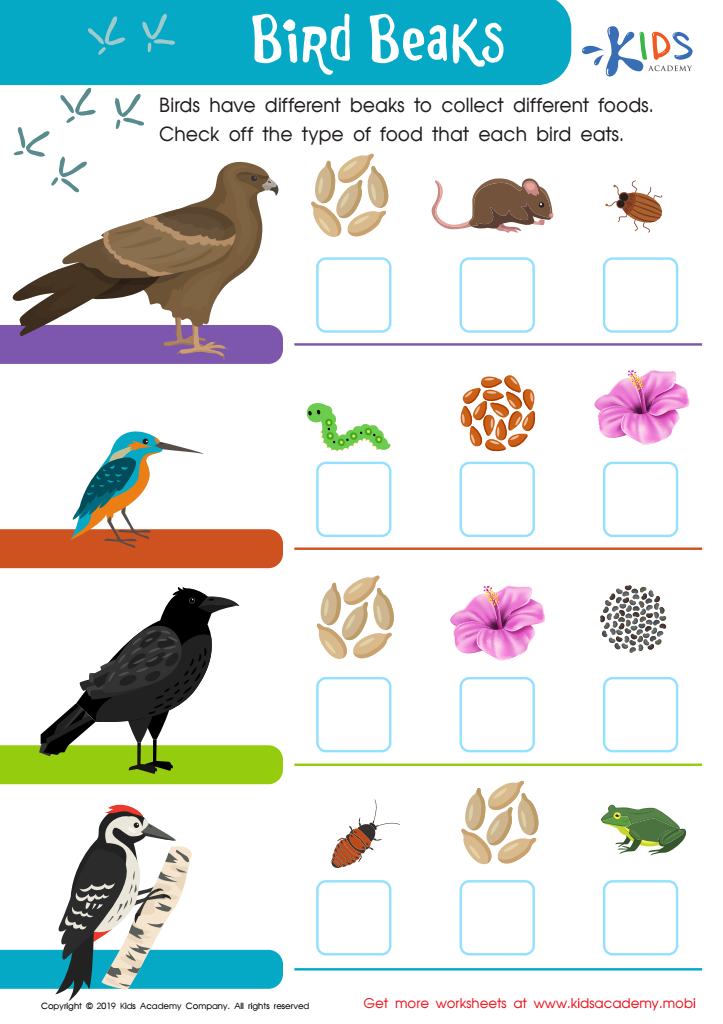
Bird Beaks Worksheet
 Assign to My Students
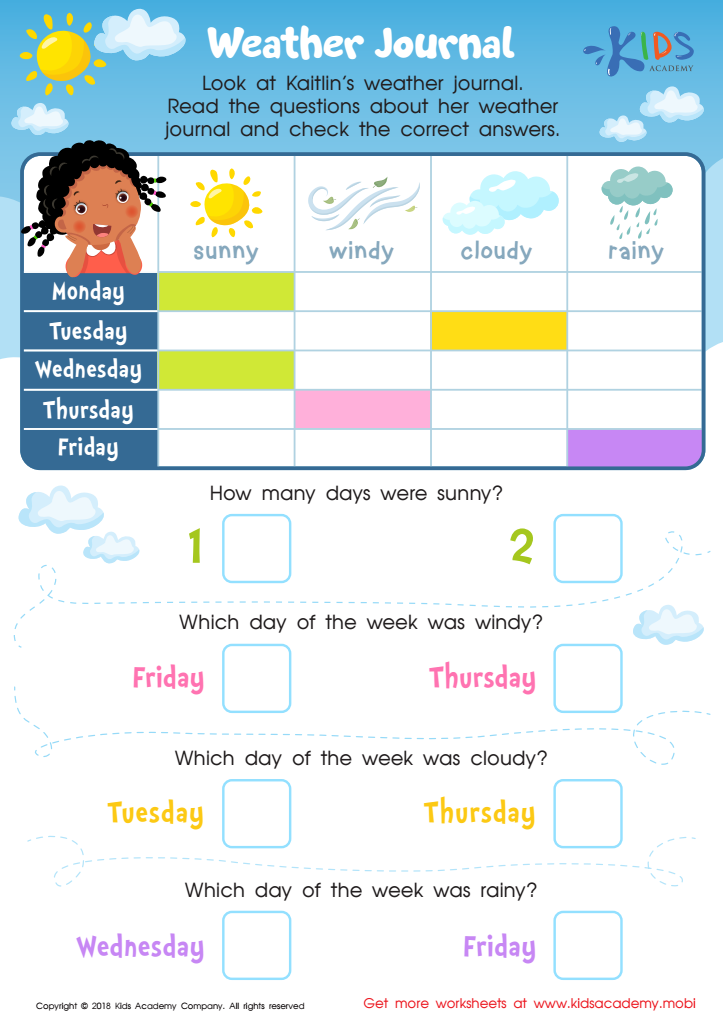
Weather Journal Worksheet
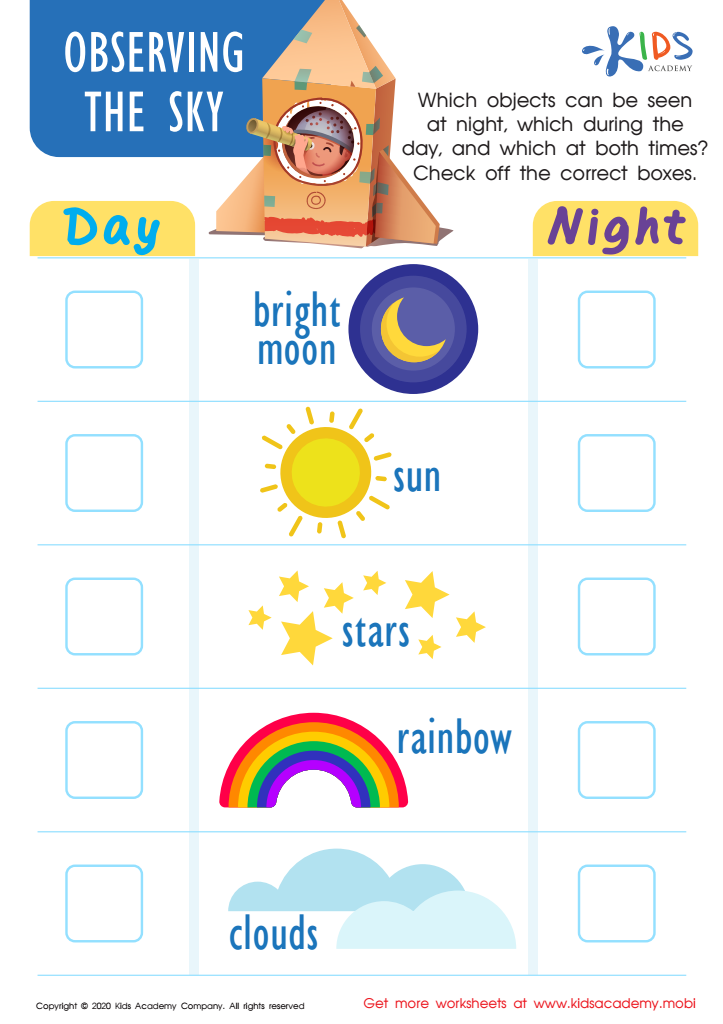
Observing the Sky Worksheet
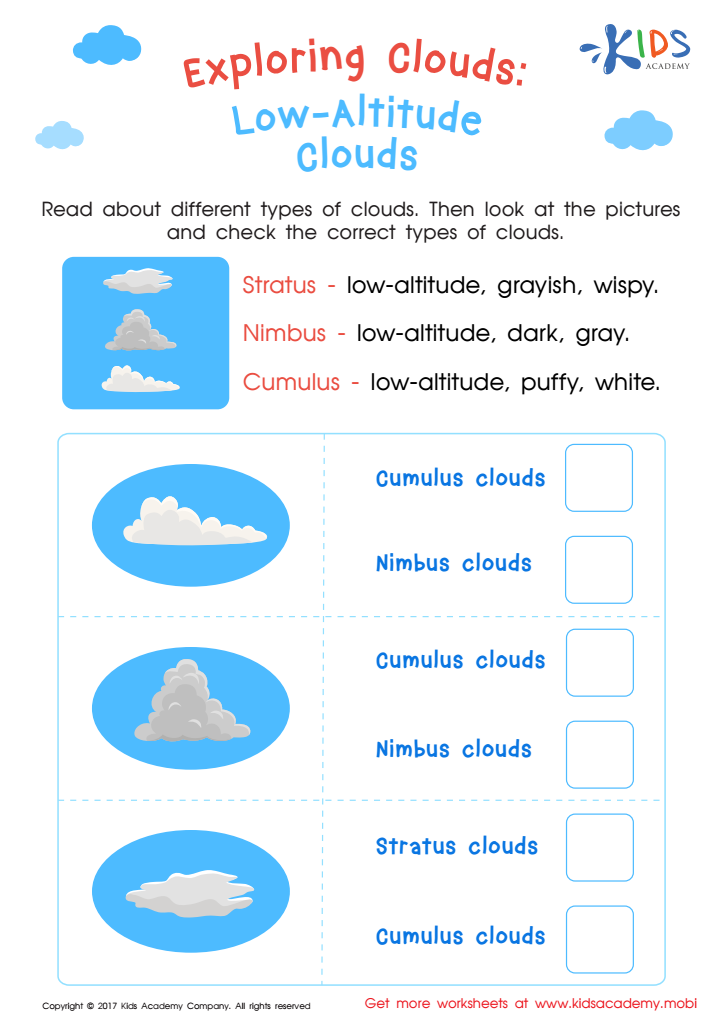
Exploring Clouds: Low Altitude Clouds Printable
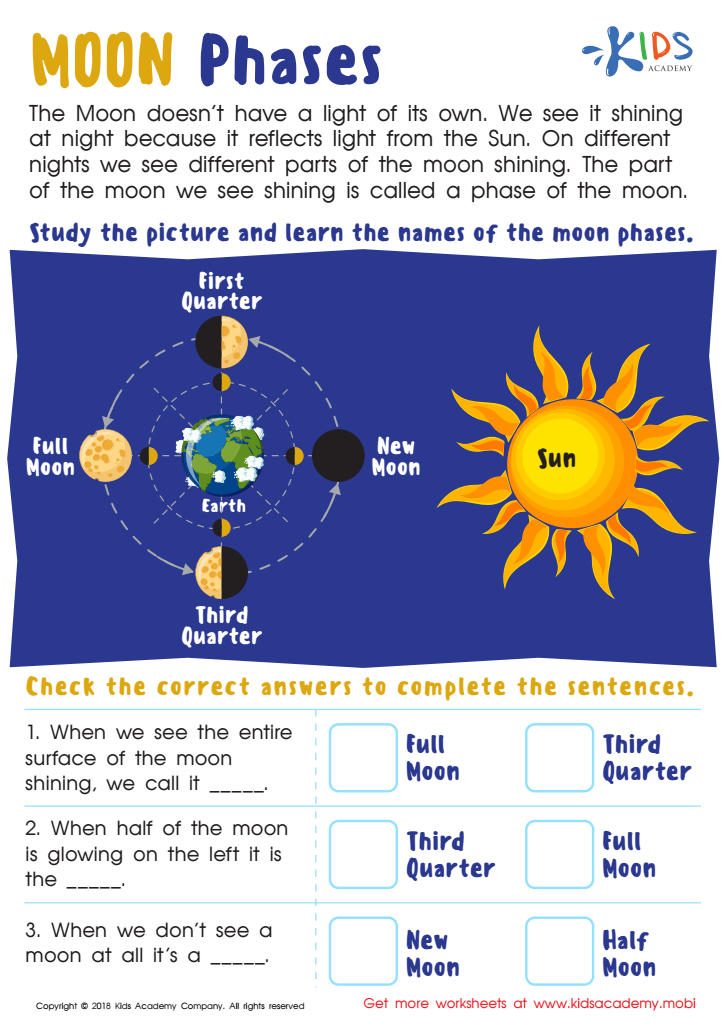
Moon Phases Worksheet
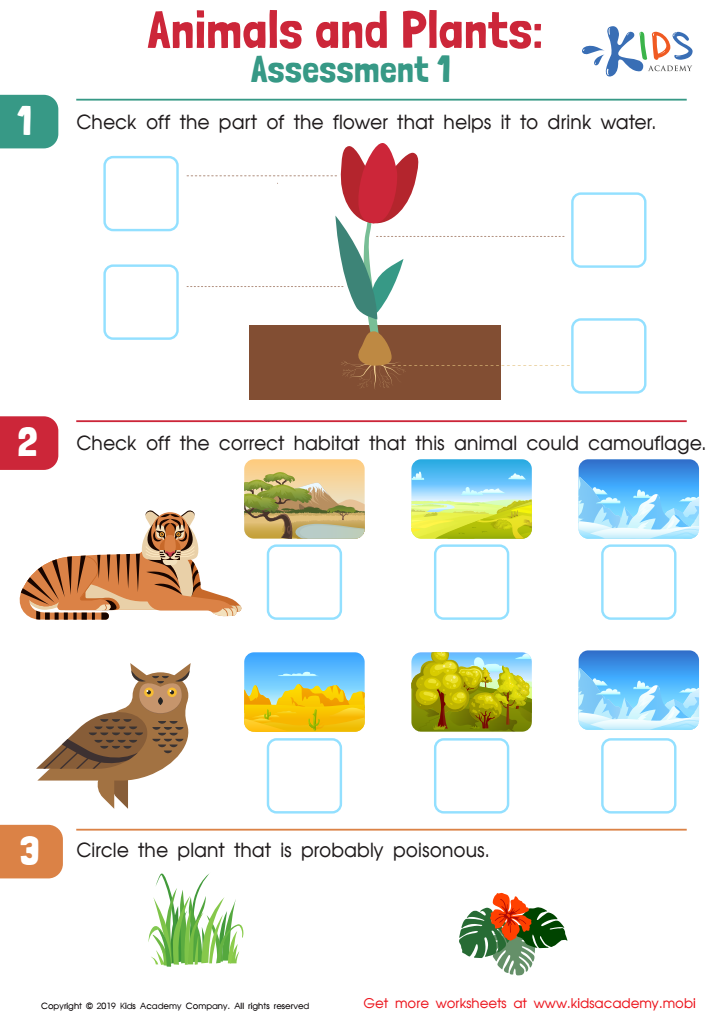
Animals and Plants: Assessment 1 Worksheet






Observational skills are foundational for children, particularly in early education, and understanding our planet and environment plays a crucial role in this development. For parents and teachers of 6- to 7-year-olds, promoting these skills nurtures curiosity and fosters a sense of connection to the world around them.
At this age, children are naturally curious and eager to explore. Helping them develop strong observational skills allows them to notice details, ask questions, and engage in critical thinking about their surroundings. When they observe nature—plants, animals, weather patterns—they begin to understand complex concepts like ecosystems, climate, and sustainability. This understanding instills a sense of responsibility toward the environment early in life.
Moreover, observational skills enhance literacy and other academic areas. By describing what they see and feel, children enhance their vocabulary and language abilities, supporting both social and intellectual growth. Teachers and parents can incorporate simple activities like nature walks, gardening, or even indoor observations, integrating learning with fun.
In essence, by nurturing observational skills linked to our planet and environment, we empower children to become informed, responsible citizens who respect and protect the world they inhabit. This foundation ultimately leads to an engaged and enlightened future generation.







