Understanding pollination Normal Plants and Animals Worksheets for Ages 6-7
3 filtered results
-
From - To
Discover the wonders of pollination with our "Understanding Pollination Normal Plants and Animals Worksheets for Ages 6-7". Tailored for young learners, these engaging worksheets from Kids Academy introduce the vital process of pollination, explaining how plants and animals work together to ensure the growth of new plants. Through fun activities and colorful illustrations, children will explore the roles of bees, butterflies, and other pollinators while enhancing their curiosity about the natural world. Perfect for classroom or home learning, these worksheets make science interactive and accessible, providing foundational skills in biology and fostering a love for nature. Unlock the secrets of pollination today!
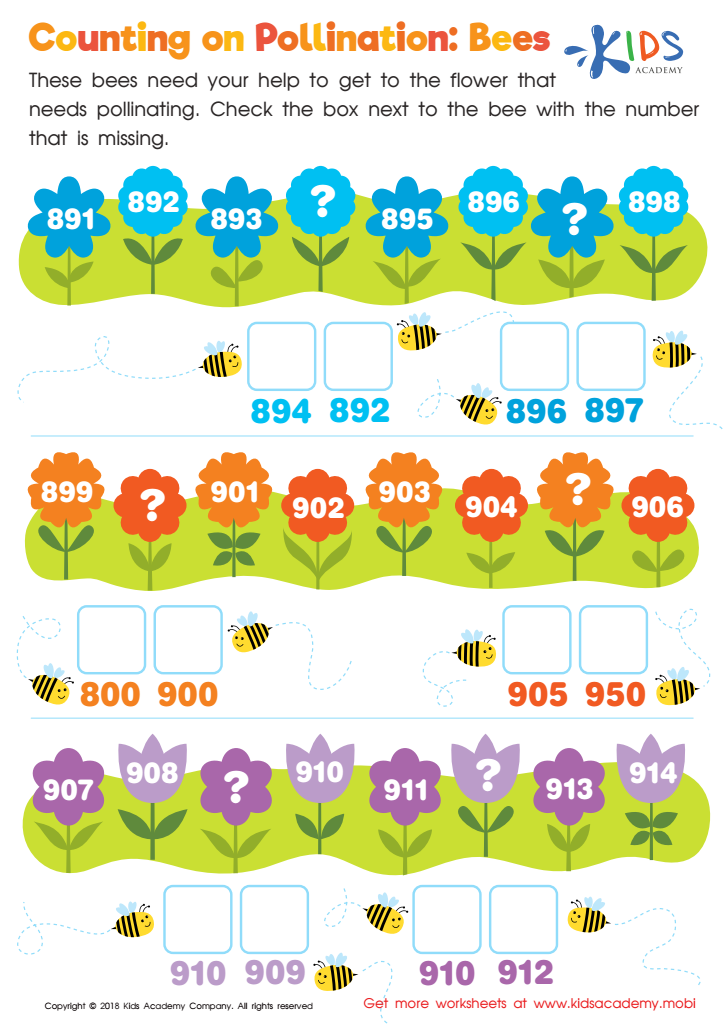
Counting on Pollination: Bees Worksheet
 Assign to My Students











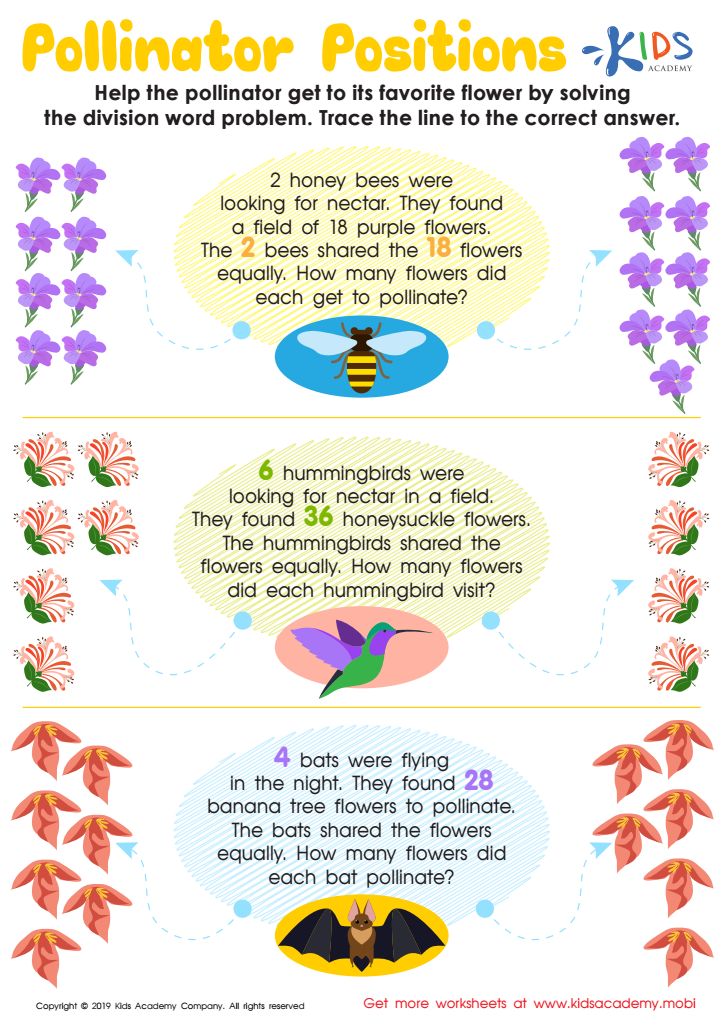
Pollinator Positions Worksheet
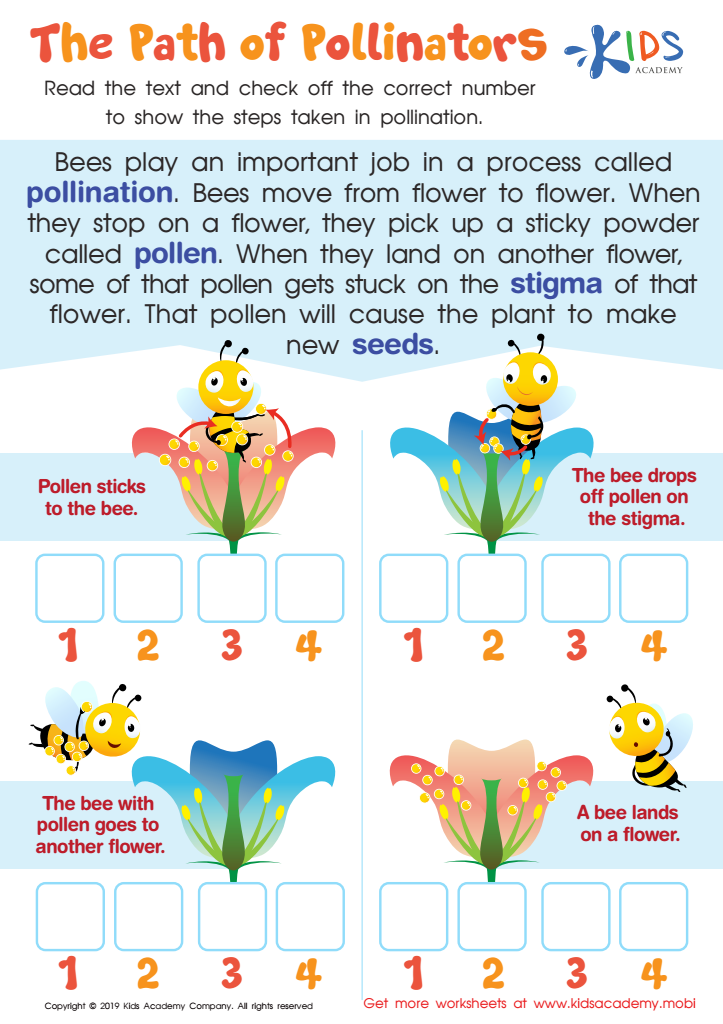
The Path of Pollinators Worksheet







Understanding pollination is vital for young children, and both parents and teachers play a key role in fostering this knowledge. Pollination is the process that allows many plants to reproduce, leading to the growth of fruits and vegetables. This understanding helps connect children with where food comes from and highlights the role of nature in feeding the world.
For children ages 6-7, learning about pollination can spark curiosity about the natural world, emphasizing how insects like bees and butterflies help plants grow. This early education can cultivate an appreciation for nature and the interdependence of living things. By teaching kids about the role pollinators play, we can help instill environmental awareness and the importance of biodiversity.
Additionally, understanding pollination can support lessons in science, extending beyond textbooks into real-world applications. It can lead to fun, hands-on learning activities like observing a garden or creating simple experiments, making education engaging and multidimensional. Such activities can improve children's cognitive abilities and fine motor skills while fostering observational skills and patience.
In summary, educating young children about pollination helps them understand vital ecological processes, encourages environmental stewardship, and provides a comprehensive, interactive learning experience that integrates various educational aspects.







