Understanding constellations Normal Space Worksheets for Ages 6-7
3 filtered results
-
From - To
Explore the stars with our "Understanding Constellations Normal Space Worksheets" designed for children ages 6-7! This engaging resource encourages young learners to delve into the wonders of the universe, helping them identify and connect with various constellations. Each worksheet is filled with fun activities, including tracing, coloring, and storytelling, aimed at enhancing critical thinking and observational skills. As students engage with the enchanting world of constellations, they’ll develop a love for science and discovery. Perfect for classroom use or at-home learning, these worksheets make astronomy fun and accessible. Ignite your child’s passion for the night sky today!
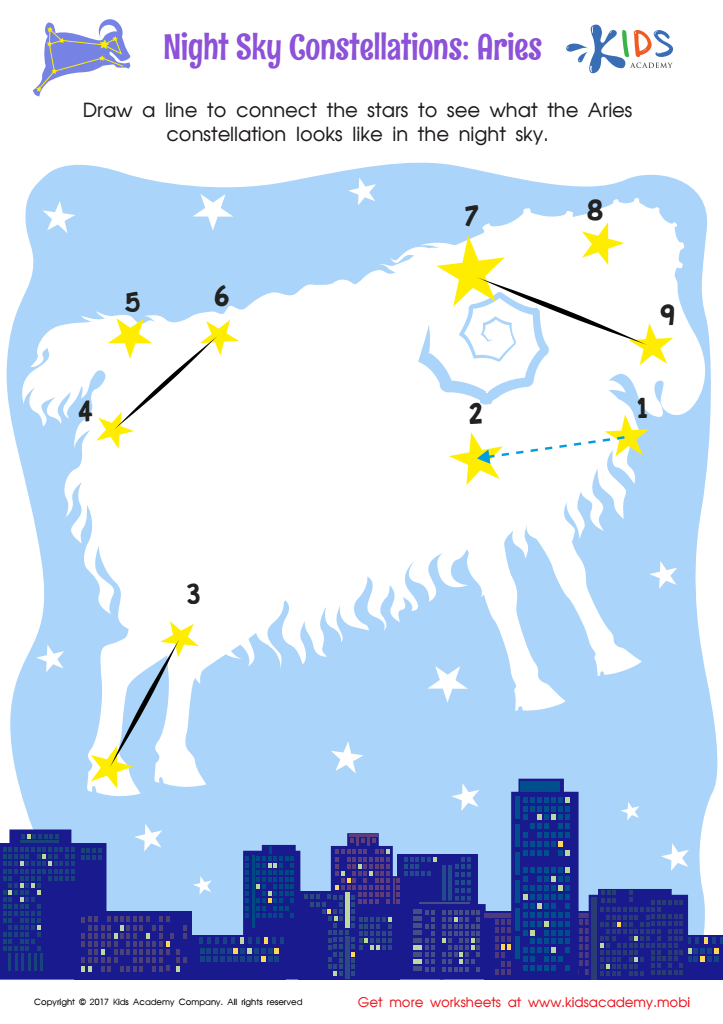
Night Sky Constellations: Aries Worksheet
 Assign to My Students
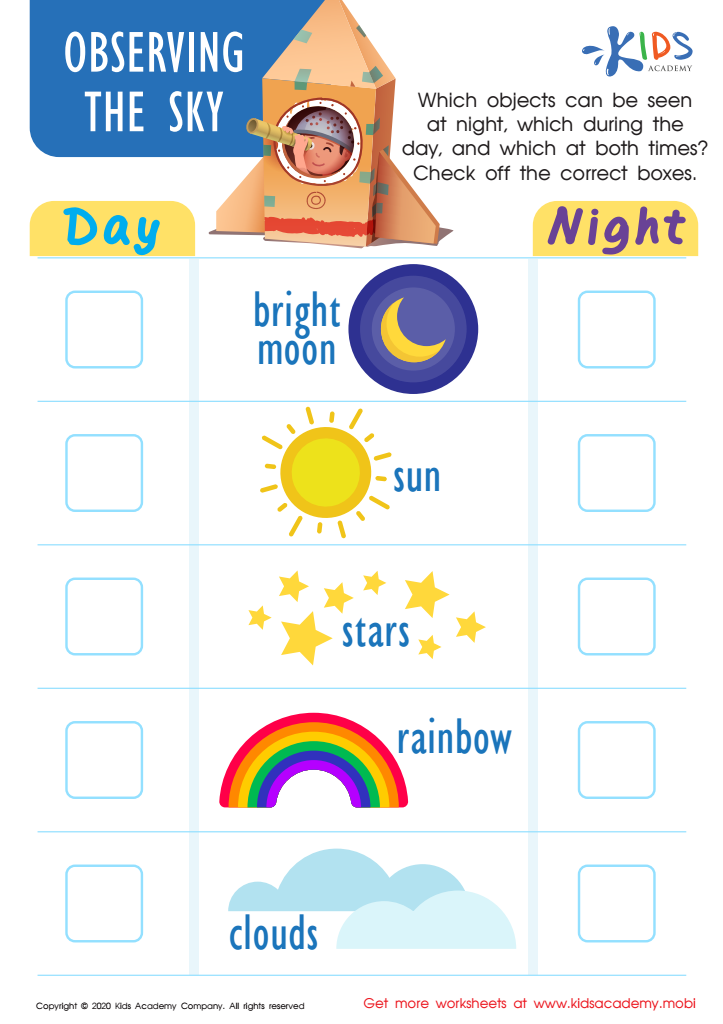
Observing the Sky Worksheet
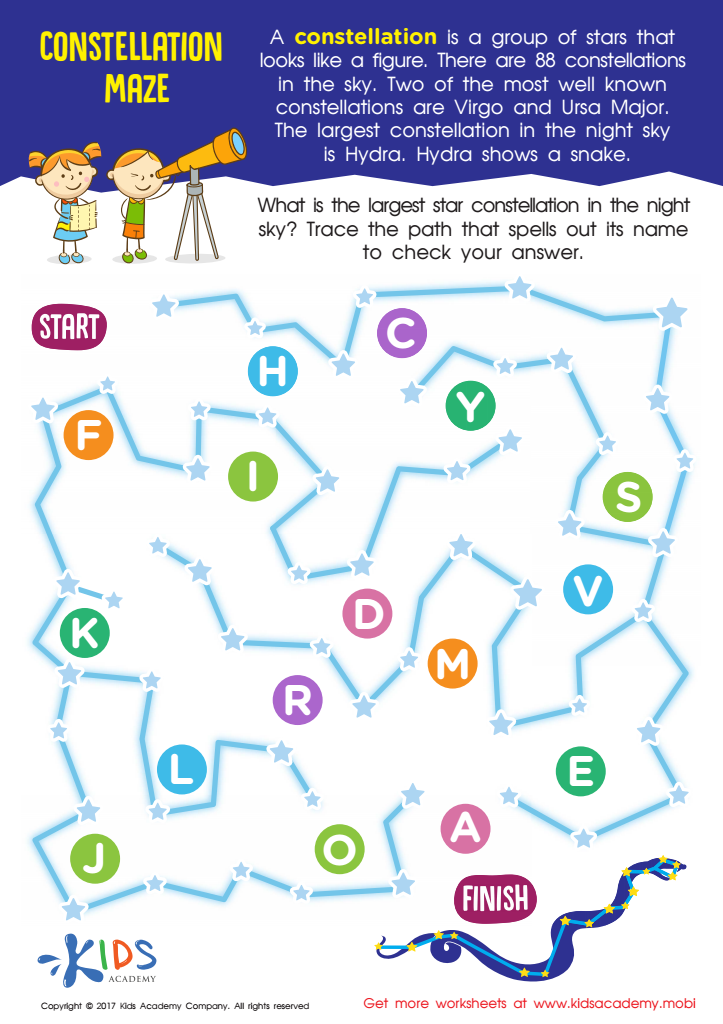
Constellations Worksheet







Understanding constellations and the concept of normal space is vital for parents and teachers of children aged 6-7, as it nurtures curiosity, imagination, and foundational knowledge in science. At this age, children are naturally inquisitive about the world around them, including the night sky. By learning about constellations, young learners develop their observational skills and learn to associate patterns with stories, sparking creativity and critical thinking.
Additionally, introducing the idea of normal space allows children to grasp essential concepts in astronomy and physics. It provides a framework for understanding their environment, fostering a sense of exploration and discovery. Engaging with constellations can also enhance math skills, as children learn to recognize shapes and patterns in the stars, preparing them for future mathematical concepts.
Incorporating constellation learning into educational activities promotes teamwork and communication among peers, as children share their observations and insights. It can also create memorable experiences for families as they gaze at the night sky together, strengthening bonds while cultivating a love for science and nature. Ultimately, encouraging young learners to explore astronomy lays a foundation for lifelong learning and appreciation for the universe, nurturing future scientists, artists, and thinkers.







