Understanding communities Normal Community Worksheets for Ages 6-7
4 filtered results
-
From - To
Explore our "Understanding Communities" worksheets designed for children ages 6-7. These engaging activities help young learners develop a fundamental understanding of their communities and the people within them. Each worksheet is thoughtfully crafted to promote critical thinking about community roles, responsibilities, and cooperation. Through fun exercises, kids will identify various community structures, learn about local figures, and recognize the importance of teamwork. Ideal for parents and teachers, these worksheets provide excellent resources for enhancing social studies curriculum, making learning about communities interactive and enjoyable. Foster curiosity and communication skills in your child as they discover the diverse world around them!
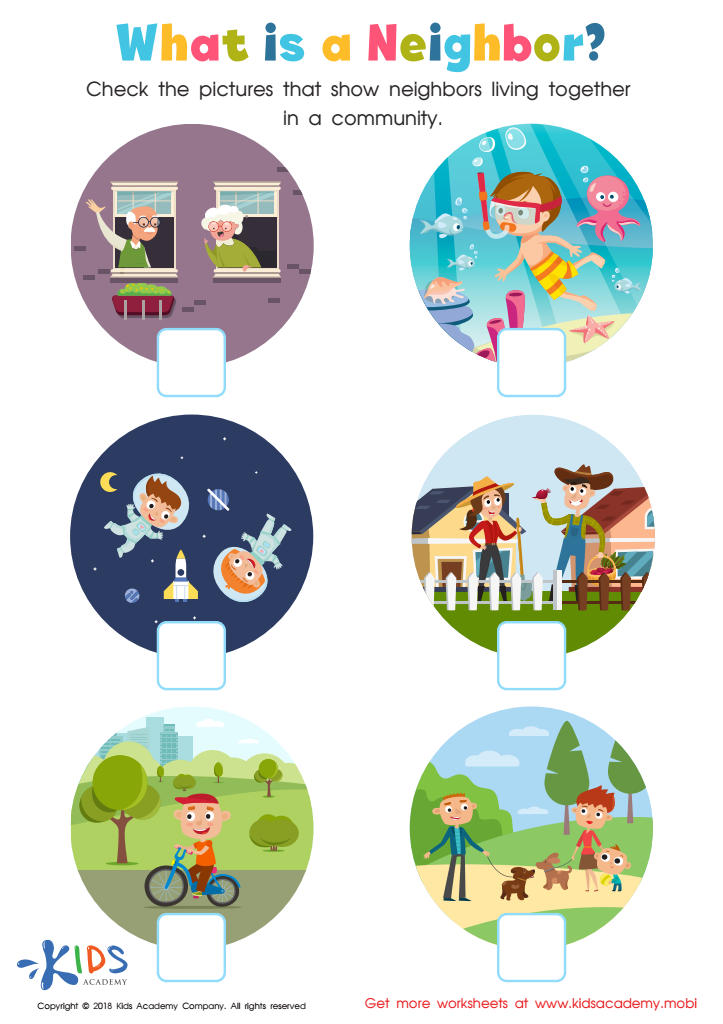
What is a neighbor Worksheet
 Assign to My Students
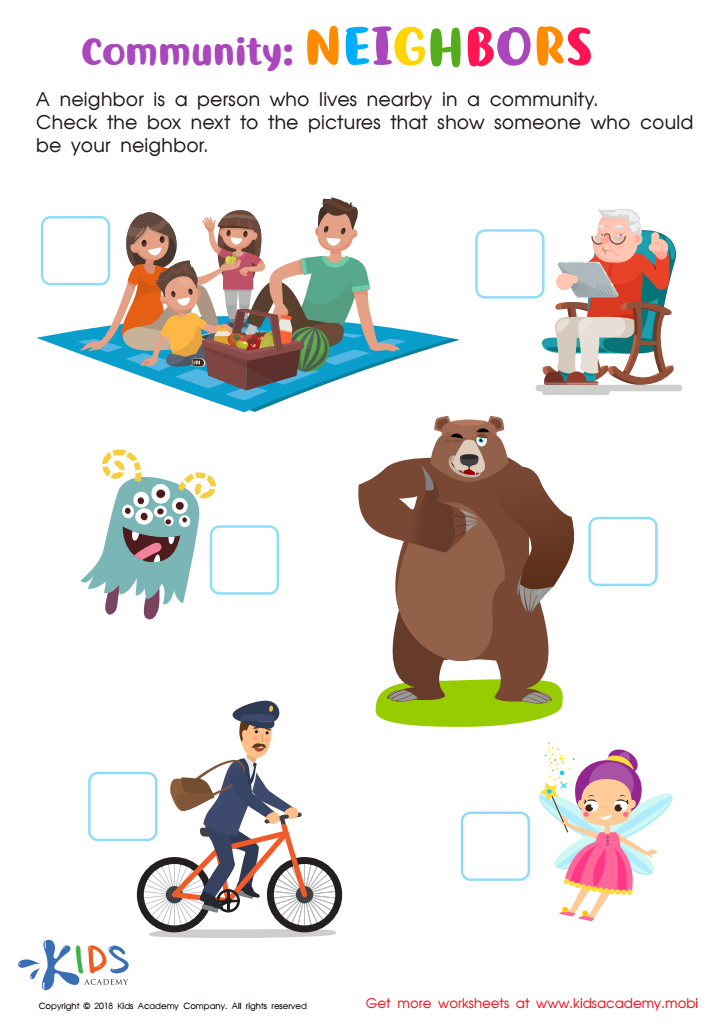
Community: Neighbors Worksheet
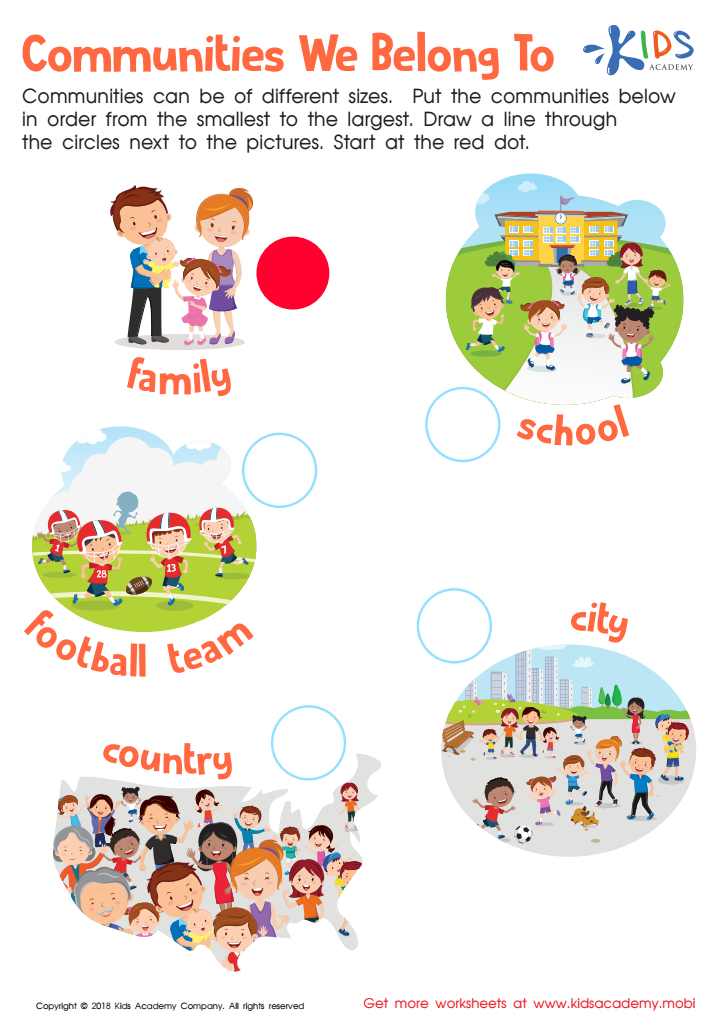
Communities We Belong to Worksheet
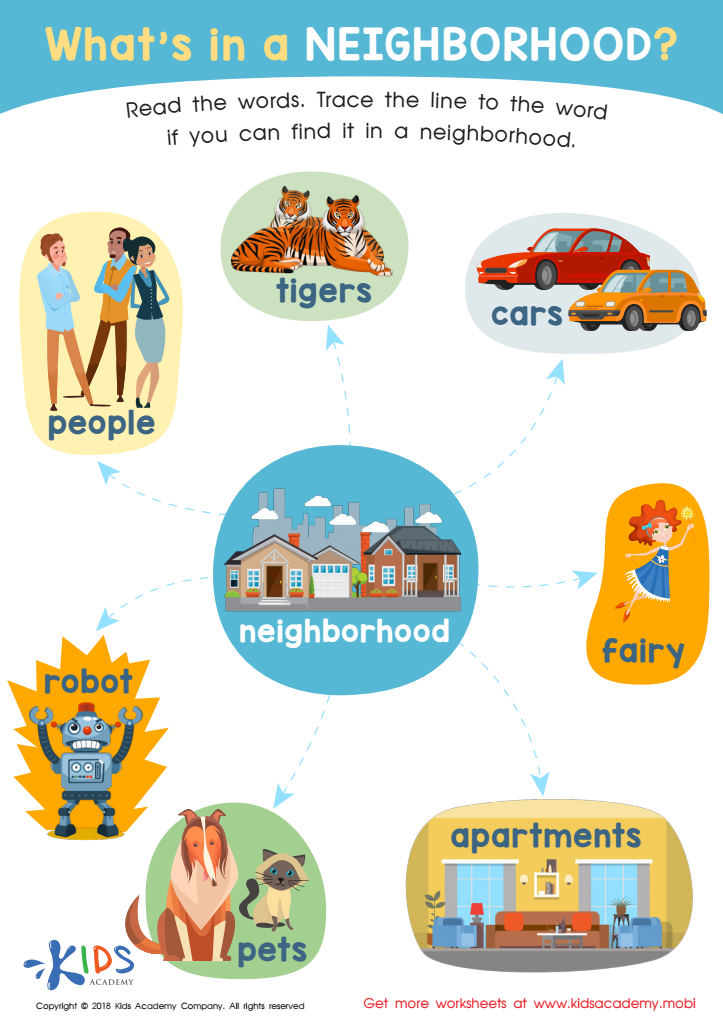
What's in a Neighborhood? Worksheet






Understanding communities is crucial for children aged 6-7 as it lays the foundation for their social, emotional, and cognitive development. At this age, children begin to explore their surroundings, make friends, and define their identities. When parents and teachers help children understand what a community is— its people, values, and functions—they foster a sense of belonging and encourage empathy.
Incorporating community lessons helps children appreciate diversity and different perspectives. They learn about various cultures, traditions, and roles within a community, promoting respect and inclusion. Furthermore, understanding community dynamics empowers children to contribute positively, whether through teamwork in school or participating in local projects.
Teachers and parents also play a pivotal role in guiding children through social interactions and conflict resolution, essential skills for navigating relationships. Community awareness helps them understand how their actions impact others, nurturing responsibility and cooperation.
Moreover, awareness of social structures can spark interest in community service, enhancing their sense of agency and initiative. Encouraging a positive relationships with their environment supports lifelong learning and active citizenship. Overall, understanding community nurtures compassionate, informed individuals who will enhance society as they grow.