Enhancing observation skills Normal Social Studies Worksheets for Ages 6-7
3 filtered results
-
From - To
Enhance your child's observation skills with our engaging Normal Social Studies Worksheets designed for ages 6-7. These worksheets provide age-appropriate activities that encourage young learners to observe and analyze their surroundings, fostering critical thinking and discussion. Through interactive exercises, children will explore aspects of their community, environment, and cultures, building essential skills for future learning. Perfect for classroom use or at-home learning, our resources make social studies fun and accessible. Download these valuable worksheets today and help your child develop strong observational skills that will serve them well throughout their educational journey!
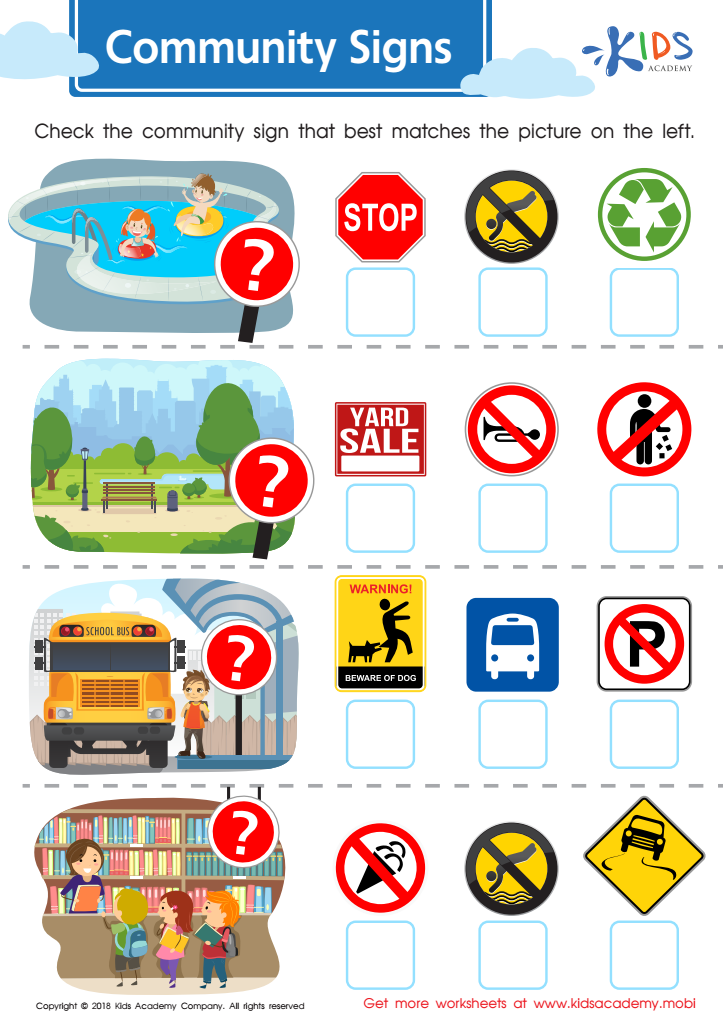
Community Signs Worksheet
 Assign to My Students
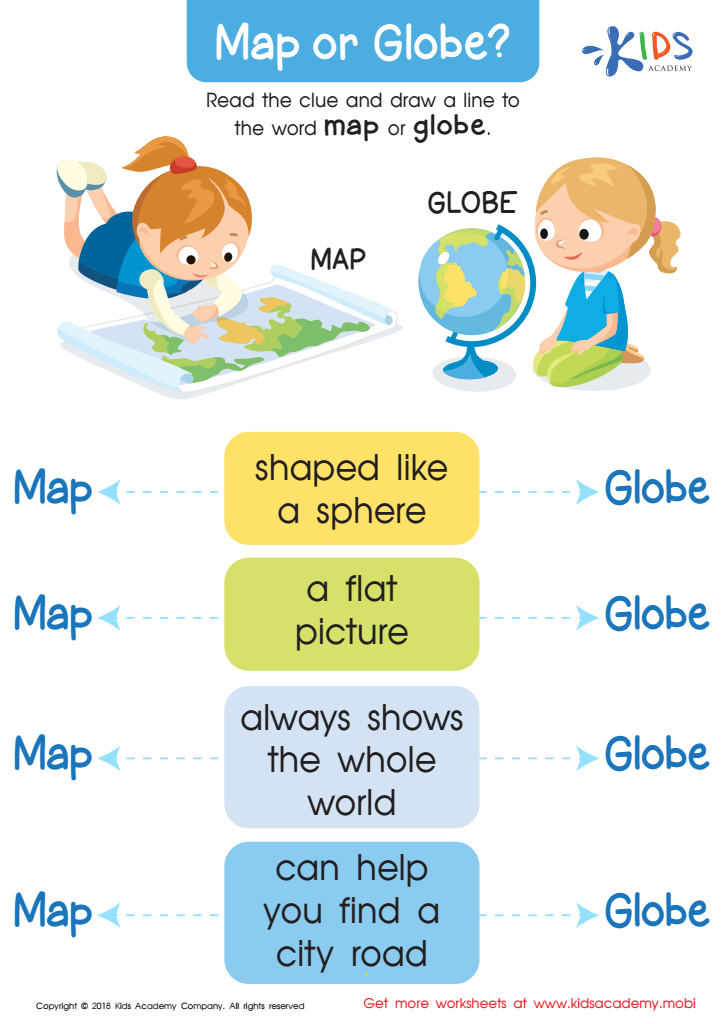
Map or Globe? Worksheet
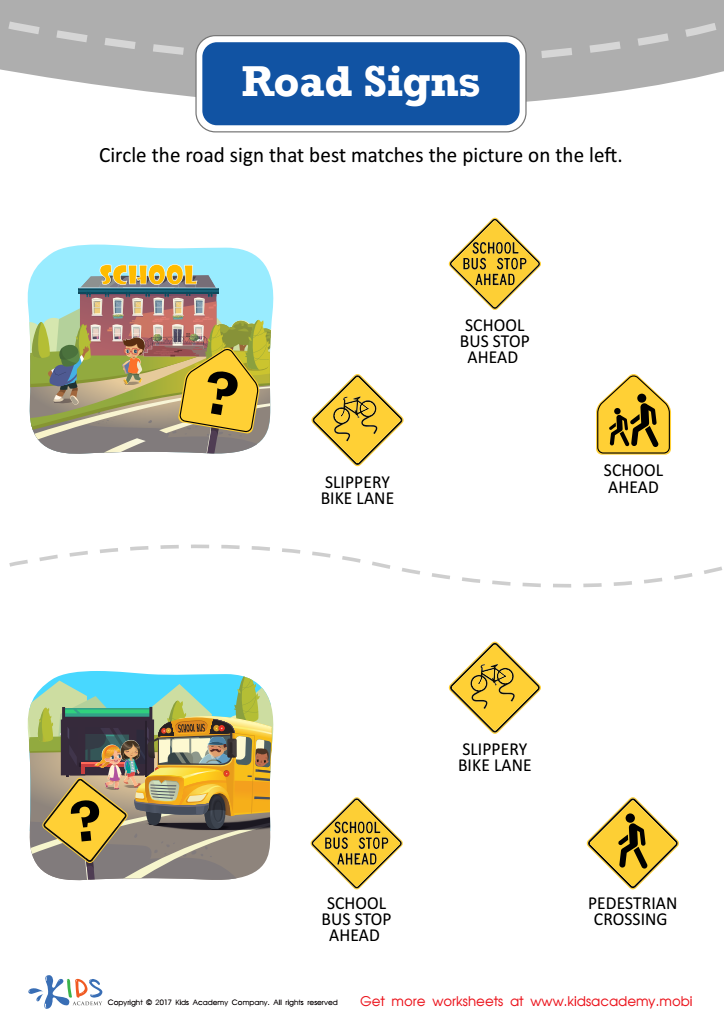
Road Signs (Part 1) Worksheet



.jpg)



Enhancing observation skills in young children, especially in Social Studies, is crucial for several reasons. At ages 6-7, children begin to make sense of their world, and observation skills allow them to engage with their surroundings meaningfully. By honing these skills, children learn to identify and analyze patterns, trends, and relationships in their environment, which forms the foundation for their understanding of social systems, cultures, and communities.
Moreover, strong observation skills pave the way for critical thinking. When teachers and parents encourage children to observe closely—from understanding differences in cultures to recognizing community roles—children develop an appreciation for diversity and empathy toward others. This early exposure prepares them to construct informed opinions and make sound decisions as they grow.
Additionally, enhancing observation fosters improved language skills. Children learn to articulate what they've seen, expanding their vocabulary and comprehension abilities. Engaging in discussions about observations helps strengthen communication skills and enhances confidence.
Finally, today's educators and parents have a vital role in shaping future citizens. By cultivating observation skills in Social Studies, they empower children to become thoughtful, informed, and socially responsible individuals who can navigate an increasingly complex world.








