Understanding communities Normal Social Studies Worksheets for Ages 6-7
4 filtered results
-
From - To
"Understanding Communities: Normal Social Studies Worksheets for Ages 6-7" fosters exploration and learning about communities for young children. Designed by Kids Academy, these engaging worksheets encourage kids to discover the concept of communities, their importance, and the roles people play. Through fun activities and thought-provoking questions, children will develop critical thinking and social skills, learn about neighborhoods, local services, and the various cultural aspects that bind communities together. Perfect for early learners, these printable resources align with educational standards and provide an excellent foundation for understanding how communities operate and thrive. Let's embark on a journey to build knowledge and a sense of belonging!
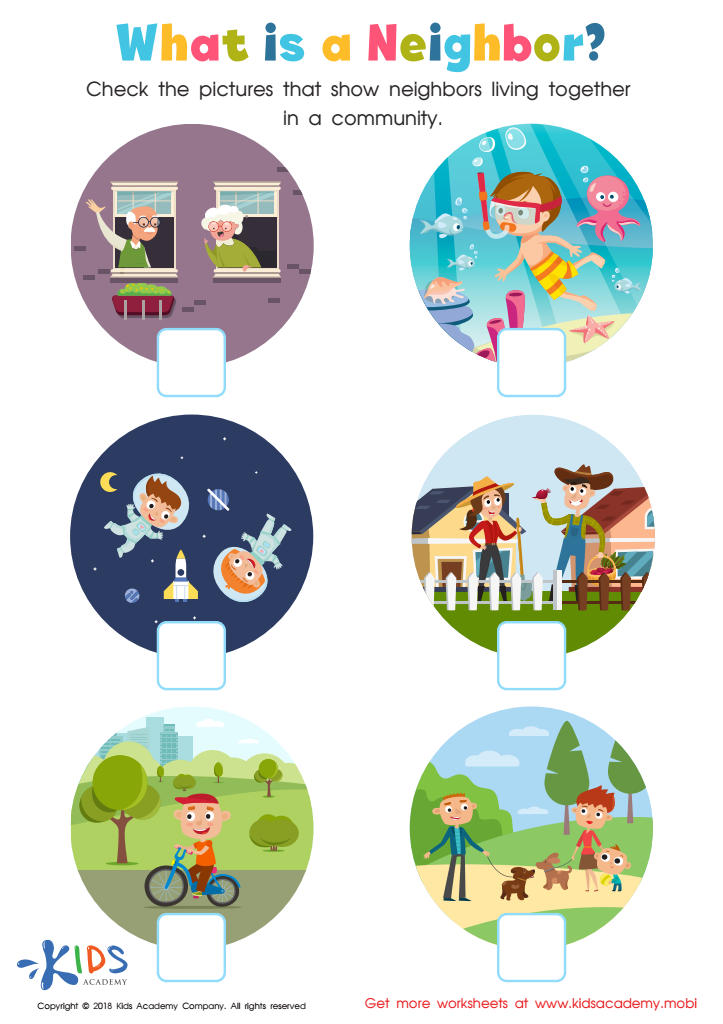
What is a neighbor Worksheet
 Assign to My Students
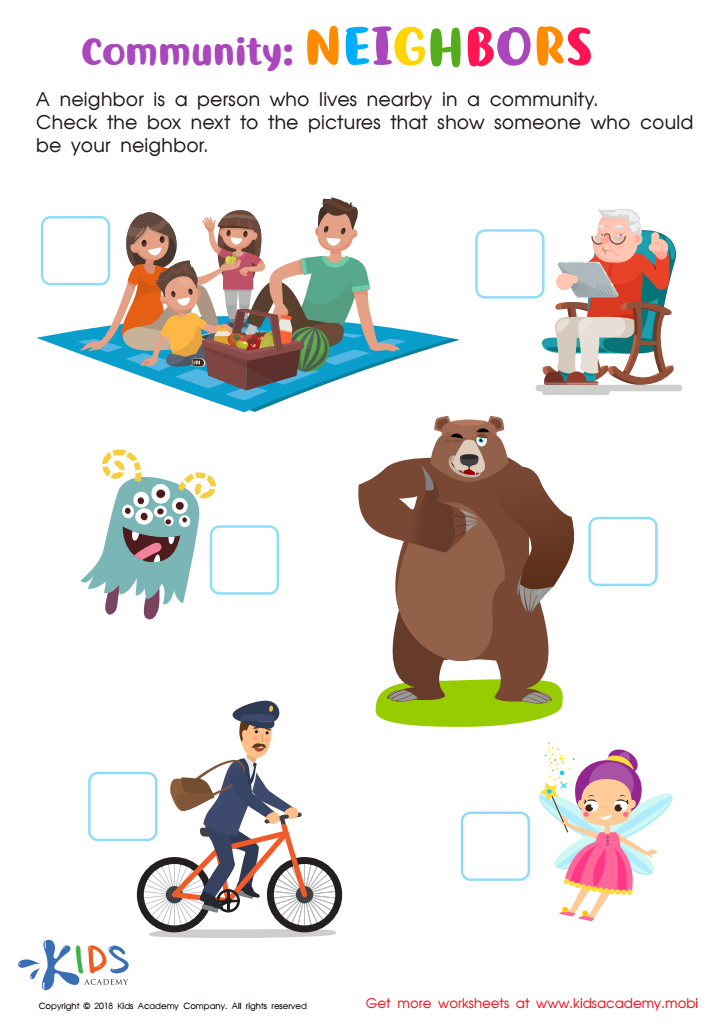
Community: Neighbors Worksheet
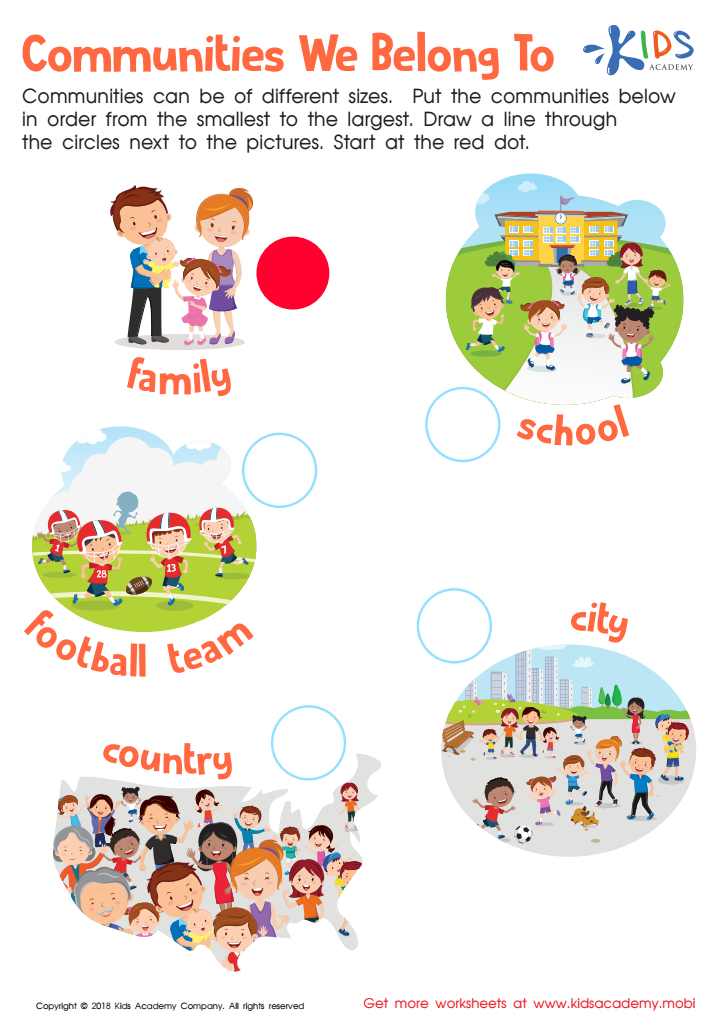
Communities We Belong to Worksheet
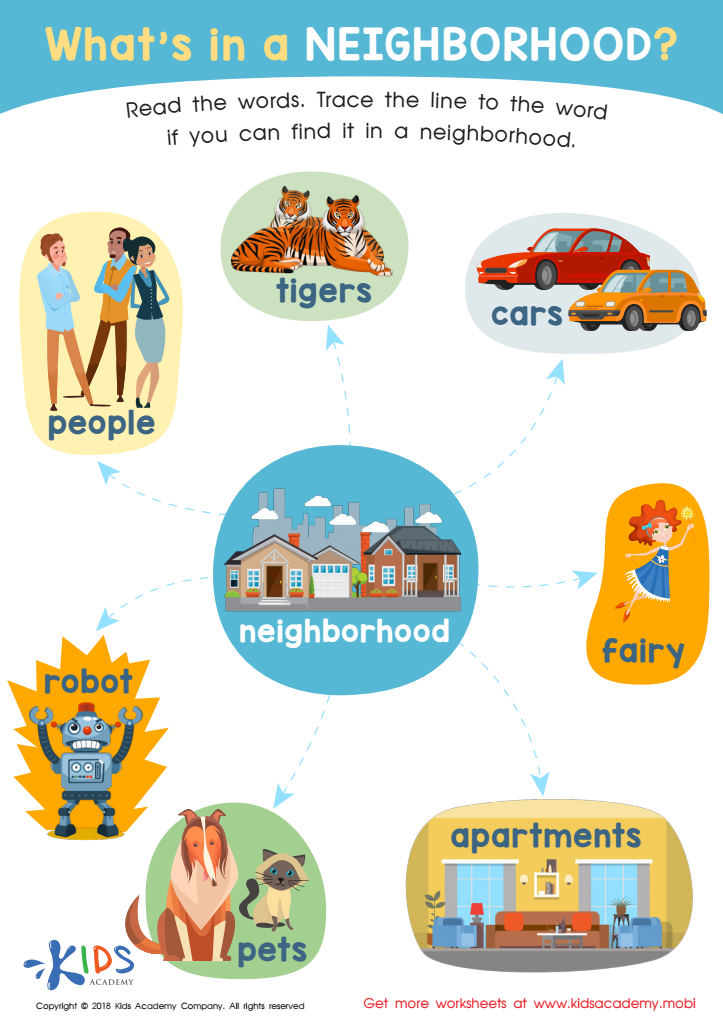
What's in a Neighborhood? Worksheet




.jpg)

Understanding communities is a vital component of social studies for children ages 6-7 because it lays the foundation for their social and emotional development. At this age, children's cognitive abilities allow them to begin understanding concepts beyond their immediate experiences. Learning about communities helps them comprehend where they fit within society and appreciate the roles different people play. This fosters empathy, respect, and cooperation—key social skills that benefit both their personal and academic lives.
By exploring diverse communities, children are exposed to various cultures, traditions, and ways of life, broadening their worldviews and reducing preconceived biases. It prepares them for increasingly multicultural environments and helps in developing an inclusive mindset. This early social education aligns with values such as fairness, kindness, and civic responsibility, which are crucial for nurturing responsible, open-minded citizens.
Moreover, understanding how communities function—including the roles of different community helpers, local government, and basic economic principles—equips children with practical knowledge to interpret everyday experiences. It helps to demystify the world around them and makes them more curious and informed individuals.
For parents and teachers, fostering this understanding not only enriches the child's learning experience but also builds a solid community foundation that supports healthy, engaged, and conscientious individuals.








