Understanding history Normal Social Studies Worksheets for Ages 6-7
3 filtered results
Difficulty Level
Grade
Age
-
From - To
Subject
Activity
Standards
Discover the engaging "Understanding History" worksheets designed specifically for children aged 6-7! Our thoughtfully crafted social studies resources provide young learners with a foundational grasp of historical concepts, helping them explore the past through fun and interactive activities. Each worksheet fosters curiosity about key events, influential figures, and cultural milestones, encouraging critical thinking and connection to their own experiences. Perfect for home or classroom use, these worksheets support skill development in reading, comprehension, and analysis while promoting a love for history. Start your child's journey through time with our delightful and educational worksheets that make learning an exciting adventure!
Favorites
With answer key
Interactive
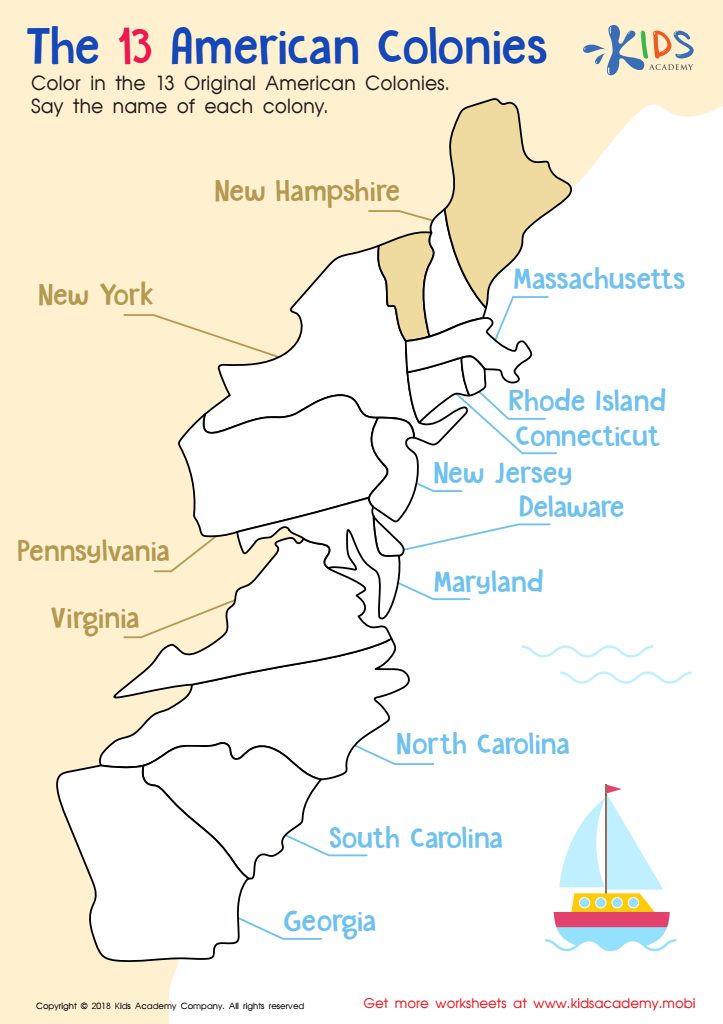
The 13 American Colonies Worksheet
Ensure kids are knowledgeable in maths, English, science, history, and geography. Test their American knowledge: Can they name the 13 Original American Colonies? Use the worksheet; have them color each colony and name it out loud.
Download (PDF)
 Assign to My Students
Assign to My Students
The 13 American Colonies Worksheet
Worksheet
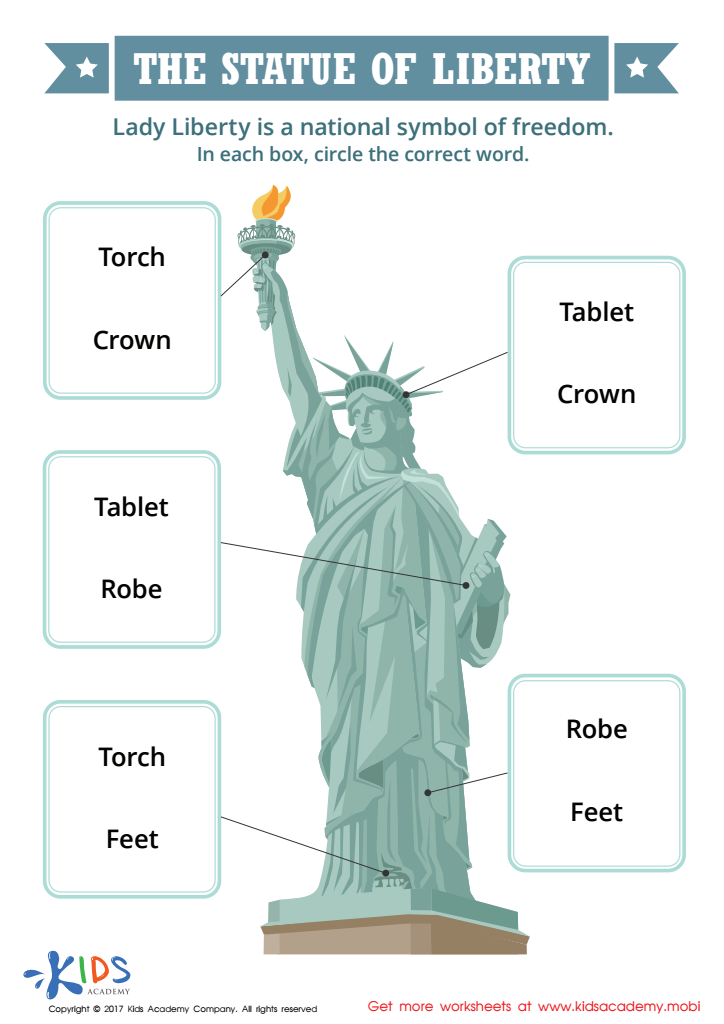
The Statue of Liberty Printable
Introduce the iconic Statue of Liberty with our printable worksheet. Perfect for learning about US symbols and their importance!
The Statue of Liberty Printable
Worksheet
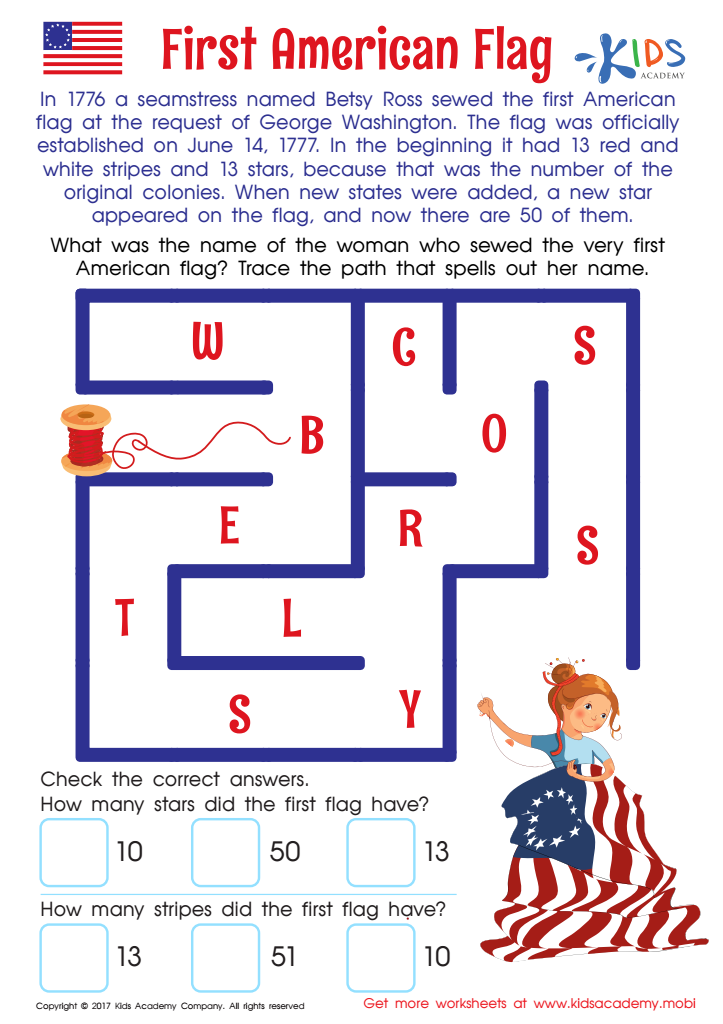
First American Flag Worksheet
Betsy Ross sewed the first American flag at the request of George Washington. This worksheet helps kids learn about this milestone in U.S. history, plus the design and origins of the flag.
First American Flag Worksheet
Worksheet
Join Kids Academy for Free
Who is primarily going to use this learning content?



.jpg)




Understanding history and social studies for children aged 6-7 is crucial for several reasons. First, it helps children develop a sense of identity and belonging. By learning about their own culture, traditions, and historical figures, young learners begin to understand their roots and place in the world. This foundational knowledge fosters pride and respect for their own heritage.
Second, early exposure to social studies promotes critical thinking. Through age-appropriate historical narratives and discussions about communities, children learn to navigate concepts like fairness, cooperation, and conflict resolution. This early understanding encourages them to question, reflect, and engage in meaningful dialogue about the world around them.
Additionally, learning about diverse cultures and the past equips young learners with empathy and respect for differences. Children begin to appreciate the diverse experiences and stories of others, building social awareness that is essential for nurturing inclusive communities.
Finally, fostering historical curiosity can spark a lifelong interest in learning. Engaging activities, storytelling, and exploration of history motivate children to inquire and discover, setting the stage for future academic success. By investing in social studies at this stage, parents and teachers support holistic development, critical thinking, and an appreciation for the richness of history and humanity.