Vocabulary Building Normal Social Studies Worksheets for Ages 6-7
6 filtered results
-
From - To
Discover engaging vocabulary building worksheets tailored for social studies, designed specifically for kids aged 6-7. These resources enhance language skills while introducing fundamental concepts in social studies. Through fun exercises, students can expand their vocabulary and improve comprehension, making connections to their community and the world around them. Each worksheet incorporates interactive activities that captivate young learners, fostering a love for knowledge in a supportive environment. Equip your child with essential communication skills and a solid foundation in social studies with our expertly crafted materials. Start your learning journey today to inspire curiosity and language development in early education!
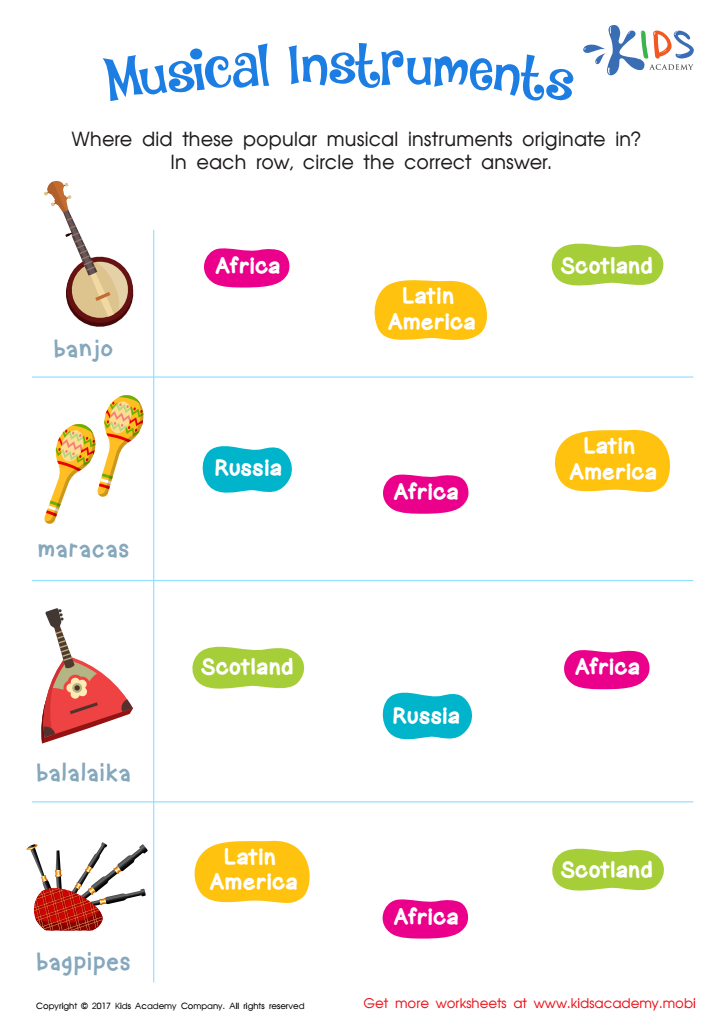
Musical Instruments Printable
 Assign to My Students
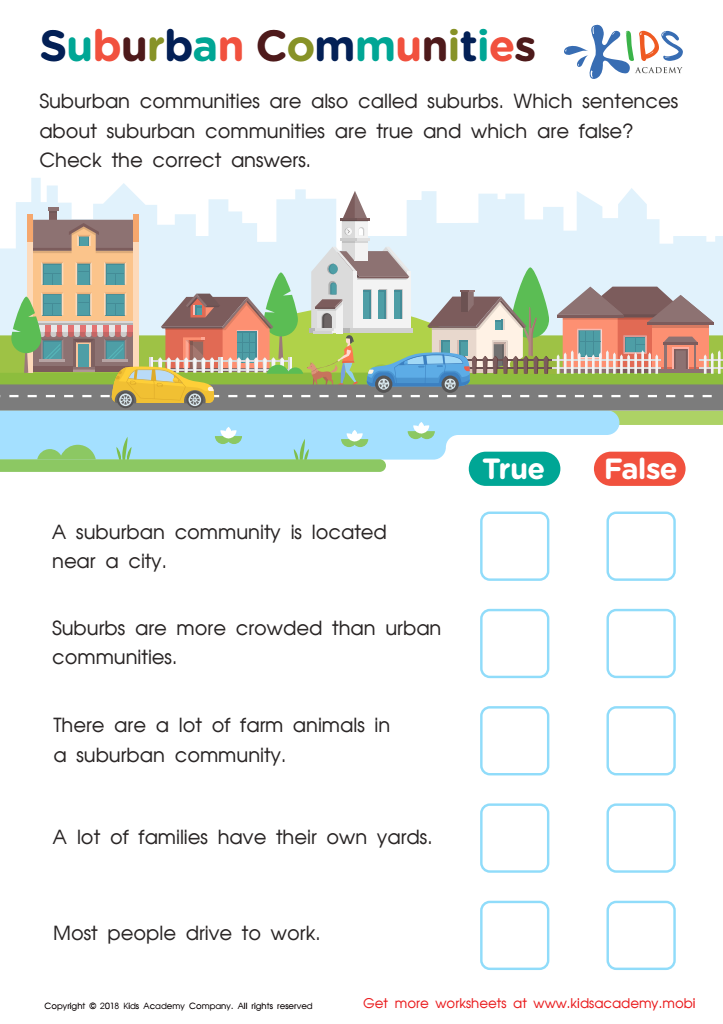
Suburban Communities Worksheet
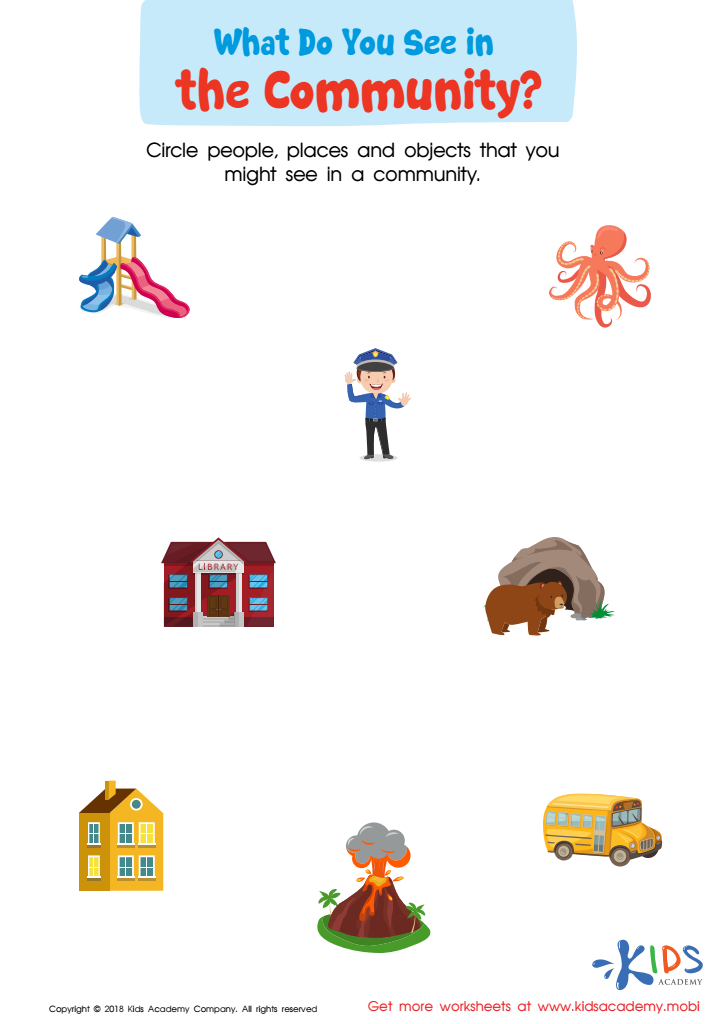
What Do You See in the Community Worksheet
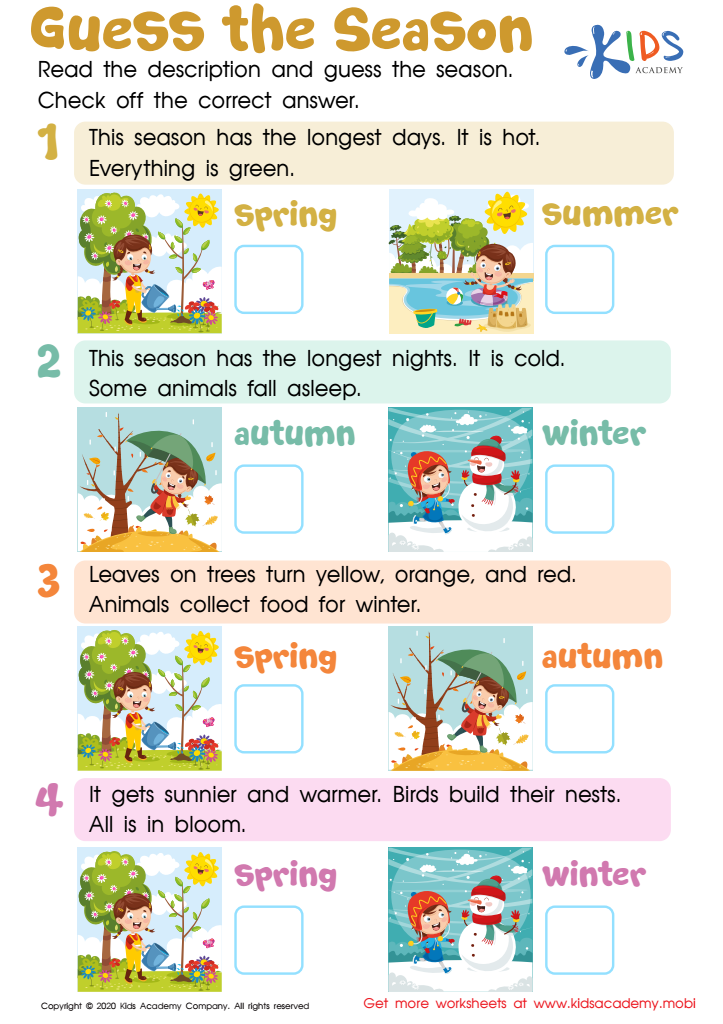
Guess the Season Worksheet

What Do you See at the Library? Worksheet
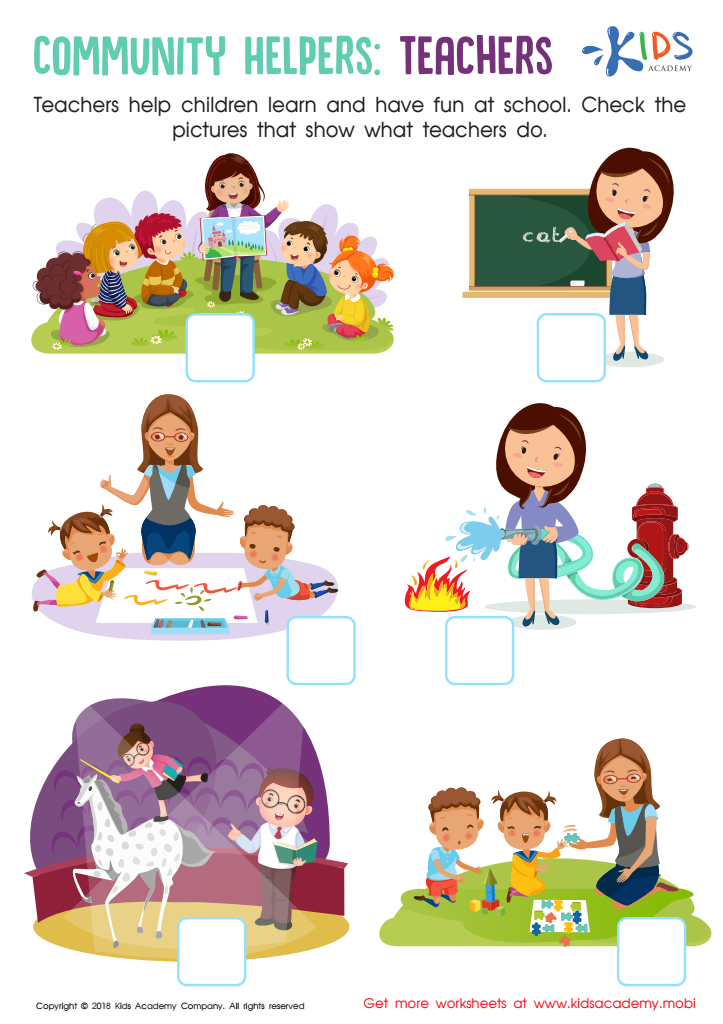
Teachers Community Helpers Worksheet






Vocabulary building in Social Studies for children aged 6-7 is crucial for several reasons. At this stage, children are developing foundational communication skills that will significantly impact their learning across all subjects. A robust vocabulary enhances their ability to understand and engage with critical social concepts such as community, culture, and geography. By introducing relevant terms and language early on, parents and teachers facilitate children's ability to relate to their surroundings, fostering a sense of belonging and recognition of diversity.
Furthermore, vocabulary learning during Social Studies helps ignite curiosity about the world. Children begin to ask questions about societal roles, history, and their environment, promoting critical thinking skills. Engaging vocabulary activities, such as storytelling, games, and discussions about current events tailored to their level, can make these connections tangible and relatable.
Finally, building a strong vocabulary supports literacy development, reinforcing reading skills and comprehension. When students encounter complex texts or conversations, they'll have the words and context needed to decipher the material, which promotes confidence and enthusiasm for learning. Therefore, prioritizing vocabulary building in Social Studies lays the groundwork for academic success and informed citizenship as children grow.