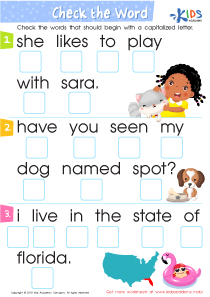
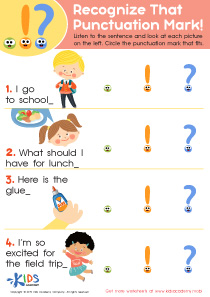
Noun identification Normal Writing Worksheets for Ages 6-7
3 filtered results
-
From - To
Looking for effective worksheets to enhance your child's understanding of nouns? Our "Noun Identification Normal Writing Worksheets" for ages 6-7 offer a fun and educational way to strengthen language skills. Designed to align with early learning standards, these worksheets help children recognize and categorize nouns in various contexts. Through engaging exercises, young learners will identify, sort, and use nouns correctly, boosting their grammar proficiency. Perfect for classroom or at-home practice, these worksheets build the foundational skills your child needs to excel in writing. Start exploring our collection to make learning a joyful experience today!
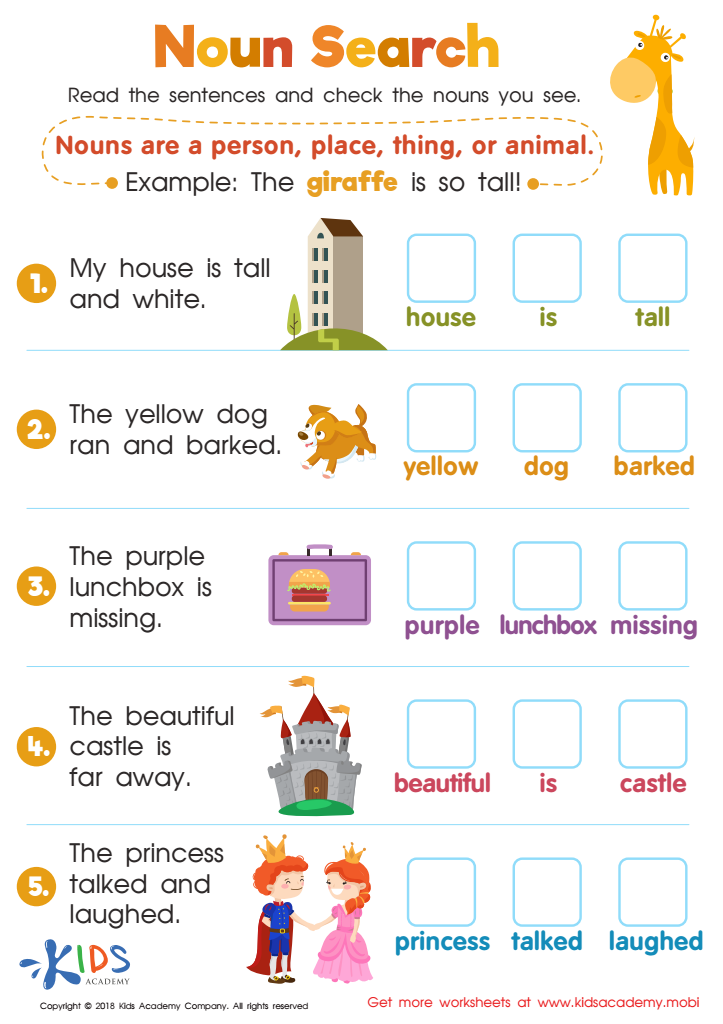
Noun Search Worksheet
 Assign to My Students
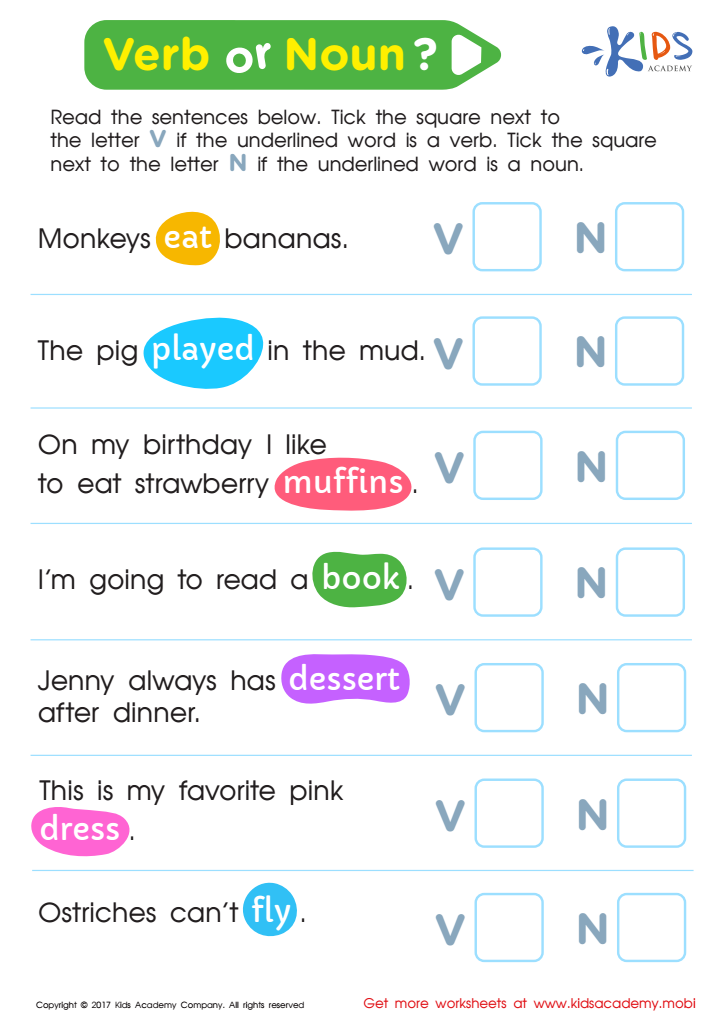
Verb or Noun Worksheet
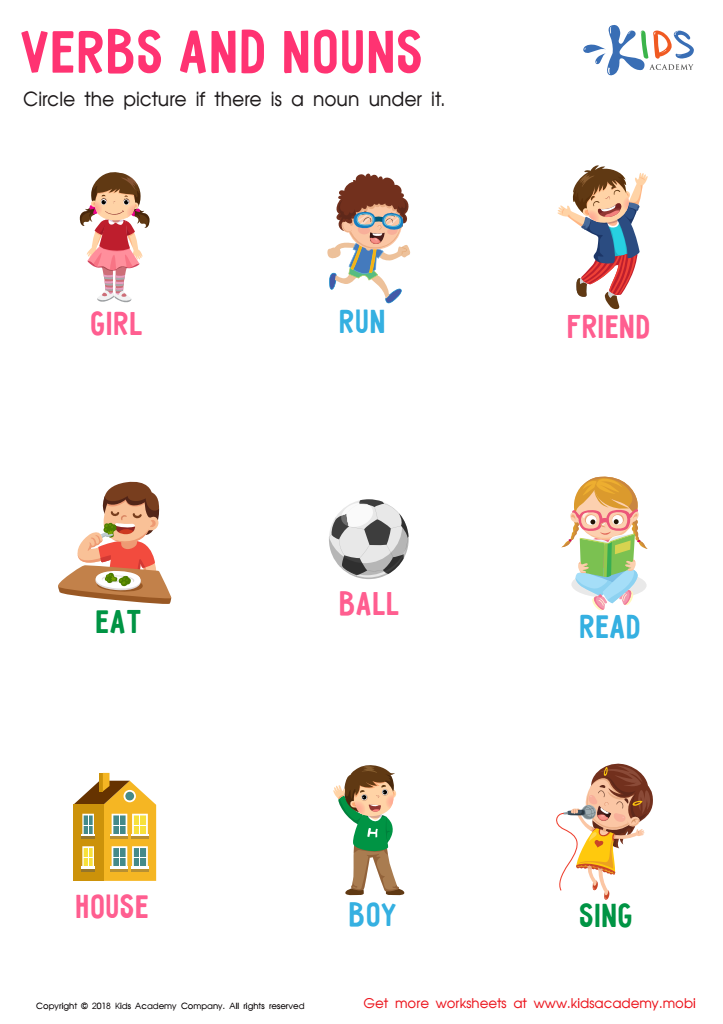
Verbs and Nouns Worksheet








Understanding noun identification at ages 6-7 is crucial for several key reasons. At this stage, children's brains are especially receptive to language acquisition, and recognizing nouns is a fundamental part of developing strong language skills. Nouns are the building blocks of sentences, representing people, places, things, and ideas. Mastering them provides a foundation upon which more complex language structures, such as verbs and adjectives, can be introduced.
Parents and teachers should care about this aspect of learning because it directly impacts a child's ability to communicate effectively. When children can identify nouns, they gain confidence in speaking and writing, which aids in overall academic achievement. Additionally, skilled noun identification can improve reading comprehension. A child who understands what a "dog" or a "park" is can better grasp simple sentences and stories, making reading a more enjoyable and rewarding experience.
Moreover, early success in language skills fosters a positive attitude towards learning. When children see that they can understand and use nouns correctly, they are more likely to enjoy the reading and writing process. Therefore, prioritizing noun identification at this critical age not only benefits immediate educational outcomes but also sets the stage for lifelong literacy and academic success.