Letter recognition Normal Tracing Words Worksheets for Ages 6-7
3 filtered results
-
From - To
Boost your child's literacy skills with our Letter Recognition Normal Tracing Words Worksheets for ages 6-7. These engaging, age-appropriate worksheets are expertly designed to enhance letter recognition and handwriting abilities. Each activity includes traceable words that help reinforce understanding of letter shapes and sounds, improving both reading and writing foundations. Ideal for early learners, our worksheets make learning fun, interactive, and effective. Download now to support your child’s educational journey and watch their confidence soar as they master essential skills through playful practice! Visit Kids Academy to explore more educational resources today.
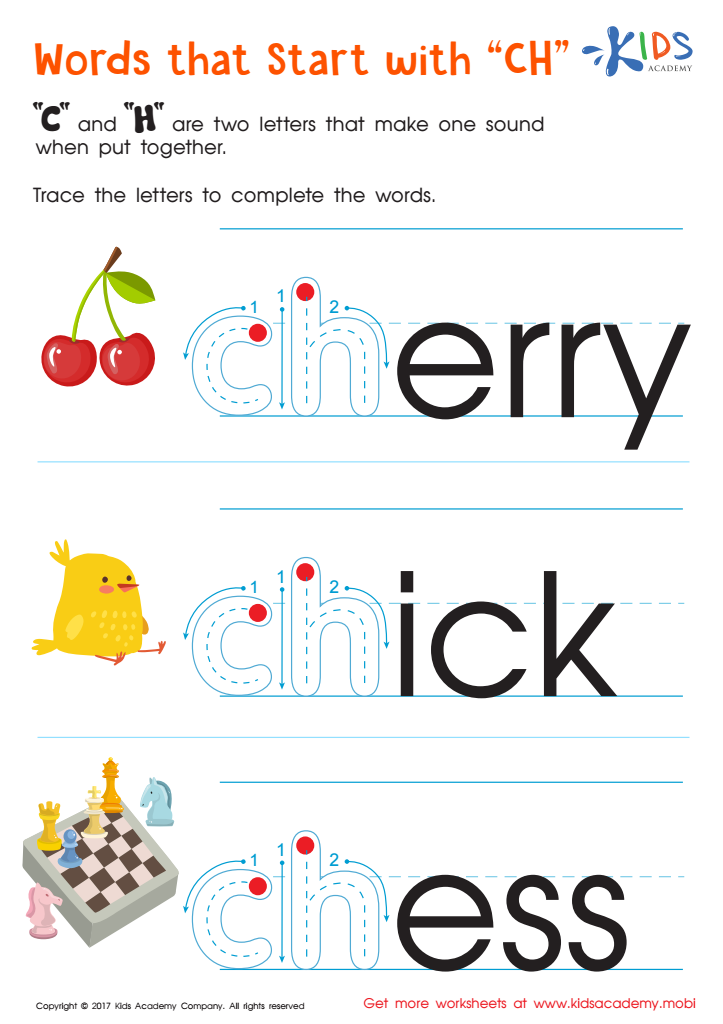
Words That Start with "ch" Spelling Worksheet
 Assign to My Students
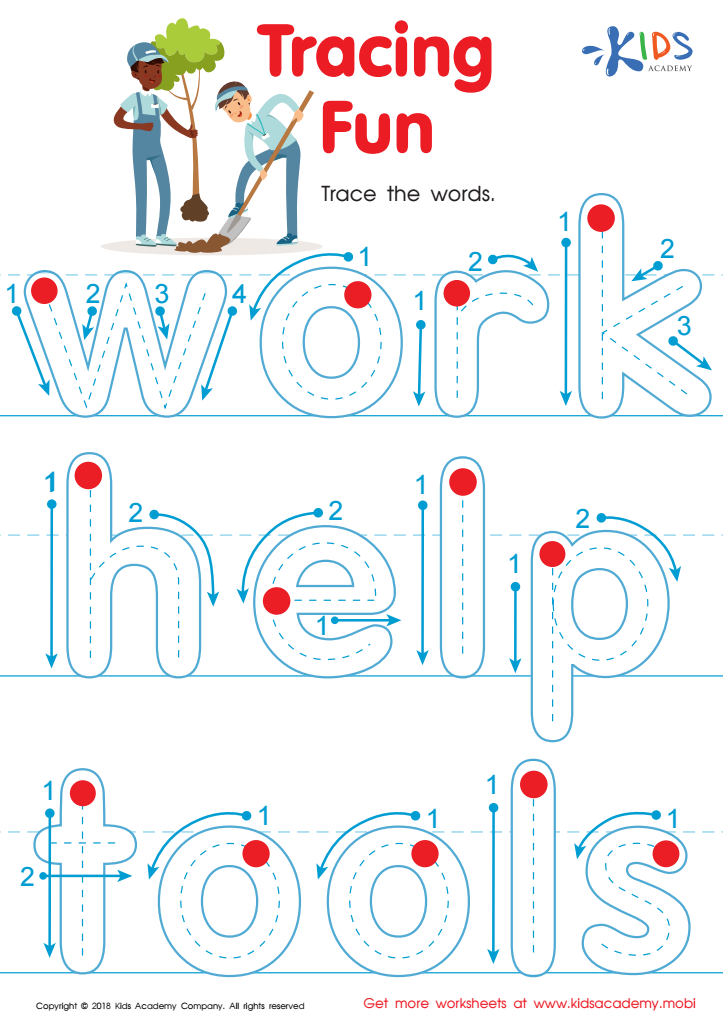
Tracing Fun Worksheet
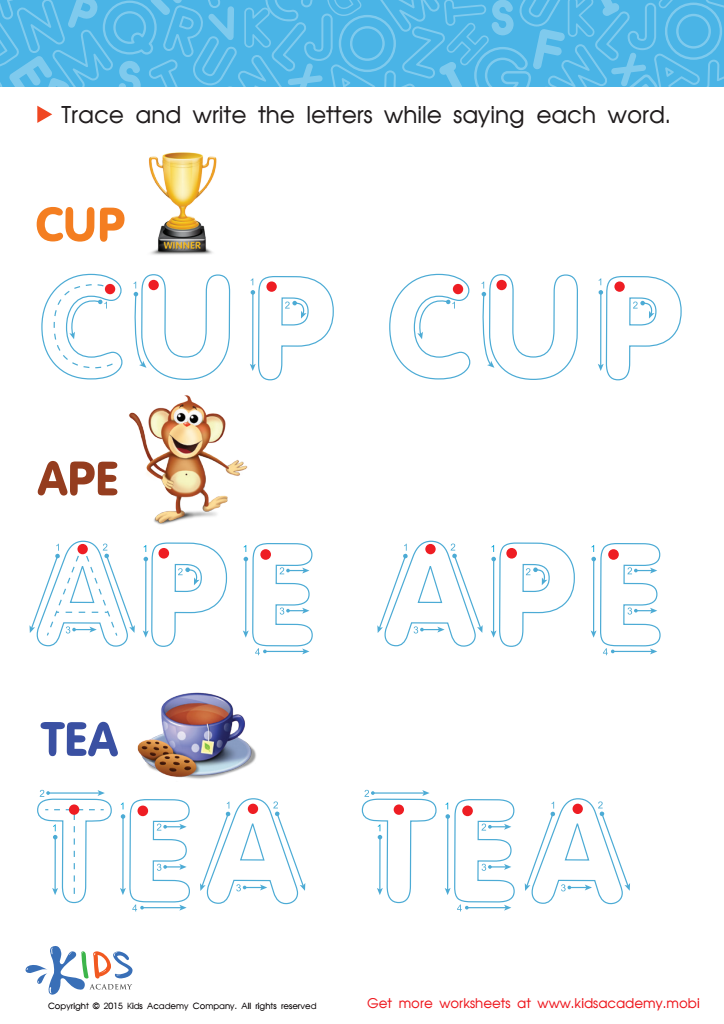
A Cup, an Ape and Tea Spelling Worksheet








Letter recognition and normal tracing activities are foundational for children ages 6-7 as they transition from early childhood into more structured learning environments. This stage is critical for several reasons. First, letter recognition is a key predictor of reading success. Understanding and identifying letters enables children to connect written symbols with their corresponding sounds, fostering skills crucial for decoding words and reading fluently.
Engaging children in normal tracing activities further reinforces letter recognition by enhancing their fine motor skills. Tracing helps mature the fine motor control necessary for handwriting, setting a robust groundwork for their writing abilities. Through repetition and practice, children develop muscle memory, making it easier to form letters legibly and consistently.
These activities also promote cognitive development by encouraging focus, attention to detail, and visual-spatial awareness. Successfully recognizing and tracing letters bolsters a child's confidence, positively influencing their attitude toward learning.
Moreover, letter recognition and tracing have social benefits. As children master these foundational skills, they can more actively participate in classroom activities, benefiting from peer interactions and collaborative learning opportunities. In essence, prioritizing these early educational activities equip children with essential tools for academic success, social development, and overall confidence in a classroom setting, laying the groundwork for lifelong learning.