
Reading proficiency Normal Phonics Worksheets for Ages 6-8
7 filtered results
Difficulty Level
Grade
Age
-
From - To
Subject
Activity
Standards
Unlock reading success with our Reading Proficiency Normal Phonics Worksheets for ages 6-8. Tailored specifically for early learners, these engaging and educational worksheets boost reading skills through fun phonics activities. Our carefully crafted exercises guide children in mastering the alphabet, recognizing phonemes, and blending sounds, setting a solid foundation for fluent reading. Perfect for home or classroom use, these worksheets not only support academic achievement but also foster a love for reading. Trust our proven methods to enhance your child's literacy journey and watch their confidence soar with every completed worksheet.
Favorites
With answer key
Interactive
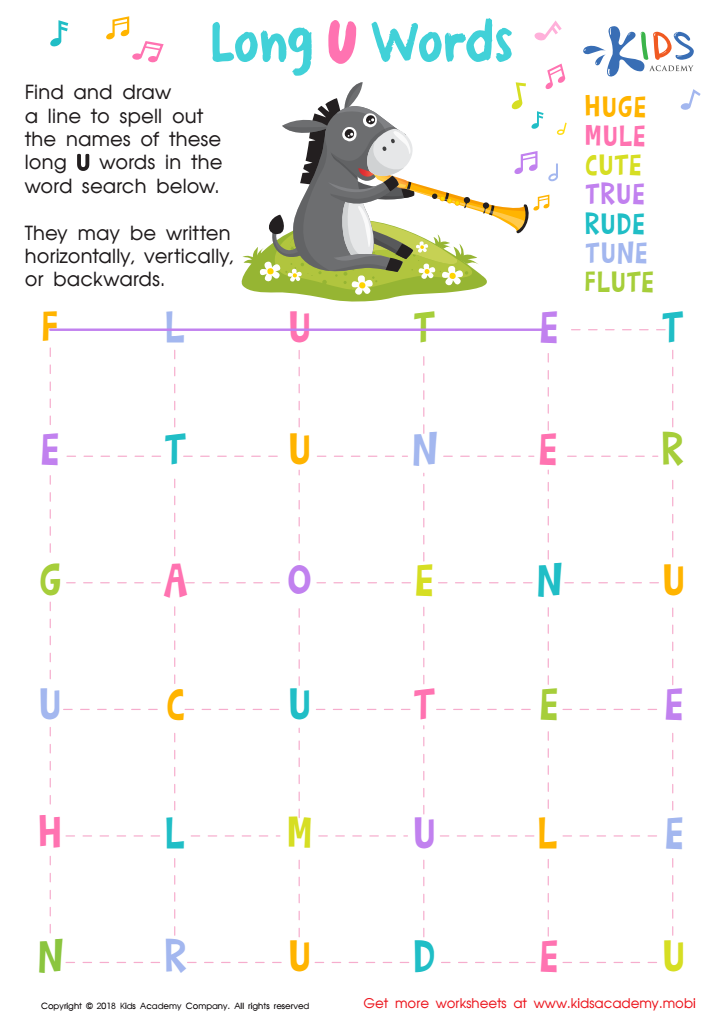
Long /u/ Words Worksheet
Your child needs to learn phonetics to enunciate and differentiate words. This fun worksheet encourages them to find and draw lines connecting the long 'U' words in the word search. Help them read the words on the right side of the picture, then look for them in the word search (horizontally, backwards or vertically).
Long /u/ Words Worksheet
Worksheet
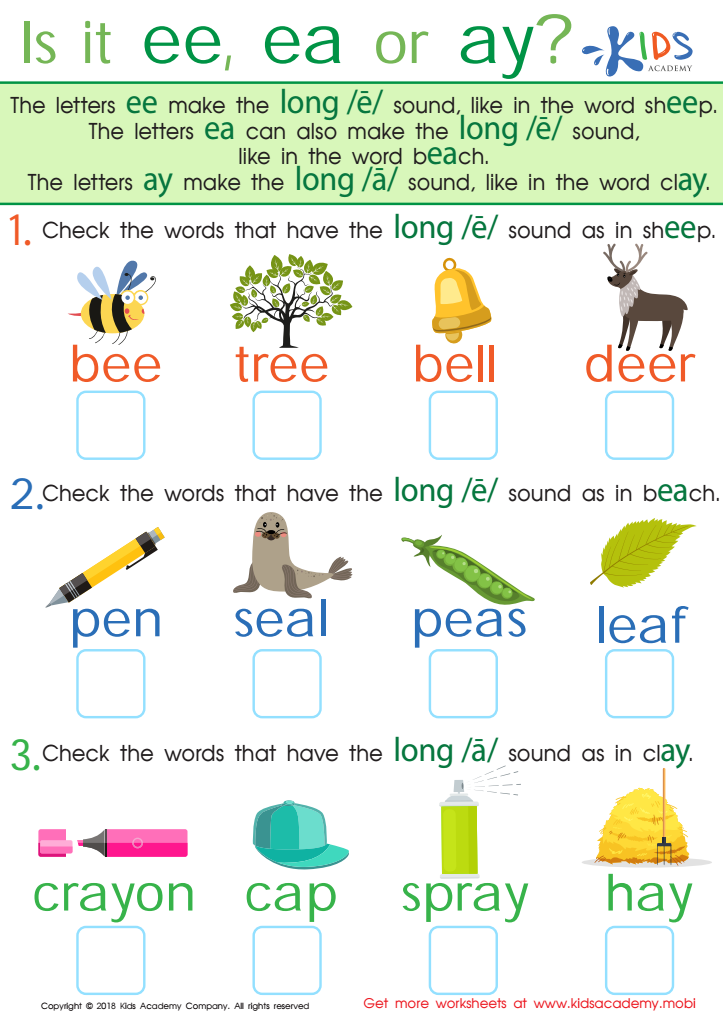
Is It EE, EA, or AY? Worksheet
When 'ee', 'ea' and 'ay' are in words, they usually make the long /e/ and /a/ sounds. Examples of words with 'ee' are "sheep", 'beach' and 'seat' with 'ea', and 'clay' and 'play' with 'ay'. Check this colourful worksheet with your kids; help them find the words that make the long /e/ sound like 'sheep'.
Is It EE, EA, or AY? Worksheet
Worksheet
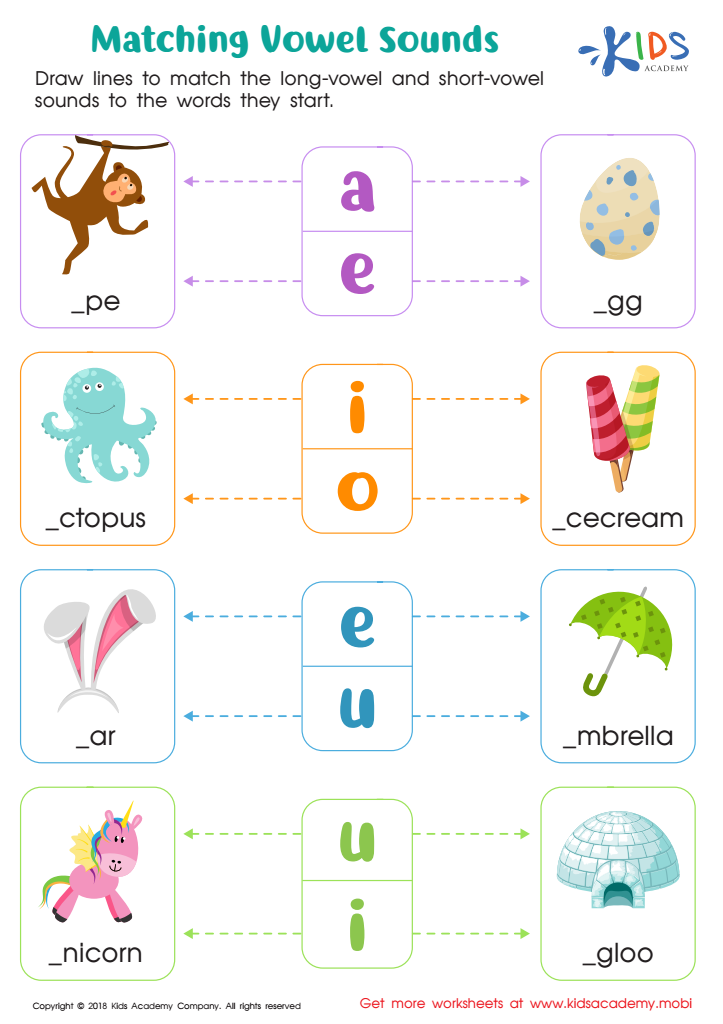
Matching Vowel Sounds Worksheet
Teach your child phonics with a fun worksheet! Ask your child to name a vowel sound and listen if it's long or short. Differentiating between long and short vowel sounds can be tricky, but this matching worksheet makes it easy for kids to understand. Have fun and master phonics - the worksheet will help them understand the difference between long and short vowel sounds!
Matching Vowel Sounds Worksheet
Worksheet

Long and Short U Worksheet
Revised: Spice up your lesson on long and short vowels with this fun printout! Kids read the words "tube" and "tub," then reinforce the sound by coloring in the words and pictures. It's a great way to make phonics class enjoyable!
Download (PDF)
 Assign to My Students
Assign to My Students
Long and Short U Worksheet
Worksheet
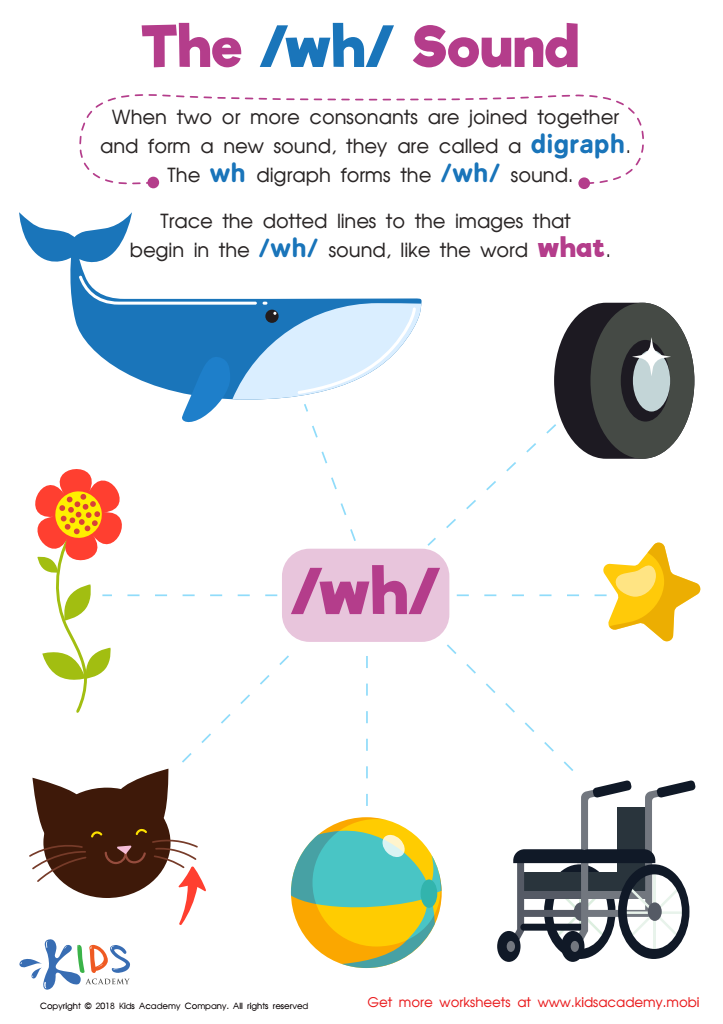
The /wh/ Sound Worksheet
Digraphs join two consonants to make a new sound, like /wh/. Give examples, like "whale", "when" and "why". Ask kids to name pictures in a worksheet and trace dotted lines to images beginning with the /wh/ sound; "what" is one example.
The /wh/ Sound Worksheet
Worksheet
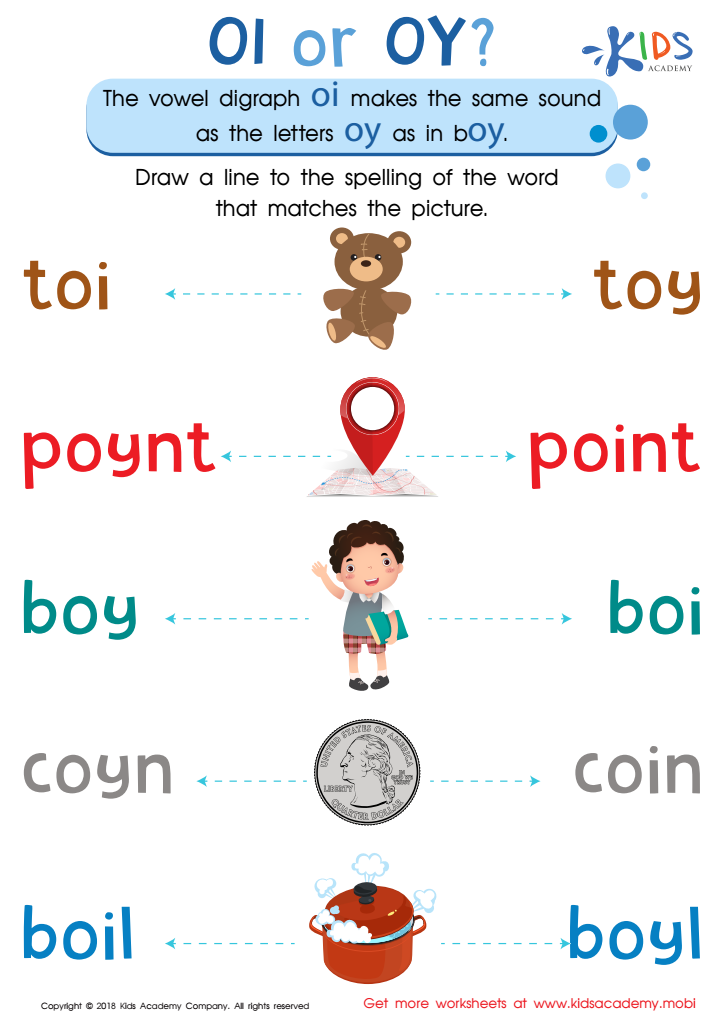
Reading: OI and OY Worksheet
Ask your students if they know the rule for words with /oi/ or /oy/ sound. If not, it's easy to learn! Rule: If /oy/ at end of word, spell with 'oy'; if /oi/ in middle of word, spell with 'oi'. Use this worksheet to help them master these digraphs and improve their ability to decode.
Reading: OI and OY Worksheet
Worksheet
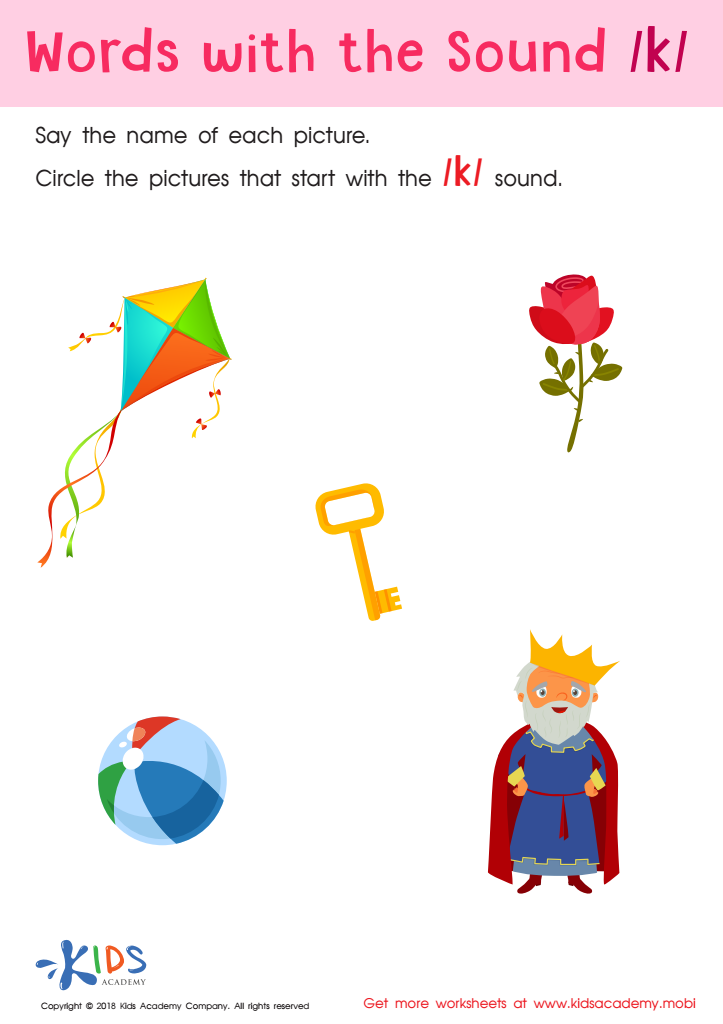
Words with sound k Reading Worksheet
Help your preschooler master the hard "k" sound with this fun worksheet from Kids Academy! Ask your child to say each picture aloud and circle only the pictures that start with "k". This early reading exercise will boost phonics skills and is sure to be loved by your little learner!
Words with sound k Reading Worksheet
Worksheet
Join Kids Academy for Free
Who is primarily going to use this learning content?








Reading proficiency and phonics mastery for children aged 6-8 are critical components of early education that parents and teachers should prioritize. During these early years, children are in a crucial period of cognitive development, where foundational skills in reading are established. Proficiency in reading and phonics forms the bedrock for future academic success and lifelong learning.
When children master phonics, they learn to decode words by understanding the relationship between letters and their sounds. This skill is essential for fluency in reading, enabling children to read more quickly and accurately. Phonemic awareness helps children understand how sounds form words, crucial for both reading comprehension and spelling skills.
Moreover, strong reading skills enhance overall cognitive development, promoting better vocabulary, improved focus, and critical thinking skills. Children who struggle with reading and phonics may fall behind in other subjects, as reading is integral to learning across the curriculum.
It’s also important to recognize the broader implications: Early reading success positively influences a child's self-esteem and confidence. When children feel competent in reading, they are more likely to enjoy learning and approach new material with enthusiasm.
In summary, investing time and resources in teaching reading proficiency and normal phonics to children aged 6-8 fosters essential academic, cognitive, and emotional benefits that impact their long-term educational journey.







