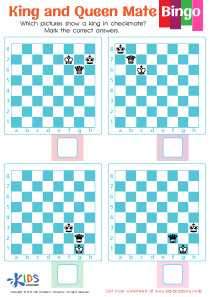
Understanding chess rules Normal Chess Worksheets for Ages 6-8
5 filtered results
Difficulty Level
Grade
Age
-
From - To
Subject
Activity
Standards
Welcome to our "Understanding Chess Rules" worksheets designed specifically for children aged 6 to 8! These engaging and educational resources help young learners grasp the fundamental rules of chess in a fun and interactive way. With colorful illustrations and user-friendly activities, kids will explore the basics of piece movement, capturing, check and checkmate, and algebraic notation. Perfect for beginner players, these worksheets enhance critical thinking and problem-solving skills while promoting strategic gameplay. Download our printable resources, and watch your child's confidence and interest in chess grow as they master the game's essential rules! Start your chess journey today!
Favorites
With answer key
Interactive
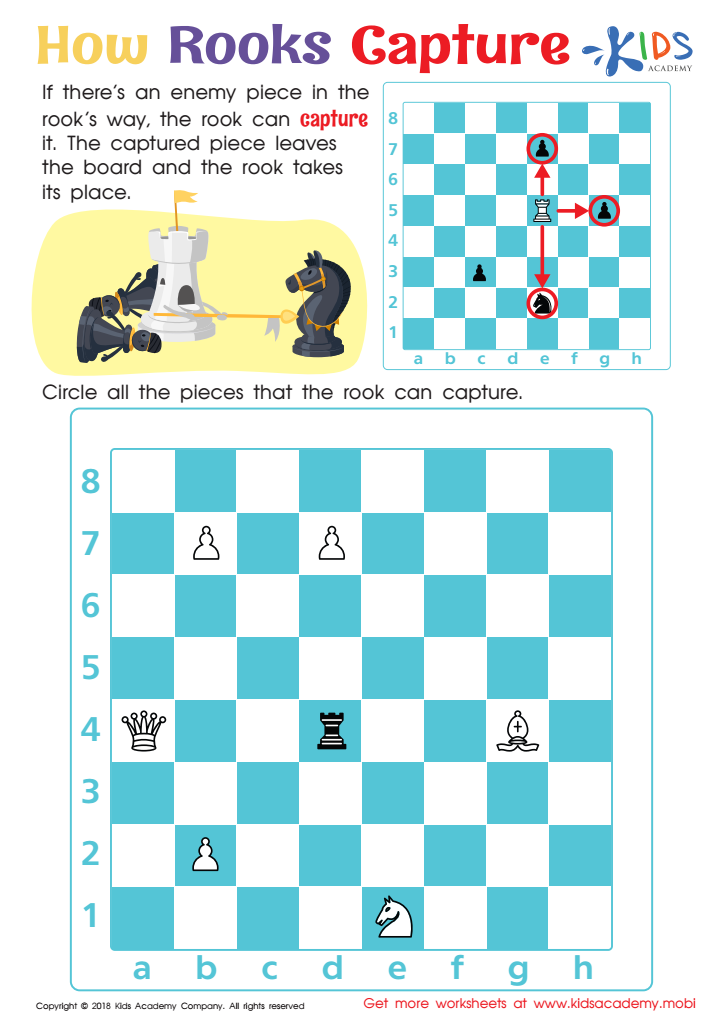
How Rooks Capture Worksheet
Chess is a game that requires skill, concentration and planning. Players must move their chess pieces strategically to capture pieces from their opponent. Do your kids know how to use the rook to capture pieces? Go through the worksheet with them and circle the pieces the rook can capture.
How Rooks Capture Worksheet
Worksheet
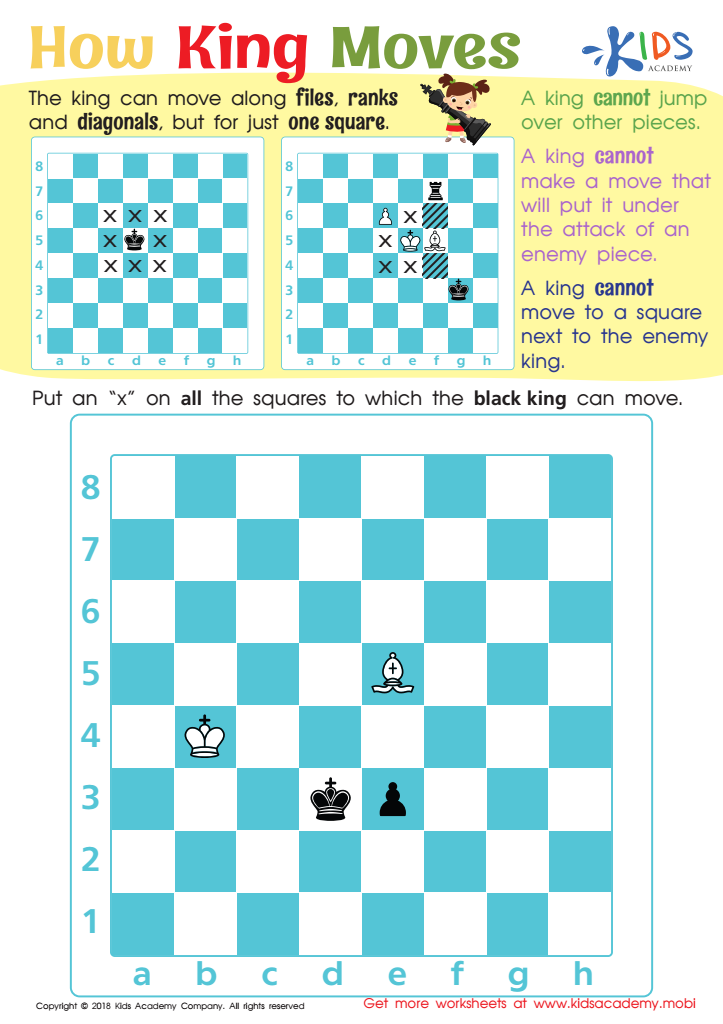
How King Moves Worksheet
Teach your kids the fundamentals of chess with this worksheet! The goal is to checkmate the opponent's king, so it must be protected at all times. The king moves along files, ranks, and diagonals (except one square at a time), and cannot move to a square next to the enemy king. Your kids will soon master the art of checkmate!
 Assign to My Students
How King Moves Worksheet
Worksheet
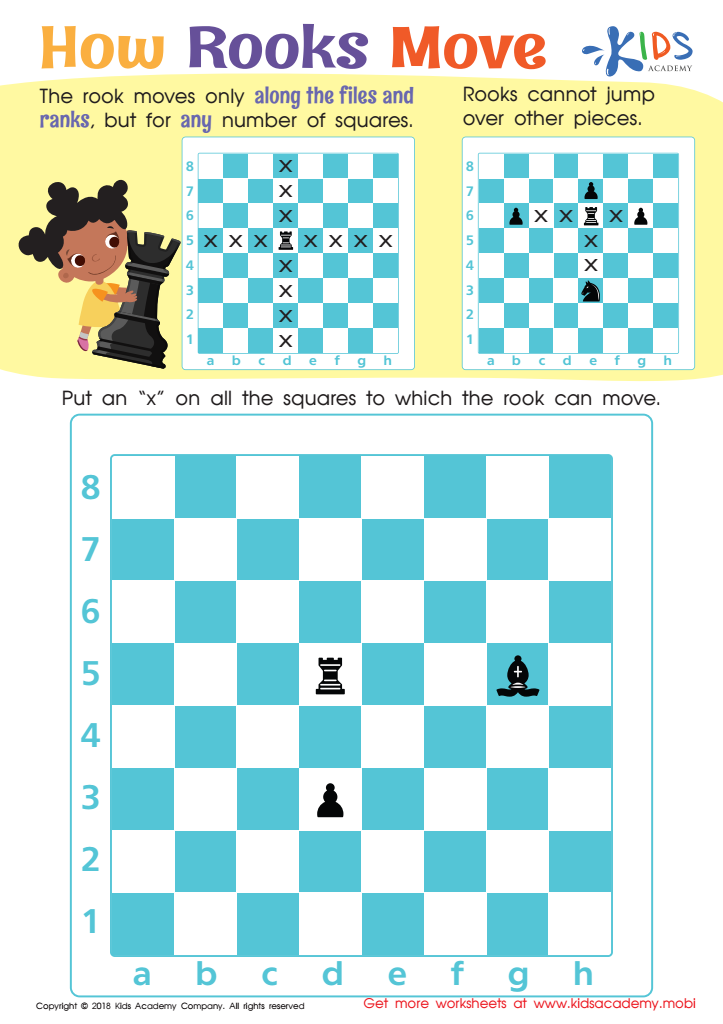
How Rooks Move Worksheet
Help your kids master chess with this worksheet! Explain how rook pieces move along ranks and files, and have them mark the squares it can move to. Note that it can't jump over other pieces. With your guidance, they'll soon understand the game they love.
How Rooks Move Worksheet
Worksheet
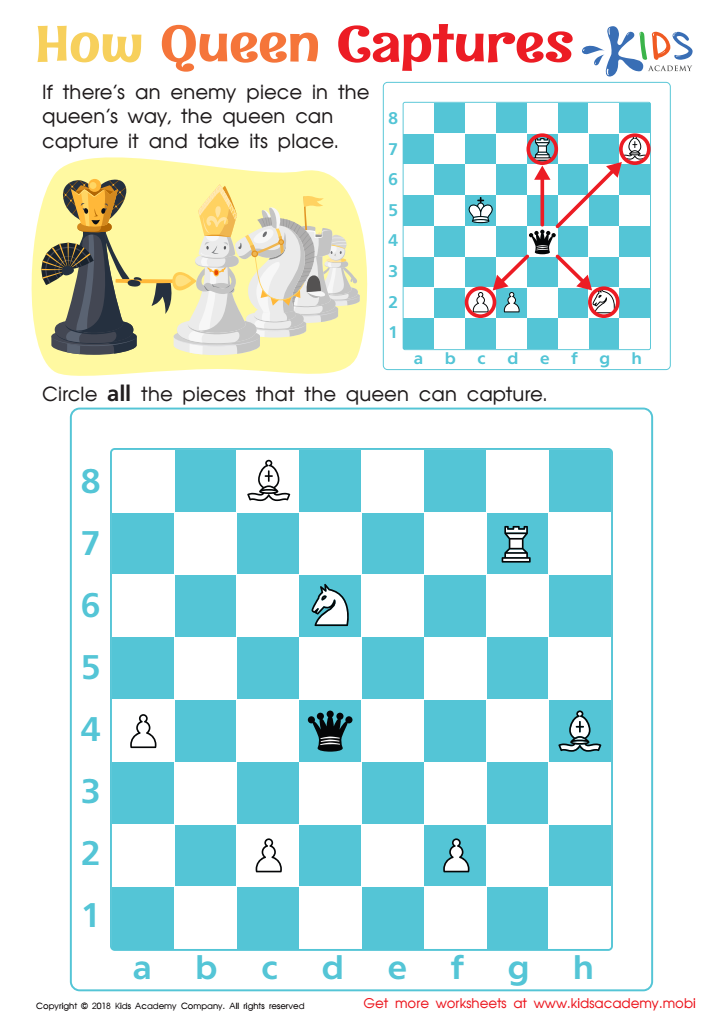
How Queen Captures Worksheet
Chess is a great game for sharpening math skills, strategic thinking, and knowledge of how each piece moves. If your child is interested, introduce them with this worksheet. It demonstrates how the queen can capture opposing pieces, such as another queen, and take their place.
How Queen Captures Worksheet
Worksheet
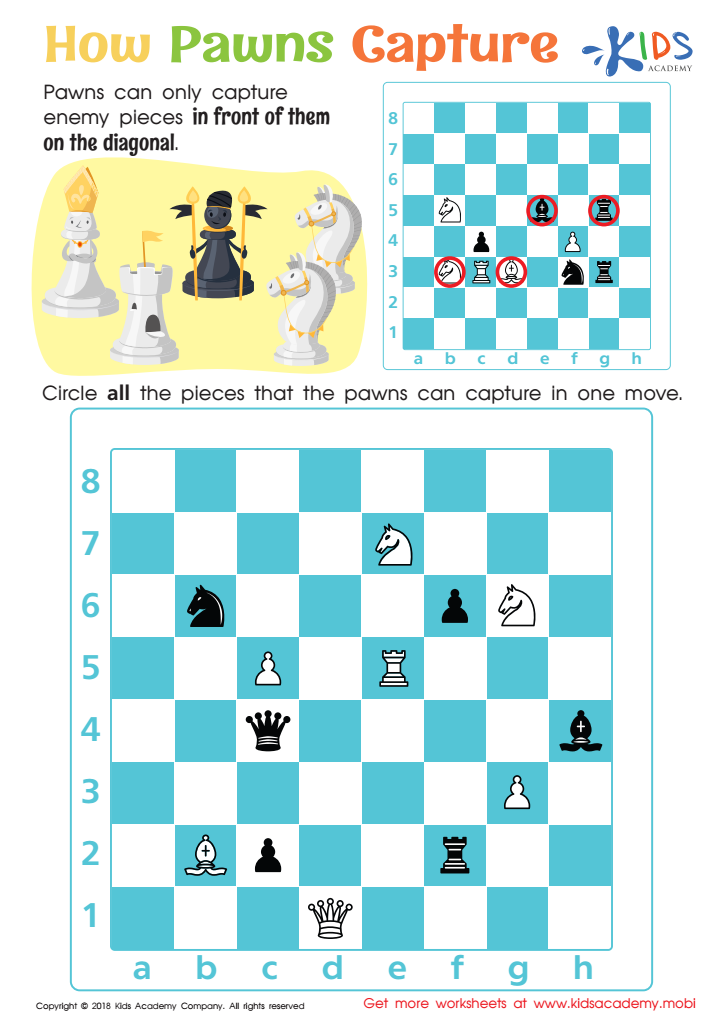
How Pawns Capture Worksheet
Ask your child to circle all the places a pawn can capture in one move on the diagonal. Pawns are limited in the moves they can make, but can still capture enemy pieces. This worksheet will help brush up on their knowledge of the rules of chess.
How Pawns Capture Worksheet
Worksheet
Join Kids Academy for Free
Who is primarily going to use this learning content?






Understanding chess rules is vital for both parents and teachers, especially when introducing the game to children aged 6-8. Chess offers a unique combination of cognitive development and social interaction, making it an invaluable tool for young learners. First, learning the basic rules of chess helps enhance critical thinking and problem-solving skills. As children strategize each move, they learn to anticipate their opponent’s actions and devise effective responses—a foundational skill that extends beyond the board.
Moreover, chess fosters patience and discipline. As children contend with the game’s complexities, they learn the importance of focus and perseverance in achieving goals. Collaboratively playing chess can also strengthen relationships between parents, teachers, and students, as shared learning activities create inclusive environments.
Lastly, understanding chess helps in cognitive skills like memory and concentration. At a young age, these foundational practices support better academic performance across various subjects. Therefore, when parents and teachers prioritize learning chess in early education, they equip children with essential life skills that extend well beyond the game itself, leading to a well-rounded approach to personal development.