
Chess strategy understanding Normal Worksheets for Ages 6-8
3 filtered results
Difficulty Level
Grade
Age
-
From - To
Subject
Activity
Standards
Unlock the world of chess for young learners with our "Chess Strategy Understanding Normal Worksheets" designed specifically for ages 6-8. These engaging worksheets introduce essential chess concepts in a fun and accessible way, encouraging critical thinking and problem-solving skills early on. Each activity focuses on essential strategies, tactics, and the fundamentals of the game, allowing children to develop their chess understanding at their own pace. Ideal for home or classroom use, these worksheets enhance cognitive skills while sparking a lifelong interest in chess. Dive into creative exercises that make learning chess exciting and enjoyable! Ideal for budding chess masters!
Favorites
With answer key
Interactive
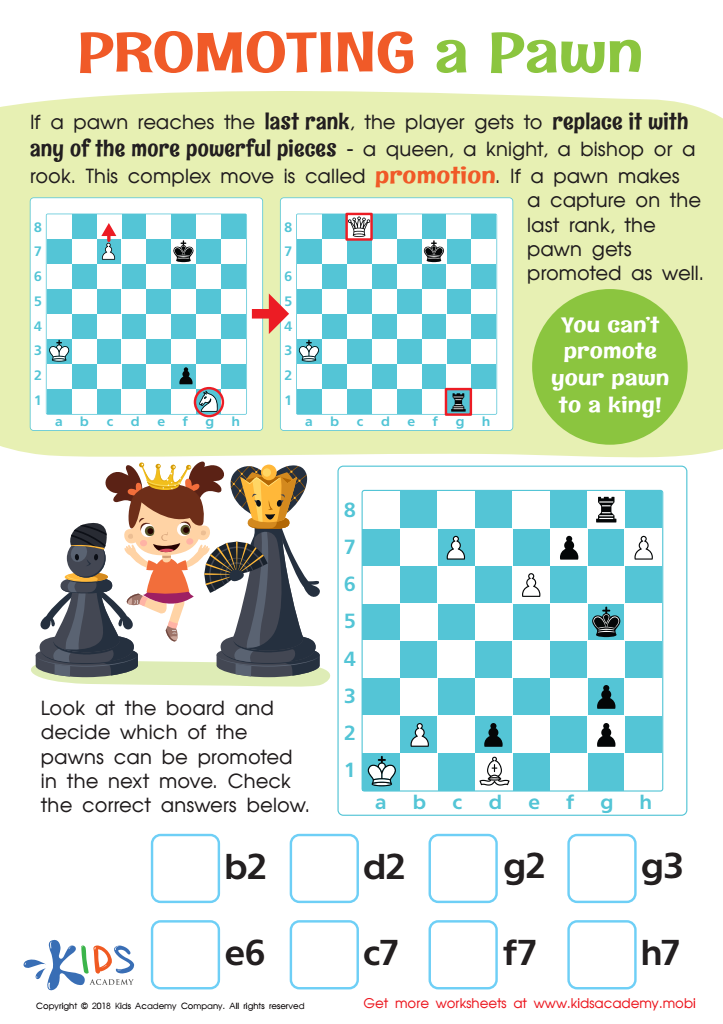
Promoting a Pawn Worksheet
Teach your kids all about pawns with this fun worksheet! Pawns may seem restricted, but experienced players can guide them across the board. If a pawn reaches the last rank, the player can upgrade it to a more powerful piece (e.g. queen, knight), or promote it if it captures an enemy piece. Give them the tools to master the game!
 Assign to My Students
Promoting a Pawn Worksheet
Worksheet
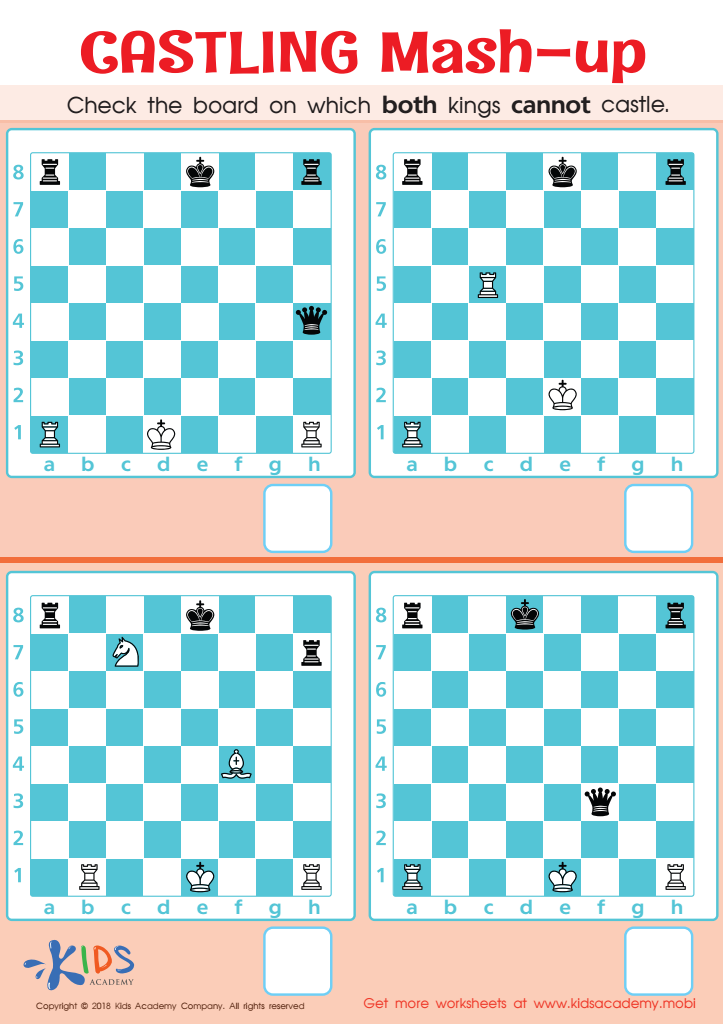
Castling Mash–up Worksheet
Before starting the worksheet, ensure your child understands castling in chess. If not, take time to explain it. Once they have a clear grasp of the rules, help them complete the exercise. Check the board to ensure that neither king can castle.
Castling Mash–up Worksheet
Worksheet
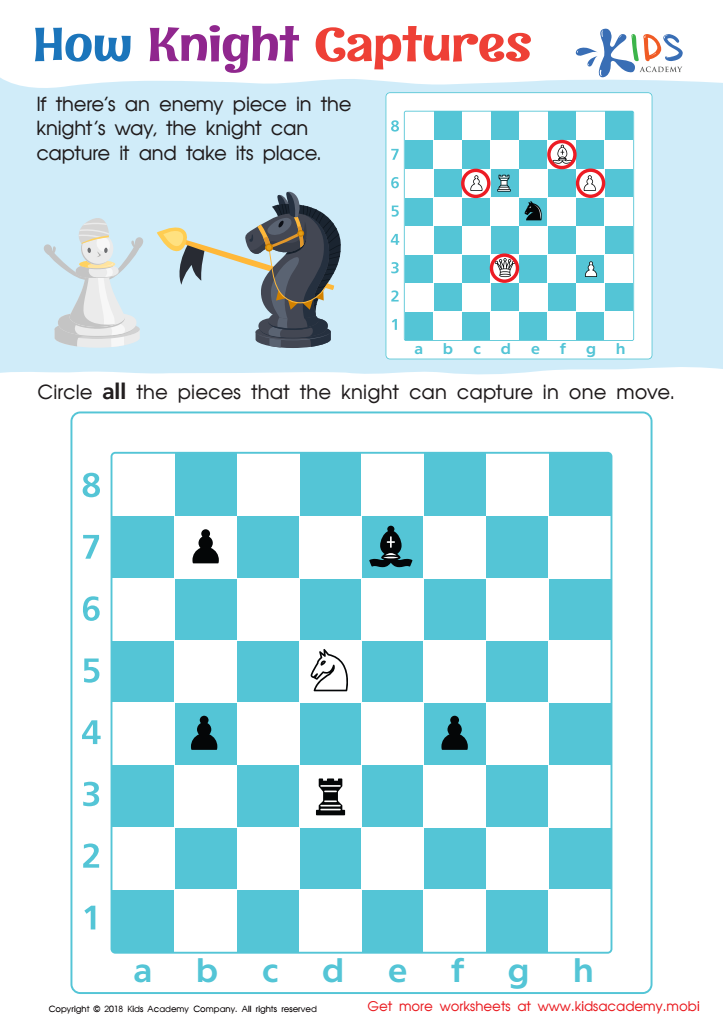
How Knight Captures Worksheet
Test your child's knowledge of chess pieces by asking them to identify the knight. It is shaped like a horse and its goal is to capture the enemy king in order to win the game. The knight has the advantage of being able to jump over other pieces, taking them out and taking their place. See how many pieces the knight can capture in one move with this worksheet.
How Knight Captures Worksheet
Worksheet
Join Kids Academy for Free
Who is primarily going to use this learning content?







Understanding chess strategy is beneficial for children aged 6-8 as it fosters critical thinking, problem-solving skills, and cognitive development. Engaging with chess helps young learners enhance their concentration and memory, as they must remember the movements of various pieces and anticipate opponents' moves. This form of mental exercise promotes strategic planning, teaching kids to think several steps ahead—a skill that transcends the game and applies to daily life decisions.
Moreover, chess encourages patience and resilience; children learn to cope with losses, analyze decisions, and develop a growth mindset, which is crucial for personal development. Playing chess also enhances creativity, as students explore various possibilities in every game, experimenting with different tactics and solutions.
From a social perspective, chess provides an excellent platform for children to engage with peers, fostering camaraderie and sportsmanship. They learn to appreciate the value of taking turns and respecting others, powerful lessons that contribute to their social skills.
For parents and teachers, introducing chess strategy into young learners’ lives assists in developing well-rounded individuals equipped not only for academic achievement but also for interpersonal success in their future endeavors. Incorporating chess into their routines is a meaningful investment in their overall growth and development.








