Differentiating goods/services Normal Worksheets for Ages 6-8
3 filtered results
-
From - To
Explore our engaging "Differentiating Goods/Services Normal Worksheets" designed specifically for children ages 6-8. These worksheets help young learners understand the essential difference between goods and services, a vital skill for their early education. Through fun and interactive activities, children will identify everyday items and experiences, enhancing their comprehension and critical thinking. Our worksheets are aligned with early learning standards and encourage growth in essential skills such as reading, problem-solving, and categorization. Perfect for classroom use or at-home learning, these resources make understanding economic concepts fun and accessible. Join us in making learning enjoyable and impactful for your child!
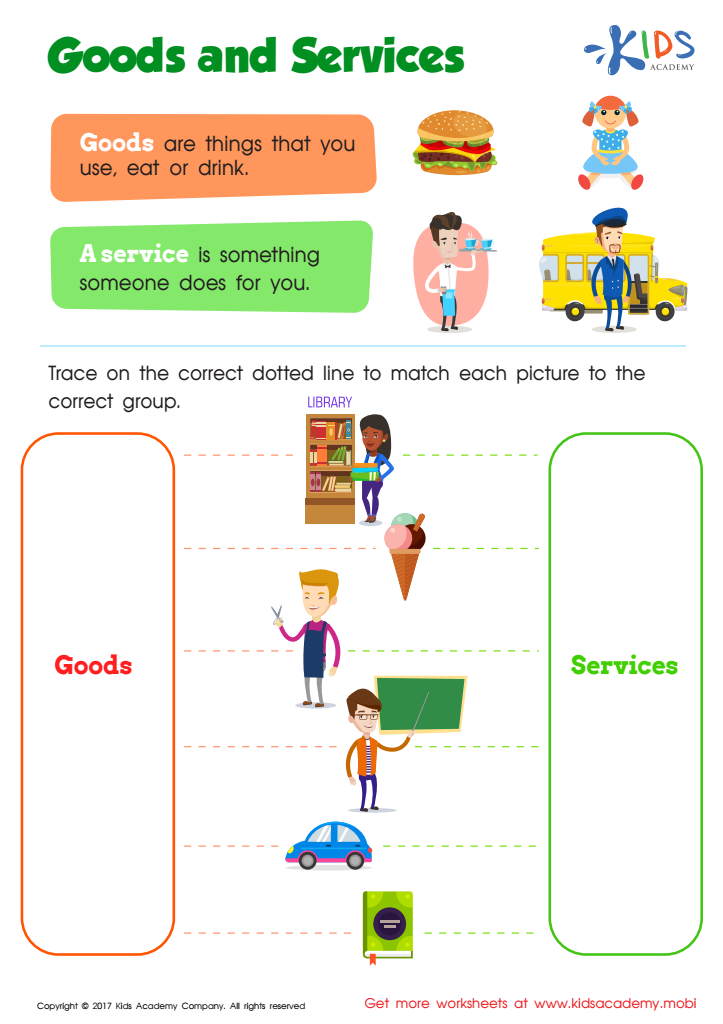
 Assign to My Students
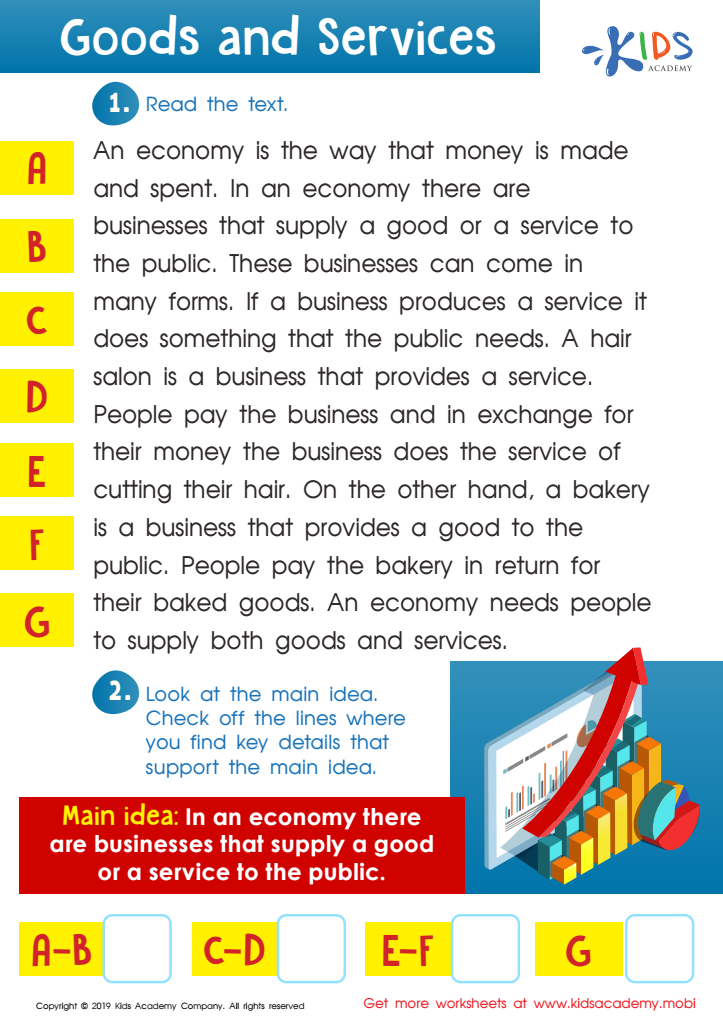
Goods and Services Worksheet
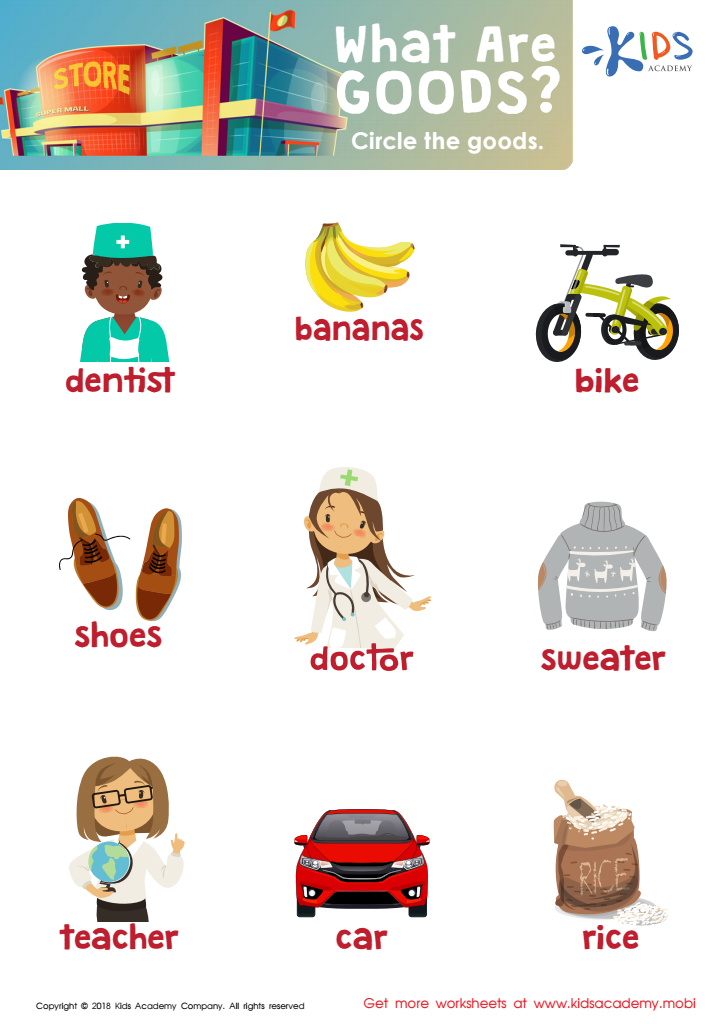
What Are Goods? Worksheet






.jpg)

Differentiating goods and services is essential for parents and teachers of children aged 6-8 because it acknowledges the diverse needs and learning styles within this age group. Children at this stage are developing their identities and skills, making it crucial to provide them with tailored supports that cater to their individual interests, strengths, and challenges.
By differentiating educational experiences and resources, teachers can better engage students and facilitate deeper understanding. For example, some children might learn better with hands-on activities, while others may excel with visual aids or group discussions. Providing a variety of approaches nurtures a love for learning and fosters confidence as students discover the best ways for them to achieve success.
Moreover, parents who recognize the importance of differentiated goods in their children's learning can enhance at-home experiences through customized educational tools, games, and crafts that resonate with their child’s unique interests. This can reinforce skills learned at school, making the practice more enjoyable.
Ultimately, addressing individual differences ensures that all children thrive academically and socially. Supporting differentiation benefits not only the students but also empowers teachers and parents to create a rich, inclusive learning environment where every child can flourish.








