Interpreting data Normal Worksheets for Ages 6-8
4 filtered results
-
From - To
Foster your child's analytical skills with our "Interpreting Data Normal Worksheets" designed for ages 6-8. These engaging and educational worksheets help young learners grasp essential concepts in data interpretation through fun exercises and activities. Your child will learn how to read and analyze charts, tables, and graphs, honing their ability to draw conclusions from visual data. Our age-appropriate worksheets not only support classroom learning but also enhance critical thinking and problem-solving abilities. Perfect for parents and teachers seeking quality resources, these worksheets make data interpretation both exciting and accessible for young minds. Explore a world of learning with Kids Academy!
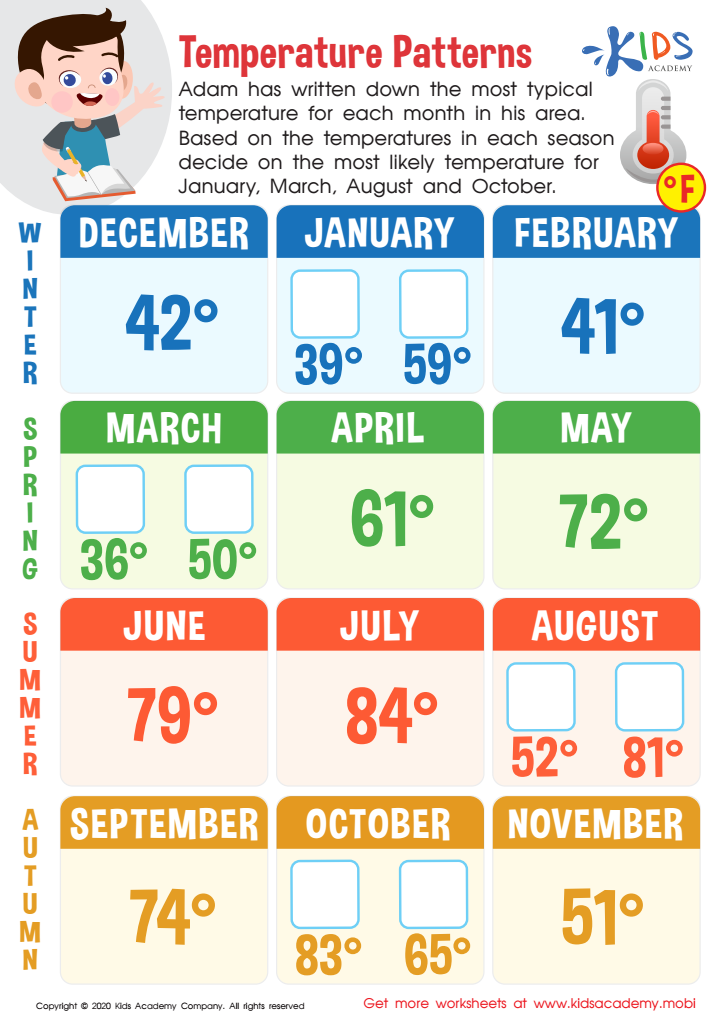
Temperature Patterns Worksheet
 Assign to My Students
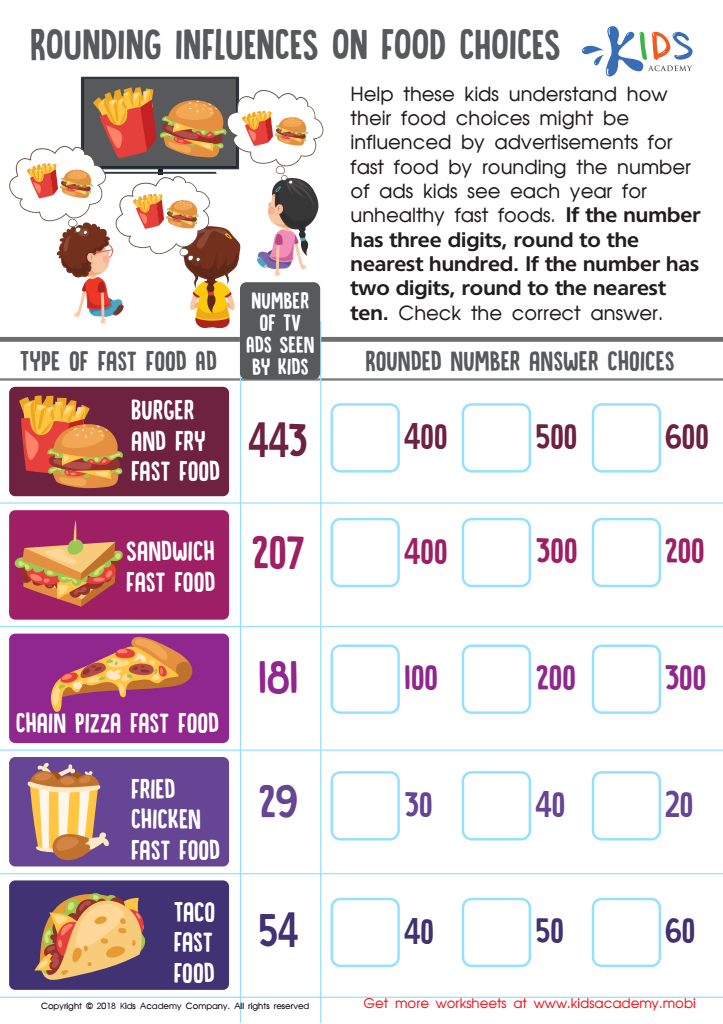
Rounding Influences Food Choices Worksheet
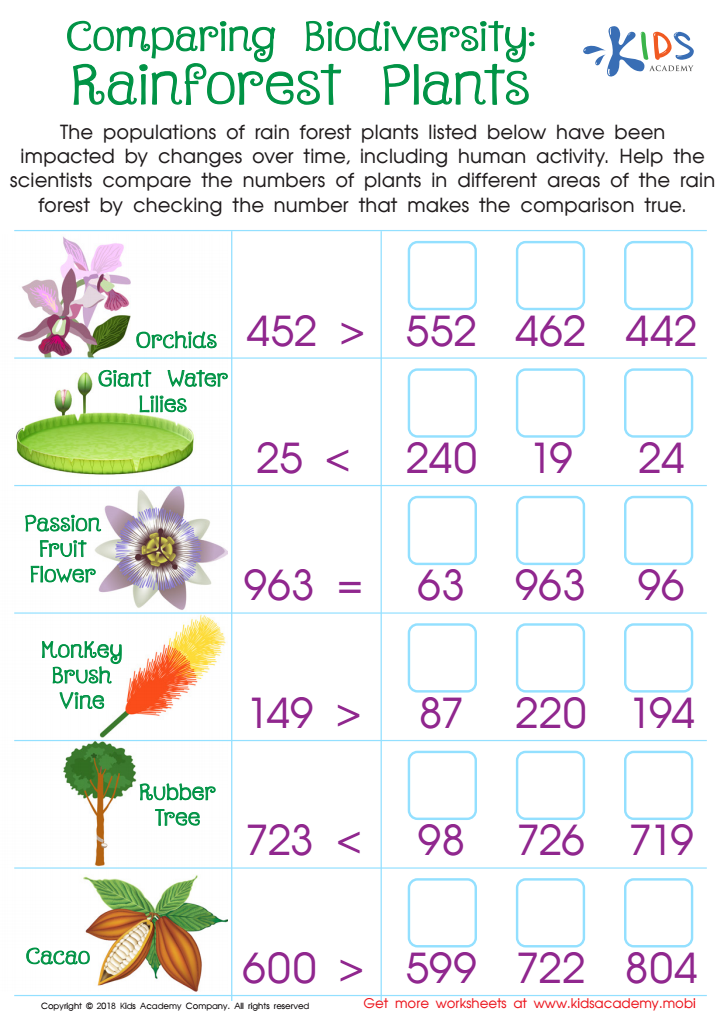
Comparing Biodiversity: Rainforest Plants Worksheet
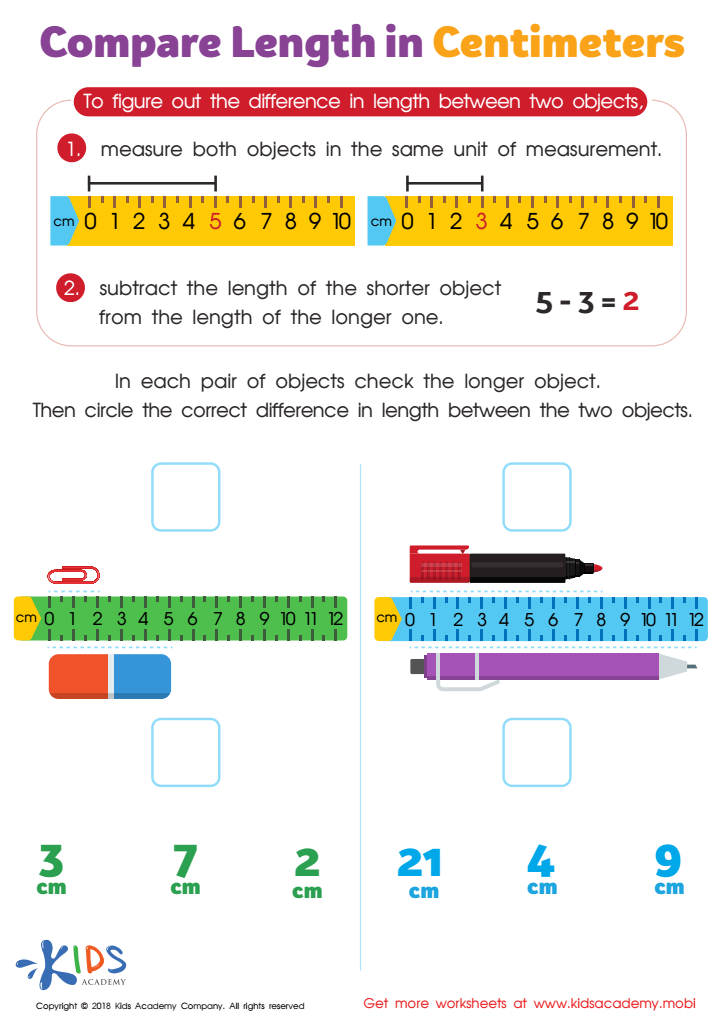
Compare Length in Centimeters Worksheet








Interpreting data is a fundamental skill that enables children to grasp the world around them. For ages 6-8, developing this skill is crucial as it lays the groundwork for more advanced analytical abilities they will need in later life. Parents and teachers should care about teaching this because it helps kids understand how to gather, organize, and make sense of information, all of which are critical learning processes.
At this age, children encounter data daily, whether they realize it or not—in weather charts, daily timetables, or even in simple counting activities. Teaching them to interpret data nurtures their reasoning skills and mathematical thinking. It grounds them in the practical use of numbers and patterns, turning abstract concepts into understandable ideas.
Moreover, early exposure to data interpretation foster skills like critical thinking and decision-making. For example, understanding and discussing a simple chart about their favorite fruits can evolve into making decisions about healthy eating based on data.
From a developmental view, kids in this age group have curious, flexible minds eager to explore new skills. By encouraging an early interest in data interpretation, parents and teachers help children become more comfortable with complexity and ambiguity, preparing them for future academic challenges and everyday problem-solving. Therefore, interpreting data is not only about math; it's essential for holistic cognitive development.








