Lowercase identification Normal Worksheets for Ages 6-8
4 filtered results
-
From - To
Boost your child's literacy skills with our engaging Lowercase Identification Normal Worksheets, designed specifically for ages 6-8. These worksheets provide a fun and interactive way for young learners to recognize and identify lowercase letters. Each activity encourages differentiation and exploration, fostering a love for reading and writing. From tracing to matching exercises, our resources cater to various learning styles, ensuring every child can thrive. Whether used in the classroom or at home, these worksheets are perfect for building foundational skills while enhancing fine motor development. Download today and watch your child's confidence in lowercase letter recognition soar!
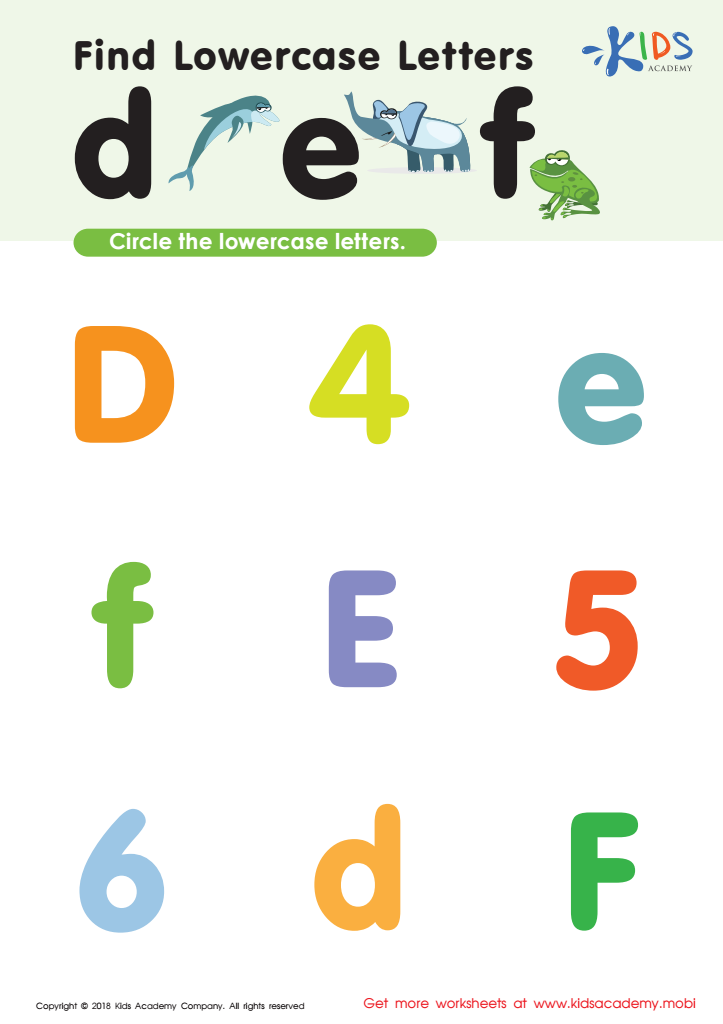
Find Lowercase Letters d e f Worksheet
 Assign to My Students
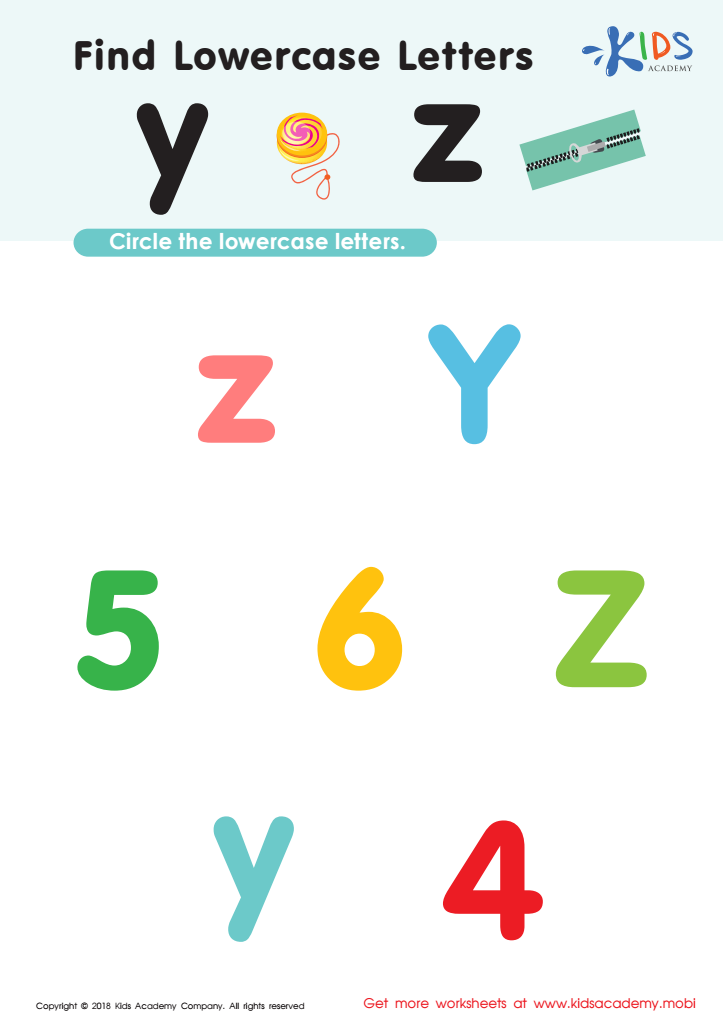
Find Lowercase Letters y z Worksheet

Find lowercase letters a b c Worksheet
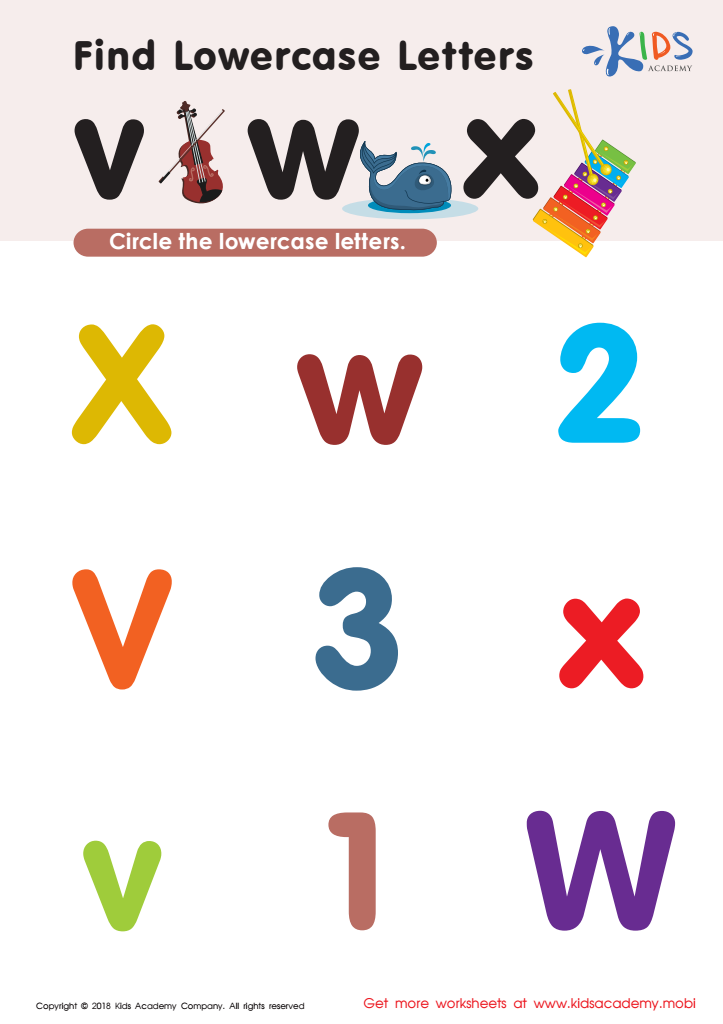
Find Lowercase Letters v w x Worksheet







Lowercase identification is a fundamental skill for children aged 6-8, playing a crucial role in their literacy development. At this age, children transition from learning letters to recognizing them in various contexts, including reading and writing. Understanding lowercase letters helps them decode words, facilitating smoother reading experiences. When children can accurately identify lowercase letters, they gain confidence in their ability to read independently.
For parents and teachers, fostering lowercase identification is important because it directly affects a child's school readiness and academic success. Proficient recognition of lowercase letters enables children to engage with texts, enhancing their vocabulary and comprehension skills. Additionally, as children begin to write, understanding the distinctions between uppercase and lowercase letters supports proper grammar and enhances their writing fluency.
Moreover, early mastery of lowercase letters lays a bit of a foundation for more complex literacy skills, such as spelling and word formation, reinforcing a child’s overall literacy journey. Thus, parents and teachers should prioritize and nurture lowercase identification, as it contributes positively to a child’s educational experience, promotes a love for reading, and equips them with the necessary skills for future learning endeavors.








