Phonological awareness Normal Worksheets for Ages 6-8
4 filtered results
-
From - To
Unlock your child's reading potential with our Phonological Awareness Normal Worksheets specifically designed for ages 6-8! These engaging and interactive worksheets focus on developing vital phonological skills, such as syllable counting, rhyme recognition, and sound segmentation. Perfect for early learners, each worksheet features fun activities that keep kids entertained while building their vocabulary and comprehension abilities. Tailored to align with educational standards, our resources make learning enjoyable and effective, ensuring your child develops a strong foundation in literacy. Download and print these worksheets today to support your child's learning journey and watch their confidence soar in reading and language skills!
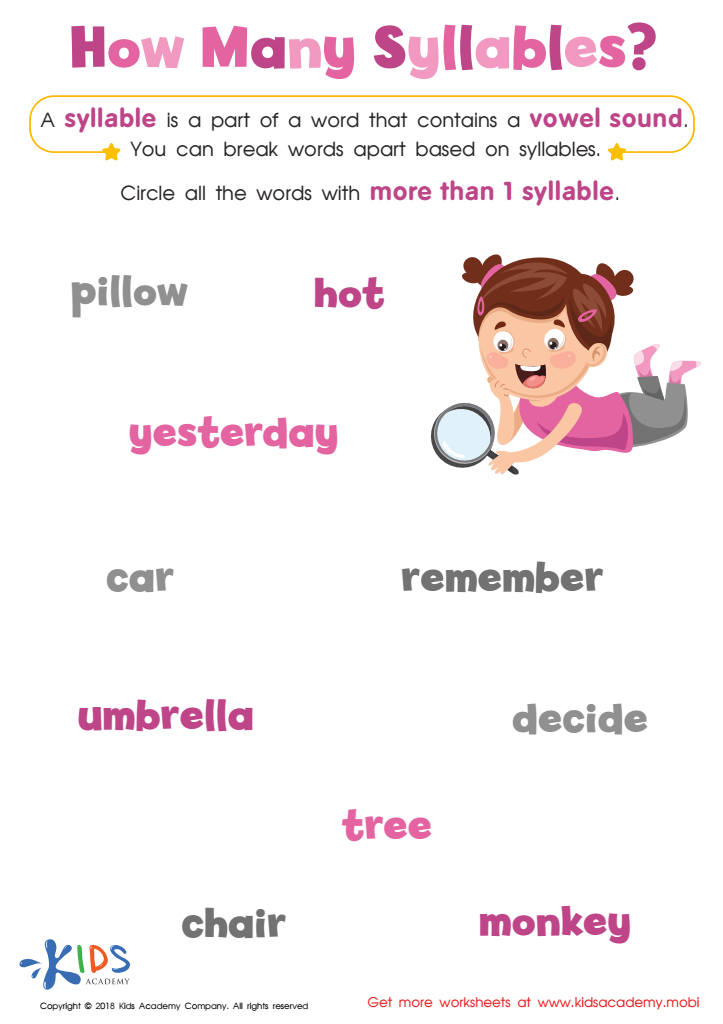
Reading: How Many Syllables Worksheet
 Assign to My Students
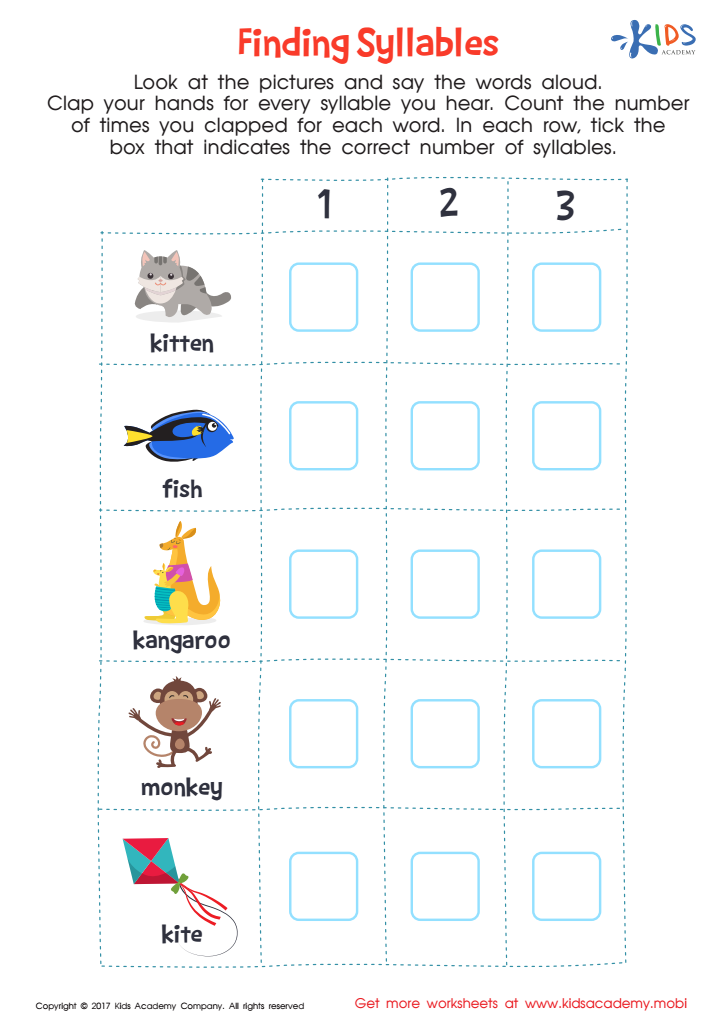
Finding Syllables Word Structure Worksheet
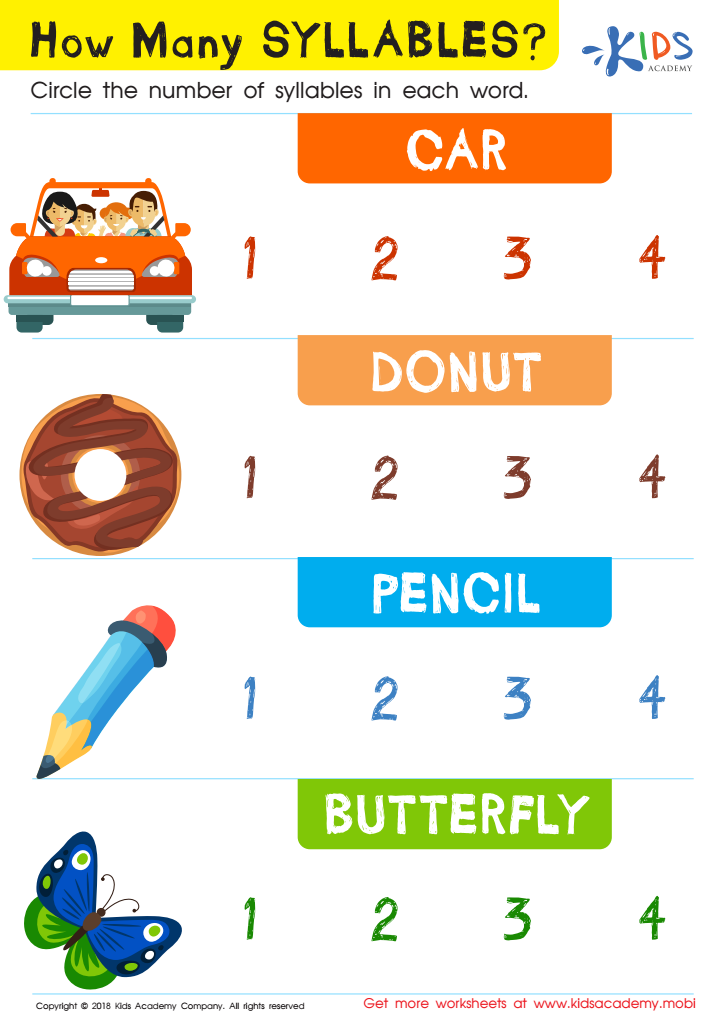
How Many Syllables? Worksheet
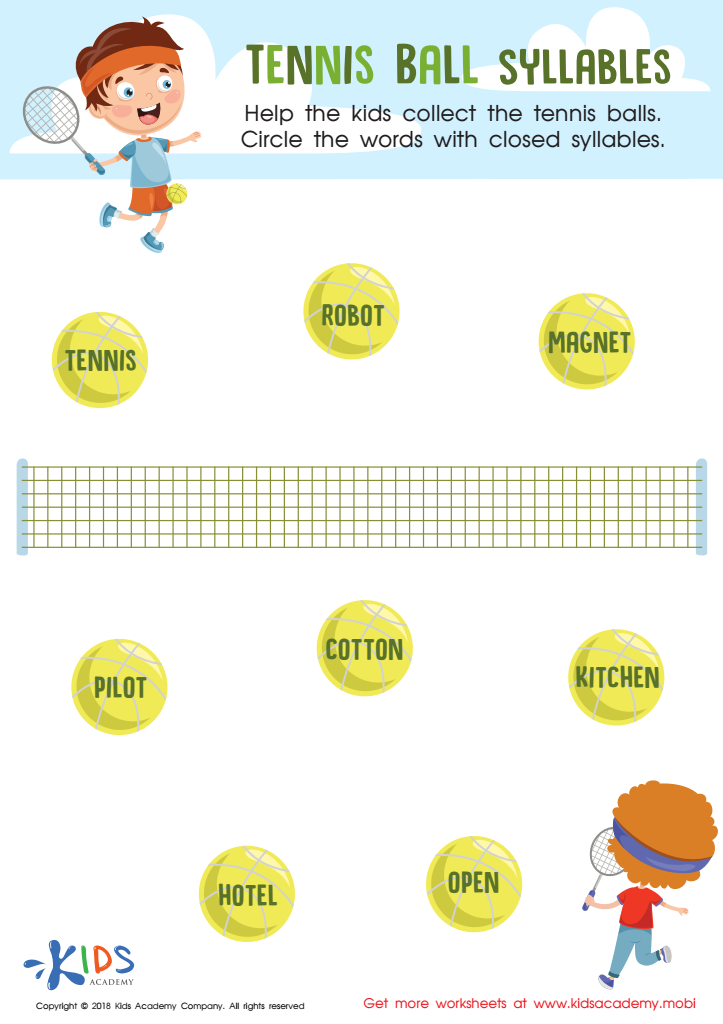
Tennis Ball Syllables Worksheet


.jpg)




Phonological awareness is crucial for children aged 6-8 as it forms the foundation for reading and writing skills. At this age, children are transitioning from learning to read to reading to learn, making mastery of phonological skills imperative. By recognizing and manipulating sounds in words, children develop the ability to decode unfamiliar words, enhancing their reading fluency and comprehension.
Parents and teachers should care about phonological awareness because it directly correlates to academic success. Cognitive research indicates that children with strong phonological skills tend to perform better in literacy tasks, which lays the groundwork for future learning across subjects. Furthermore, phonological awareness supports vocabulary development, essential for effective communication and critical thinking.
Investing time in activities that promote this skill—like rhyming games, sound segmentation, and syllable counting—can make learning fun and engaging. Additionally, addressing phonological weaknesses early can prevent potential reading difficulties later, fostering a positive self-image and motivation to learn. Ultimately, prioritizing phonological awareness ensures children become proficient readers and confident learners, setting them on a path to academic achievement and lifelong learning.








