
Rhyming skills development Normal Worksheets for Ages 6-8
4 filtered results
Difficulty Level
Grade
Age
-
From - To
Subject
Activity
Standards
Enhance your child's language mastery with our Rhyming Skills Development Worksheets designed for ages 6-8. These engaging activities promote phonemic awareness, improve vocabulary, and foster creativity through playful and interactive games. Children will love matching words, completing rhymes, and discovering new patterns in sound. Tailored to reinforce literacy skills, our worksheets are perfect for both classroom and home learning. With a variety of colorful and appealing designs, these resources keep learning enjoyable while building essential reading foundations. Download our worksheets today to spark your child's interest in rhymes and support their educational journey in a fun, stimulating way!
Favorites
With answer key
Interactive

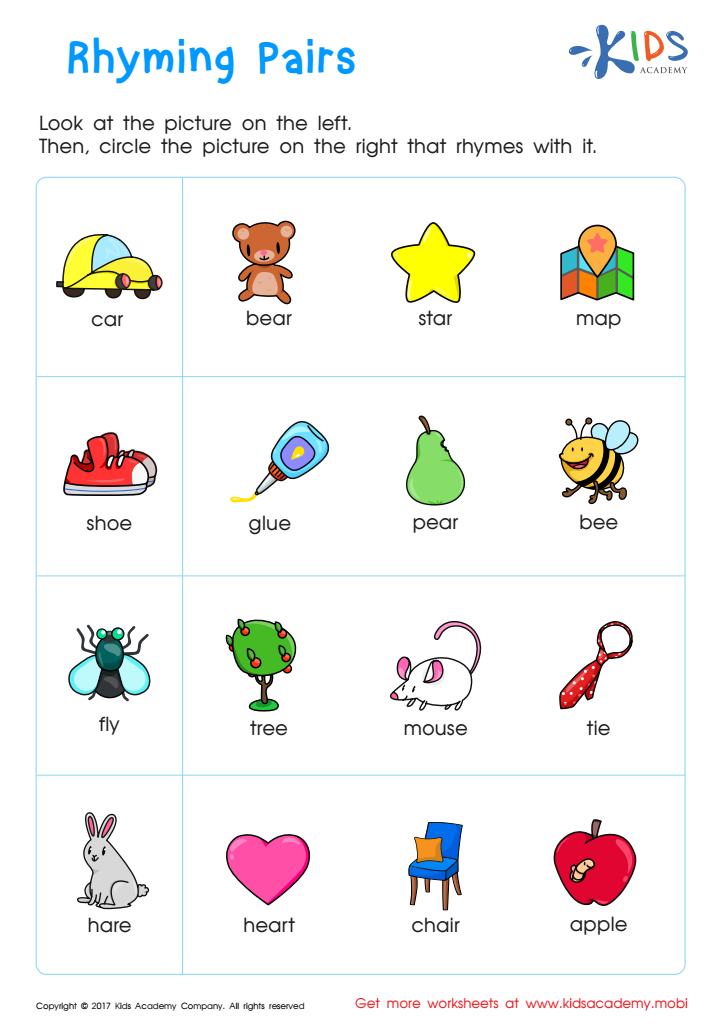
Rhyming Words Rhyming Worksheet
This worksheet is great for honing pre-reading skills. It helps kids make connections between pictures and written words, use problem-solving, and recognize sounds and words that rhyme. Have fun exploring rhyming words with your child, and they'll be rhyming in no time!
 Assign to My Students
Rhyming Words Rhyming Worksheet
Worksheet
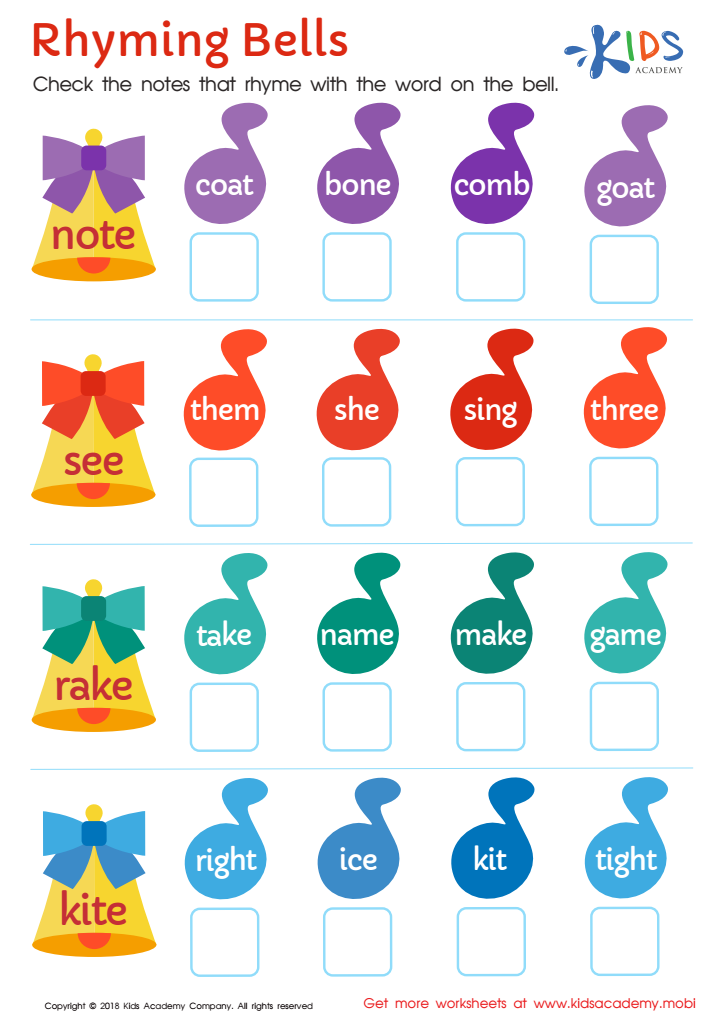
Rhyming Bells Worksheet
This printable worksheet helps students recognize rhyming words. Read a word, then pick the 4 words that rhyme. Look out for words with different spellings but same ending sound. It's a great exercise to improve understanding of rhyming words.
Rhyming Bells Worksheet
Worksheet

First Words: Picture Rhymes Worksheet
Rhyming helps kids understand language, read and write better. This printable worksheet boosts problem-solving and cognitive skills with vibrant pictures. It teaches kids to identify words, recognize rhymes, complete mental tasks and write words. An extra activity: show them how rhyming words share some of the same letters.
First Words: Picture Rhymes Worksheet
Worksheet
Join Kids Academy for Free
Who is primarily going to use this learning content?







Rhyming skills development is crucial for children aged 6-8 for several reasons. Firstly, rhyming enhances phonemic awareness, a foundational literacy skill that enables children to recognize and manipulate sounds in words. This awareness is essential for developing proficient reading and writing abilities, as it helps children decode unfamiliar words and spell them correctly.
Moreover, rhyming fosters vocabulary expansion and comprehension. Engaging with rhyming texts exposes children to new words and contexts, adding depth to their language skills. Children tend to remember and understand words better when they hear them in playful, rhythmic formats.
Additionally, rhyming encourages creativity and self-expression. Writing and reciting rhymes enables children to explore language in a fun and imaginative way, which can boost their confidence in using words. It also enriches their ability to communicate and conveys emotional nuances, an often-overlooked skill.
Finally, rhyming supports social interaction. Group activities that involve rhyming games or songs promote cooperation and communication among peers. Thus, prioritizing rhyming skill development empowers children in literacy, creativity, and social connectivity, making it essential for parents and teachers to nurture this ability during the crucial ages of 6 to 8.








