Understanding comparisons Normal Worksheets for Ages 6-8
5 filtered results
-
From - To
Welcome to our "Understanding Comparisons Normal Worksheets" designed specifically for ages 6-8! These engaging worksheets aim to enhance young learners' comprehension of comparative concepts such as more, less, greater, and fewer. Our collection provides fun exercises and visual aids that encourage interactive learning, helping children sharpen their critical thinking skills as they compare quantities and attributes. Each worksheet reinforces essential mathematical concepts through relatable examples, making learning enjoyable. Perfect for at-home practice or classroom activities, these resources will boost your child's confidence in understanding comparisons, laying a strong foundation for their future mathematical success! Explore and empower your little learners today!
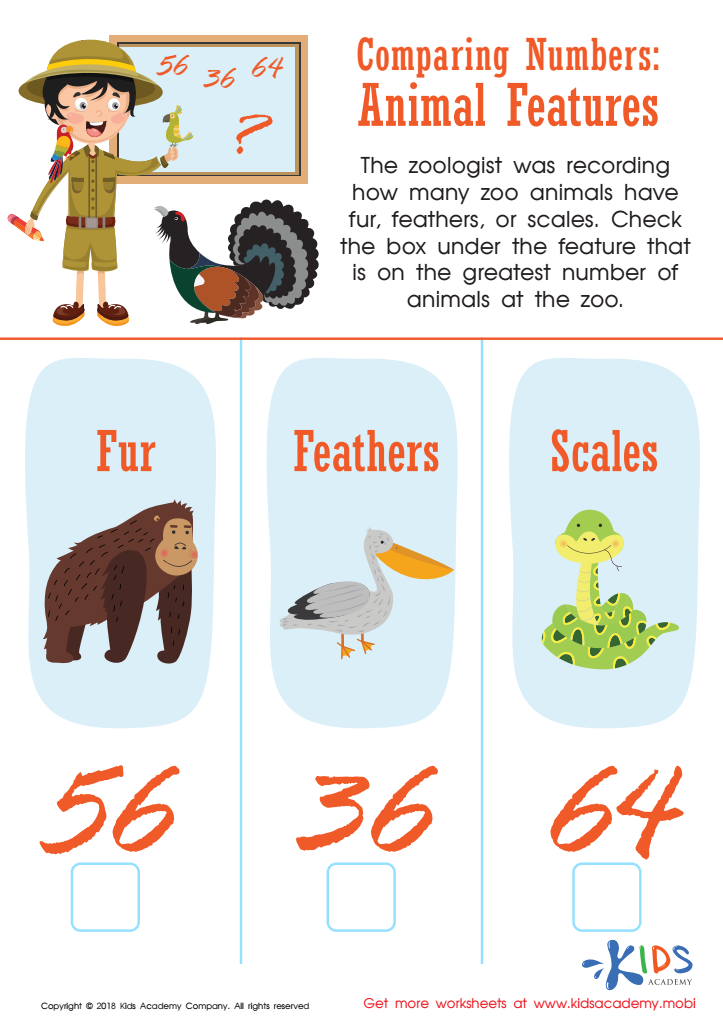
Animal Features Worksheet
 Assign to My Students
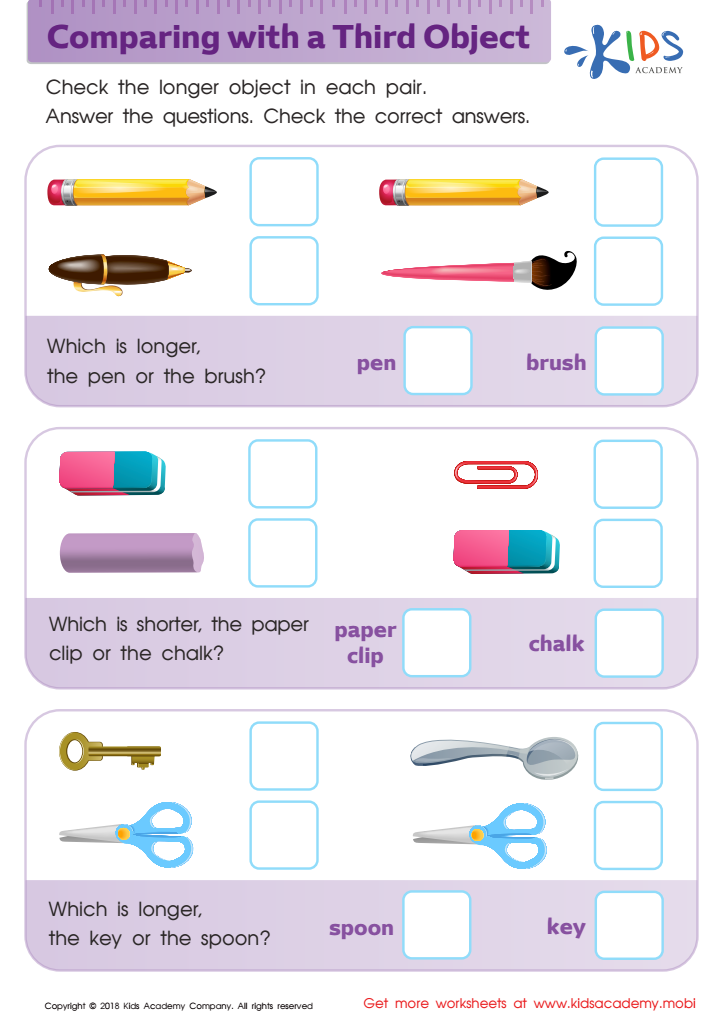
Comparing with a Third Object Worksheet
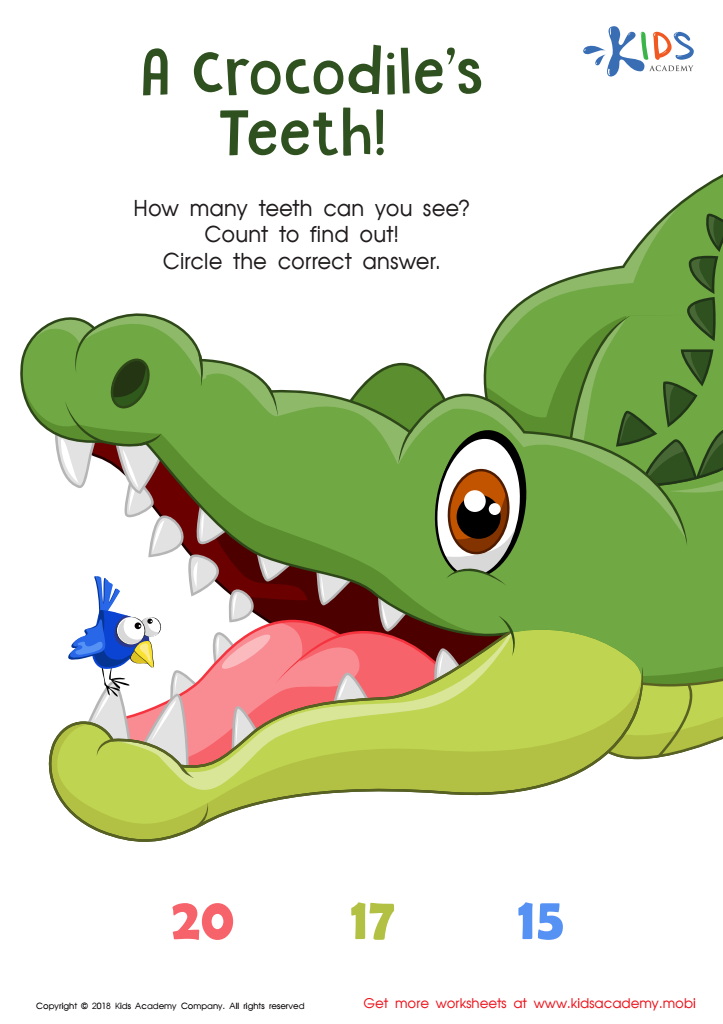
A Crocodile's Teeth Worksheet
Matching: Classifying Toys by Size Worksheet
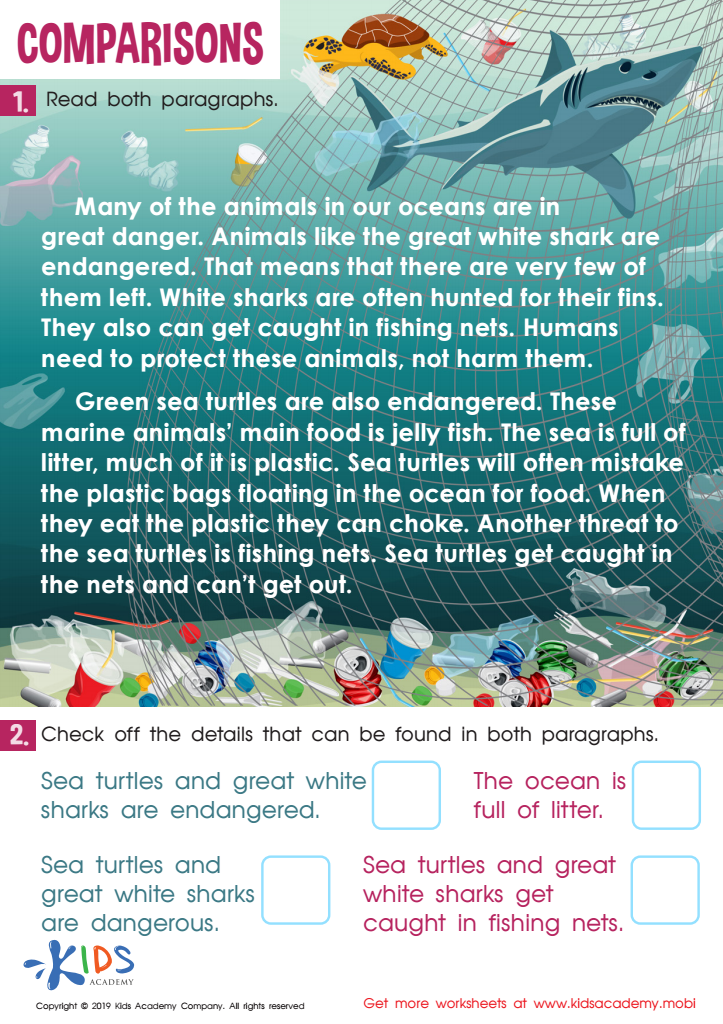
Comparisons Worksheet




Understanding comparisons is crucial for children aged 6-8, and both parents and teachers play a vital role in fostering this skill. At this developmental stage, children are starting to grasp fundamental mathematical concepts, and mastering comparisons lays the groundwork for more advanced problem-solving skills later on. Learning to compare quantities, sizes, and attributes strengthens critical thinking and reasoning abilities, which are essential for overall academic success.
Moreover, making comparisons helps children to develop a sense of proportionality and to recognize patterns and relationships in their environment. This skill extends beyond math; it encourages analytical thinking in science, social studies, and everyday decision-making. For example, children learn to evaluate which items are heavier or lighter, taller or shorter, which nurtures their conflict-resolution skills and enhances their ability to communicate effectively.
Furthermore, understanding comparisons enhances vocabulary and language skills, as children learn to describe differences and similarities. When parents and teachers engage children in activities that involve comparisons, they make learning interactive and relevant, inspiring curiosity and a love for exploration. Ultimately, fostering the ability to make comparisons nurtures well-rounded, confident learners who are prepared for more complex academic challenges ahead.








