"Understanding Context Normal Worksheets for Ages 6-8" help young learners develop essential reading comprehension skills. These engaging worksheets are designed to teach children how to discern the meaning of words and phrases based on the surrounding text. By practicing with these resources, kids aged 6-8 enhance their ability to understand context, improve vocabulary, and become more confident readers. Parents and educators can use these worksheets to support classroom learning, home education, or supplementary practice. Fun puzzles, matching games, and thought-provoking questions make learning enjoyable and effective, laying a solid foundation for future academic success.

Check out this FREE "Understanding context" Trial Lesson for age 6-8!

Key Details

Favorites
With answer key
Interactive
  • 6-8
  • Understanding context
  • Normal
Read It! Worksheet
Read It! Worksheet

Read It! Worksheet

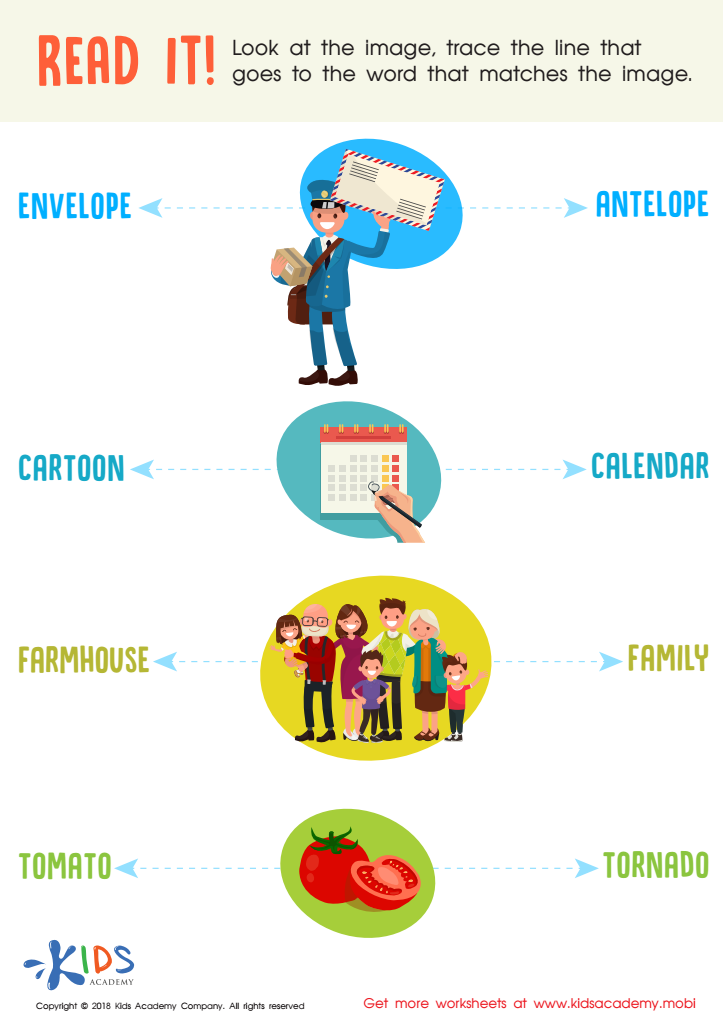
Point to each image on this worksheet, asking your child what it is. Read the 2 options then help your child trace the line to the correct word. It'll keep them engaged and provide visual stimulation.
Read It! Worksheet
Worksheet
Craft and Structure: Assessment 3 Worksheet

Craft and Structure: Assessment 3 Worksheet

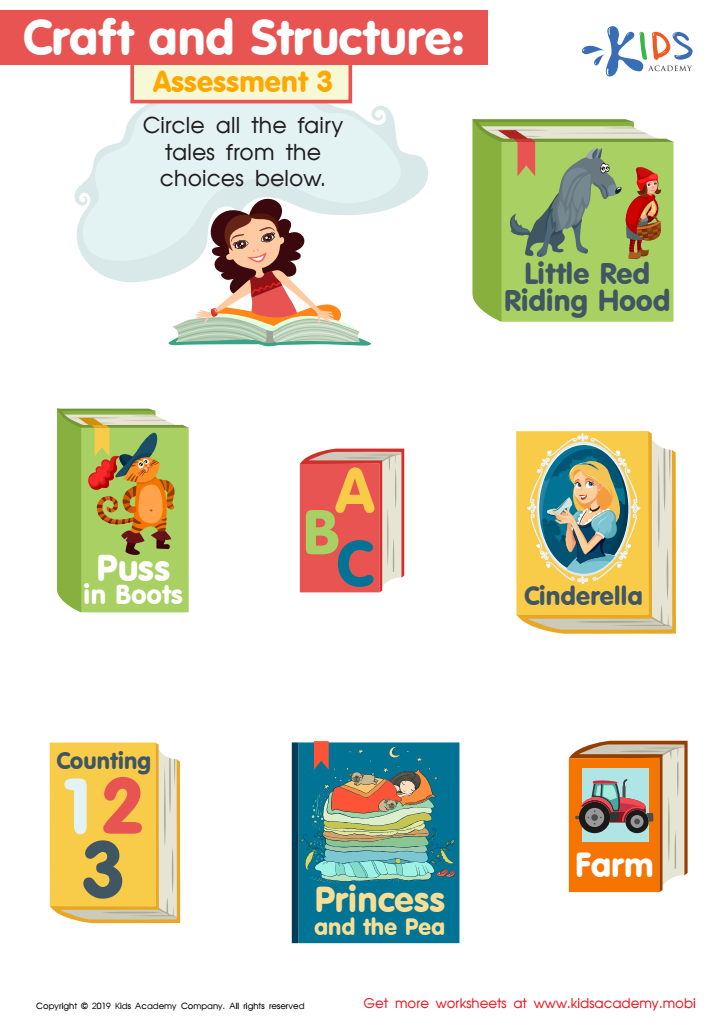
Before starting the worksheet, ask your kids to recall their favorite bedtime stories. What characters and events can they remember? Four popular children's stories are hidden among pictures of other objects - help them search and circle the fairy tales in this PDF.
Craft and Structure: Assessment 3 Worksheet
Worksheet
The Big Surprise Worksheet

The Big Surprise Worksheet

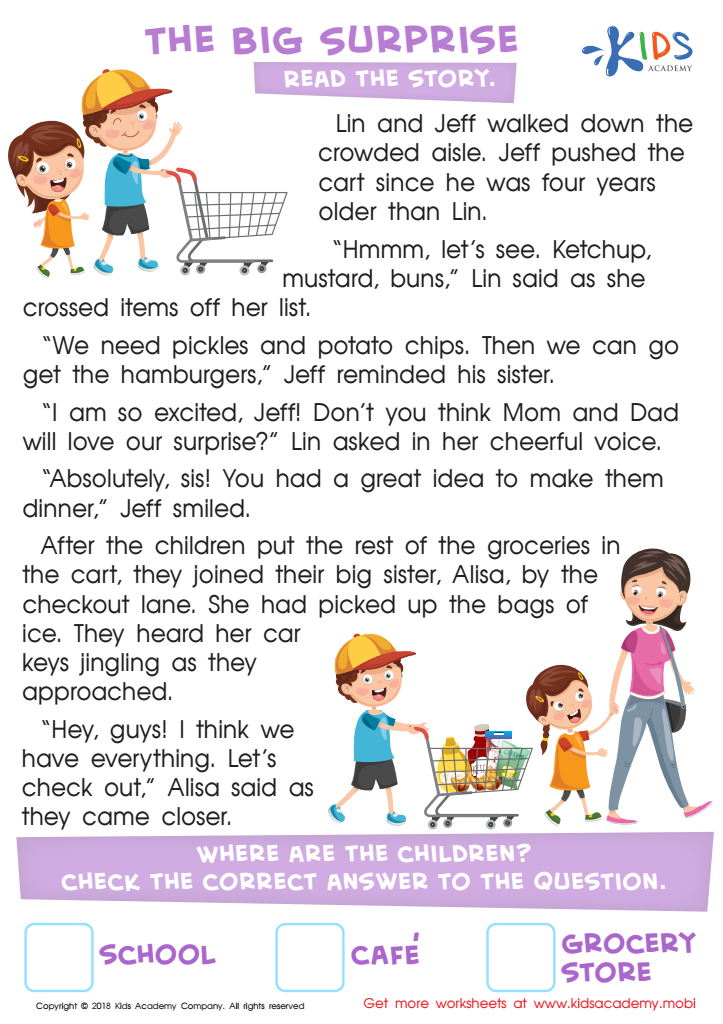
Read this story to your kids: Lin and Jeff are in the supermarket with their big sister Alisa. They're excited to buy groceries. Listen closely to the details and ask the questions at the end to check your understanding. Read it twice to ensure full comprehension.
The Big Surprise Worksheet
Worksheet
I Can Read Worksheet

I Can Read Worksheet

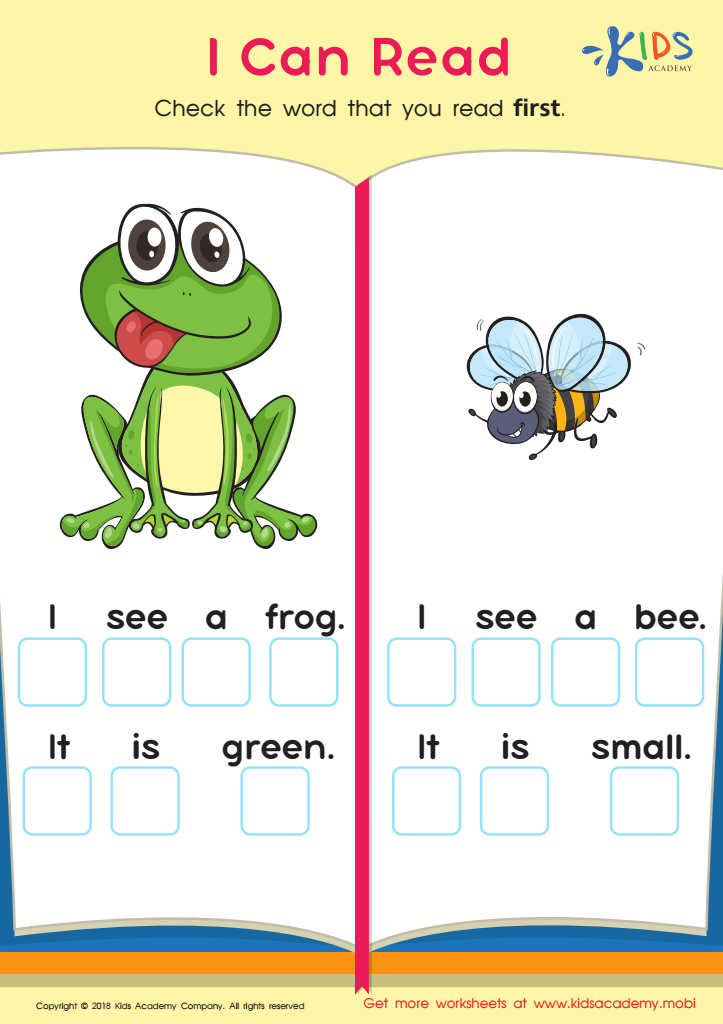
Test your child's reading skills with this fun worksheet. See how well they know one-letter, two-letter, and five-letter words. Ask your little one to read the sentences and tick the word they identify first. It's a great way to track their progress and help them become more confident readers.
I Can Read Worksheet
Worksheet
Key Details Neighborhoods Worksheet

Key Details Neighborhoods Worksheet

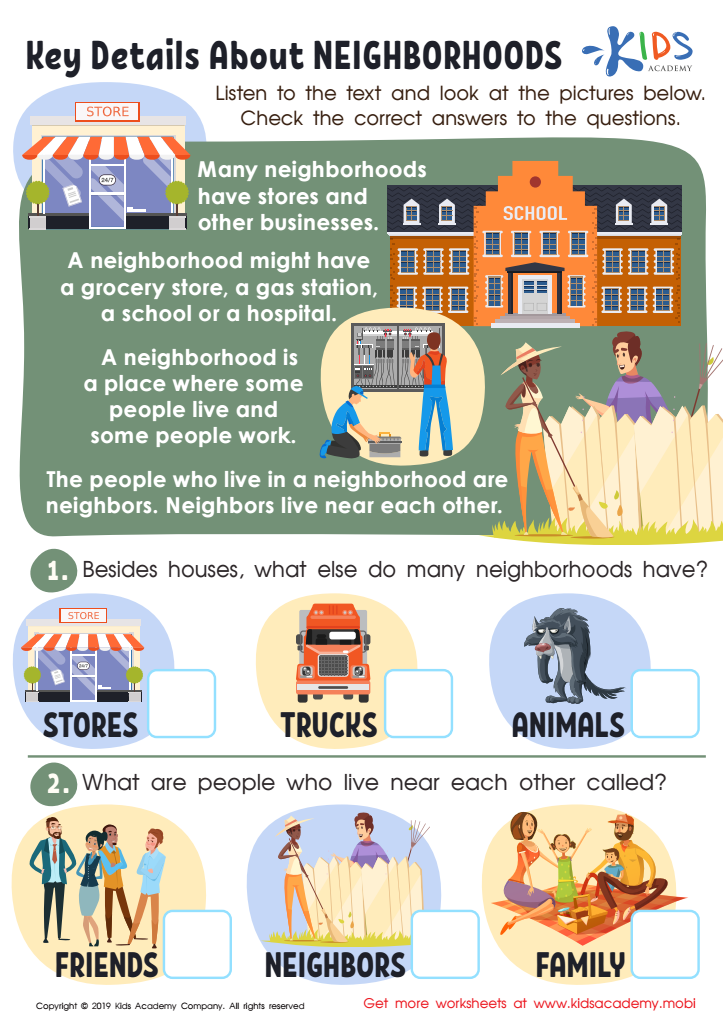
This worksheet helps your child strengthen reading comprehension by teaching them to pull out key details and store them in their memory. It includes words and pictures that demonstrate how the two can work together to create better understanding. As they learn about a neighborhood, they'll practice these skills by answering comprehension questions.
Key Details Neighborhoods Worksheet
Worksheet
Finish the Sentence Worksheet

Finish the Sentence Worksheet

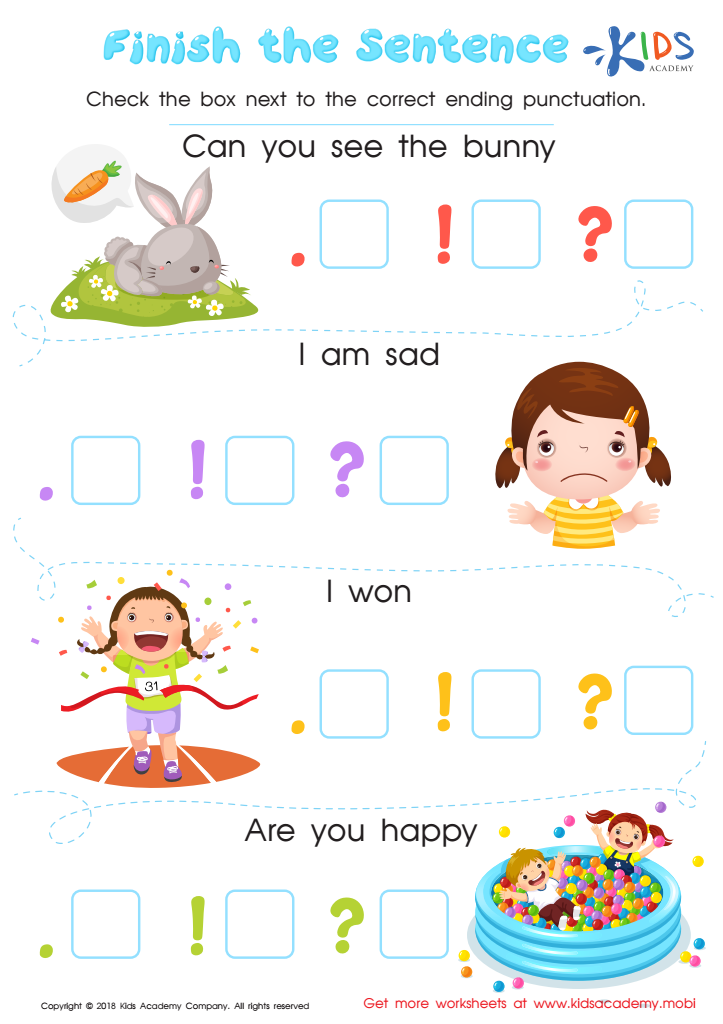
If your students have difficulty with punctuation, have them read sentences aloud and check the box next to the correct ending punctuation with this simple worksheet. Punctuation signals the tone and meaning of sentences. It helps students understand what is being communicated.
Finish the Sentence Worksheet
Worksheet
Puss in Boots Vocabulary Worksheet


Puss in Boots Vocabulary Worksheet

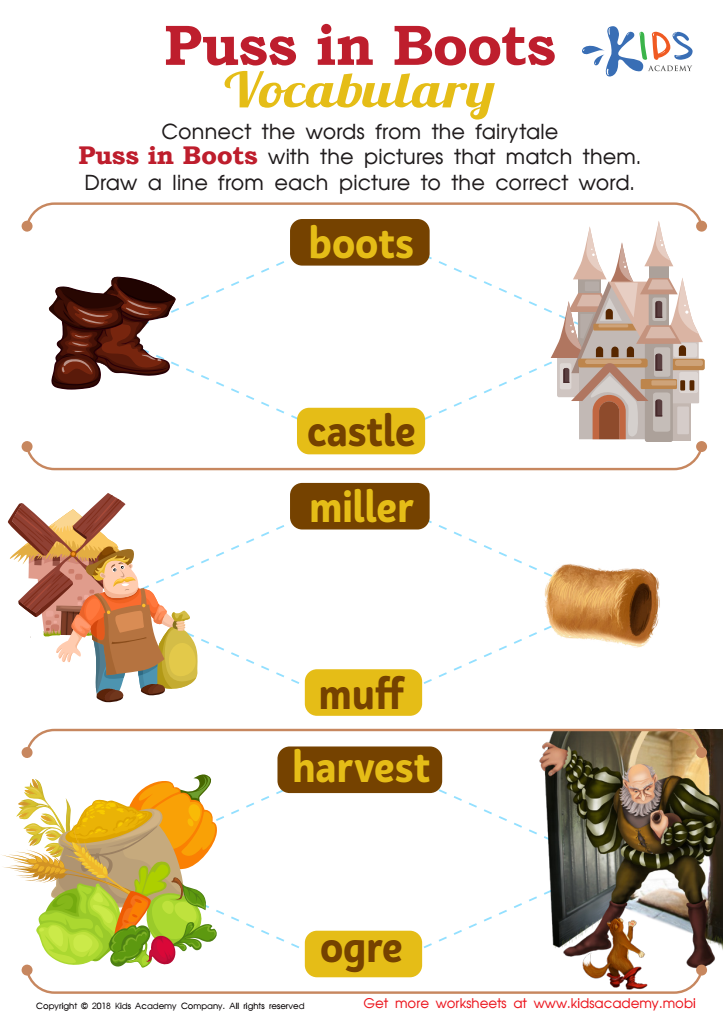
Let your kids enjoy story-telling while learning at the same time. Help them learn from the fairytale, Puss in Boots, by connecting words from the worksheet with the matching pictures. Ask them to draw a line between each picture and corresponding word to build their vocabulary.
Puss in Boots Vocabulary Worksheet

Worksheet


Understanding context is crucial for children aged 6-8 as it forms the foundation for effective communication, comprehension, and learning. For parents and teachers, knowing how to guide children in this skill is essential. At this developmental stage, kids are transitioning from learning to read to reading to learn. They start to grasp the nuances of language, including idioms, metaphors, and implied meanings.

Understanding context helps children make sense of new information and how it relates to what they already know. For instance, in stories, children learn to infer meaning from the setting, characters’ actions, and dialogue. This boosts their reading comprehension skills, making them better prepared for academic success. It also helps them understand social cues, improving their social interactions and emotional intelligence.

Moreover, kids in this age group frequently encounter new and complex language, whether in textbooks or conversations. If they can’t understand context, they may misinterpret information, leading to confusion and frustration. By prioritizing context recognition, parents and teachers strengthen children’s critical thinking and analytical skills, cultivating lifelong learners who can navigate more complex texts, conversations, and experiences in the future. Understanding this developmental milestone allows caregivers to provide the right support, ensuring children thrive both inside and outside the classroom.