Understanding economics Normal Worksheets for Ages 6-8
3 filtered results
-
From - To
Discover the fascinating world of economics with our "Understanding Economics Normal Worksheets" designed specifically for children aged 6-8. These engaging worksheets introduce young learners to essential economic concepts, such as wants and needs, goods and services, and the basics of currency. Our fun activities and adventures encourage critical thinking and enhance math and reading skills while making learning enjoyable. Ideal for parents and teachers, these worksheets serve as a valuable resource to build a strong foundation in economic understanding. Help your child explore how money, trade, and decision-making shape our world with these thoughtfully crafted resources. Start the journey today!
 Assign to My Students
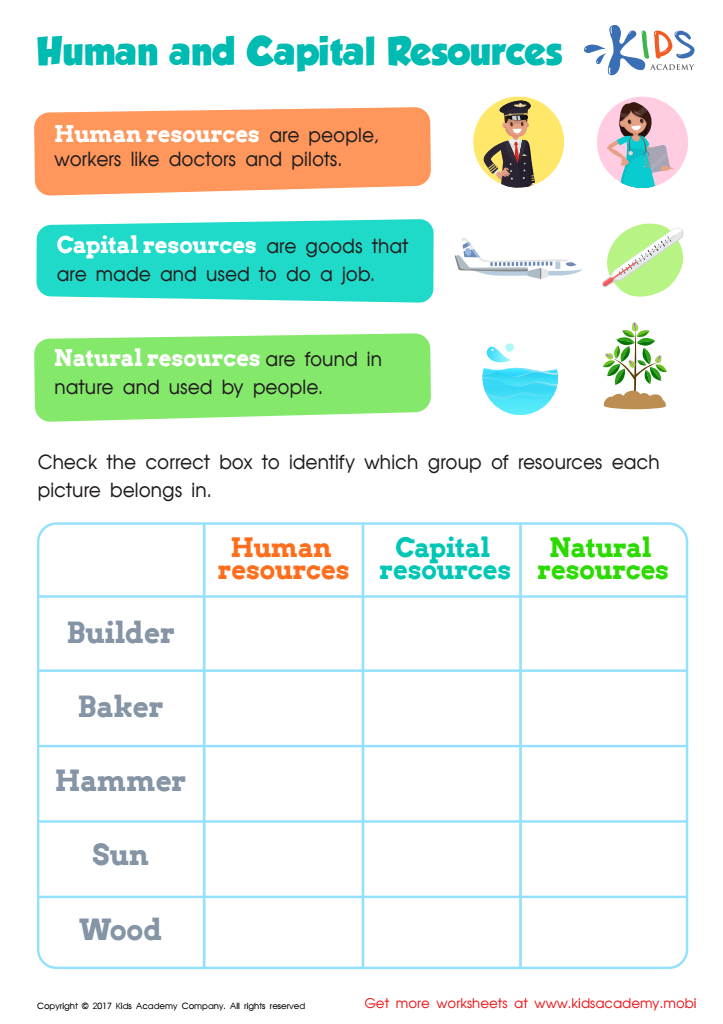
Human and Capital Resources Worksheet
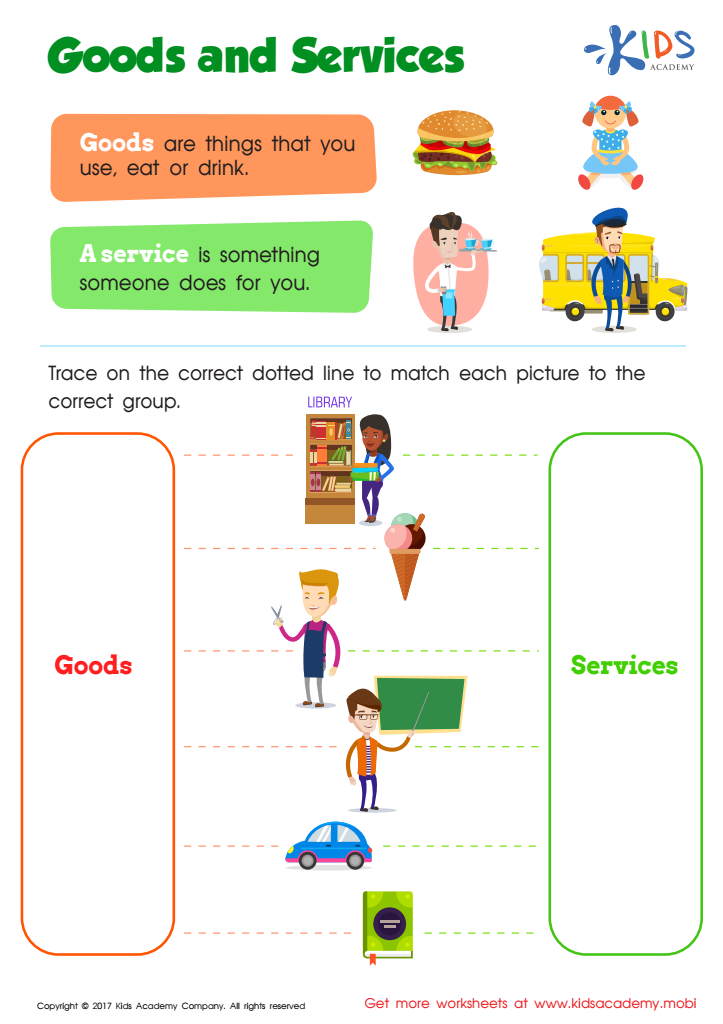
Goods and Services Worksheet



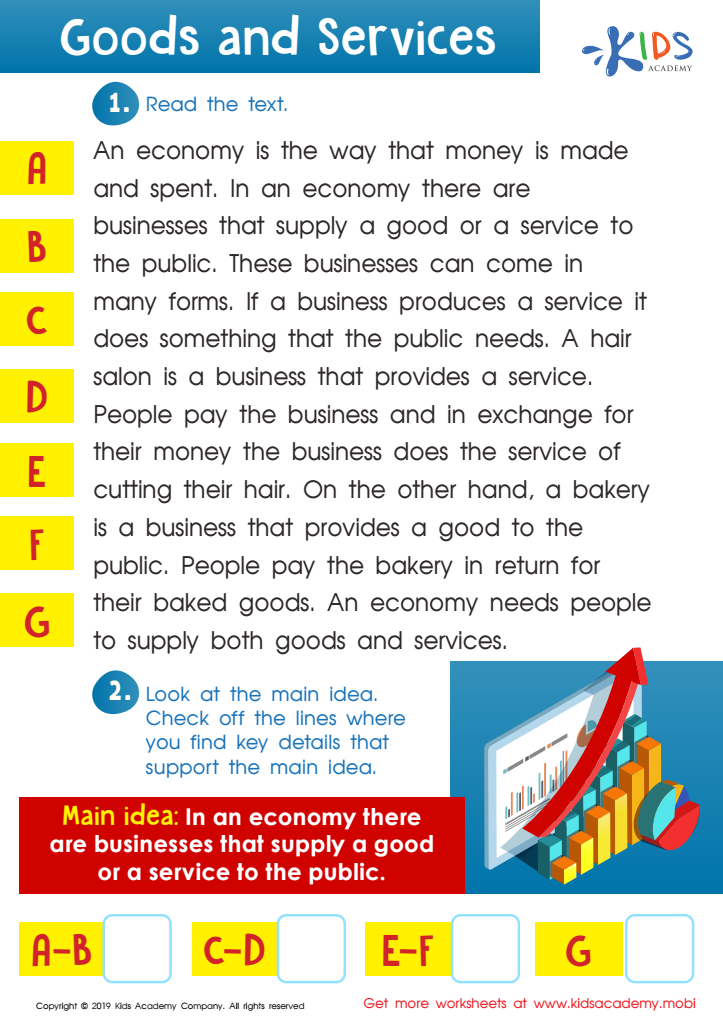
.jpg)


Understanding basic economics is essential for children ages 6-8, and both parents and teachers play a pivotal role in this education. Grasping economic concepts fosters critical thinking and helps young kids make informed decisions about resources and spending.
At this age, children begin to recognize that money is limited, and learning to manage it promotes responsibility and accountability. Simple lessons around trade, buying, and saving can help them understand the value of things and the effort it takes to earn money. This intellectual foundation prepares them for future financial literacy, teaching them the importance of budgeting and saving.
Moreover, understanding economics enhances problem-solving skills. When kids learn about scarcity or how choices affect outcomes, they gain insight into real-world situations. This not only applies to money but can extend to time management and resource allocation in their daily lives, from sharing toys to coordinating playtime.
By integrating economic concepts in everyday conversations, parents and teachers cultivate a mindset of curiosity and resilience, enabling children to navigate challenges more effectively as they grow. Ultimately, imparting these lessons early can empower future generations to be wise consumers, responsible citizens, and savvy decision-makers.








