Understanding pollination Normal Worksheets for Ages 6-8
4 filtered results
-
From - To
Unlock the wonders of nature for your 6 to 8-year-olds with our "Understanding Pollination" worksheets! These engaging printables make learning about pollination fun and interactive. Designed to fit seamlessly into class curriculums or home learning, kids will discover how bees, butterflies, and birds assist in pollination. With colorful illustrations and simple explanations, children will grasp essential science concepts while enhancing their fine motor skills by tracing and matching. Our age-appropriate activities encourage curiosity and foster a deeper connection to the natural world. Make science exciting and accessible with our enriching pollination worksheets today!
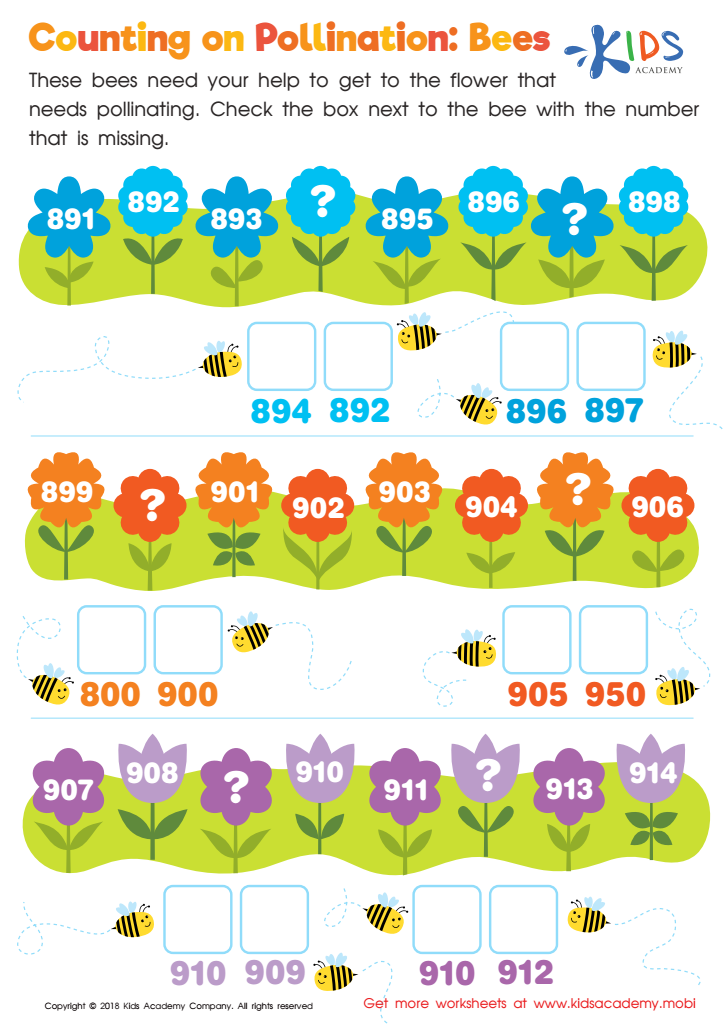
Counting on Pollination: Bees Worksheet
 Assign to My Students
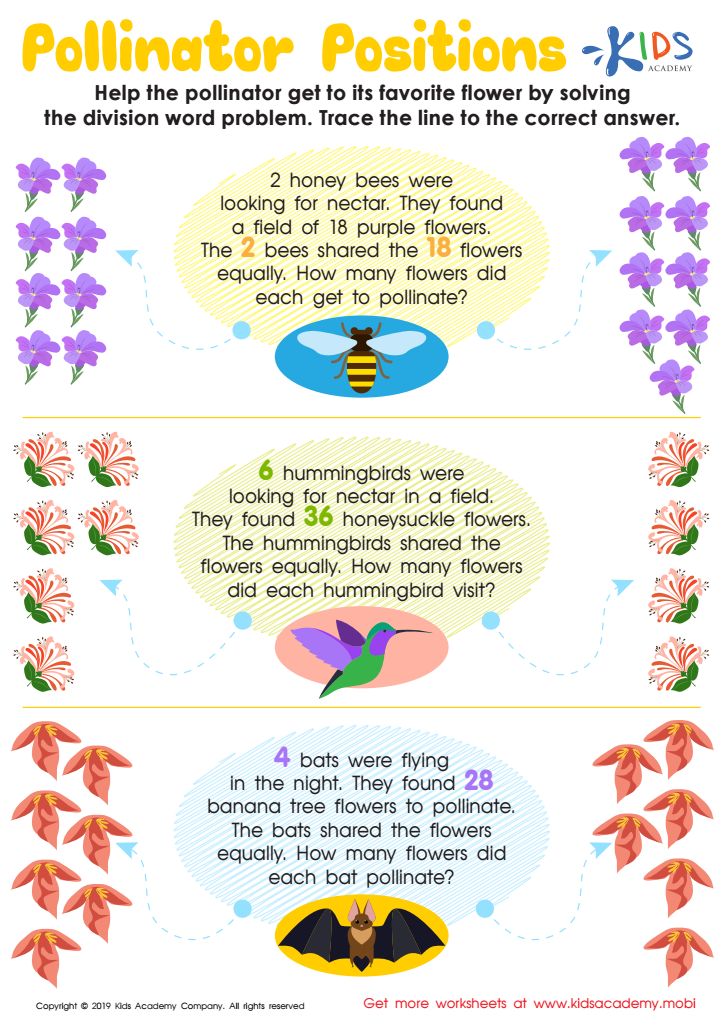
Pollinator Positions Worksheet
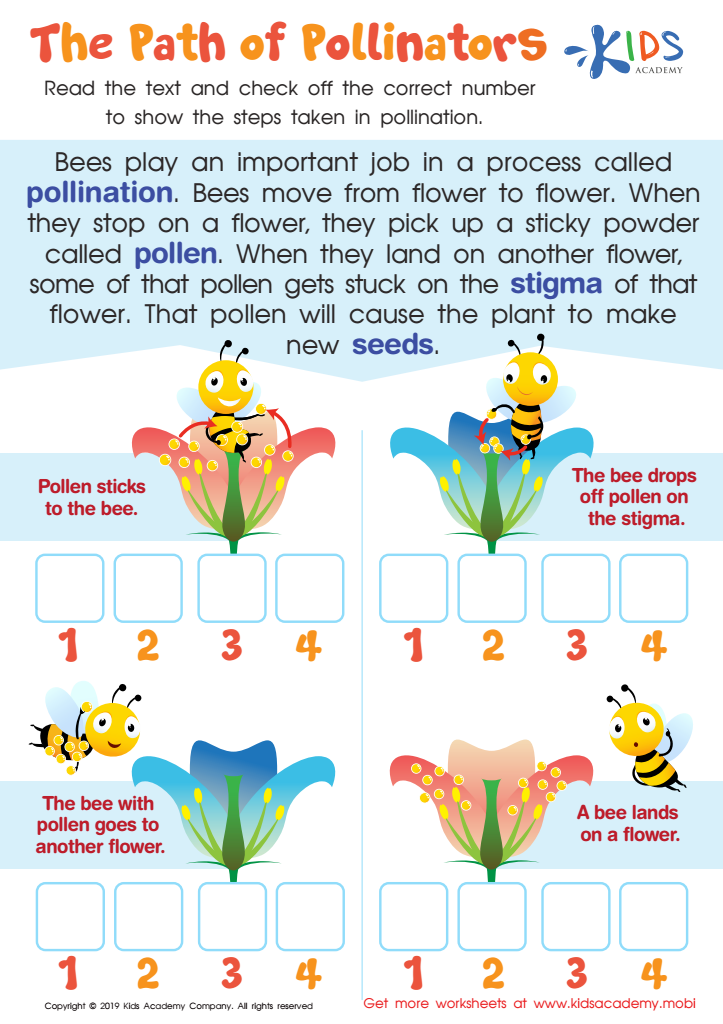
The Path of Pollinators Worksheet
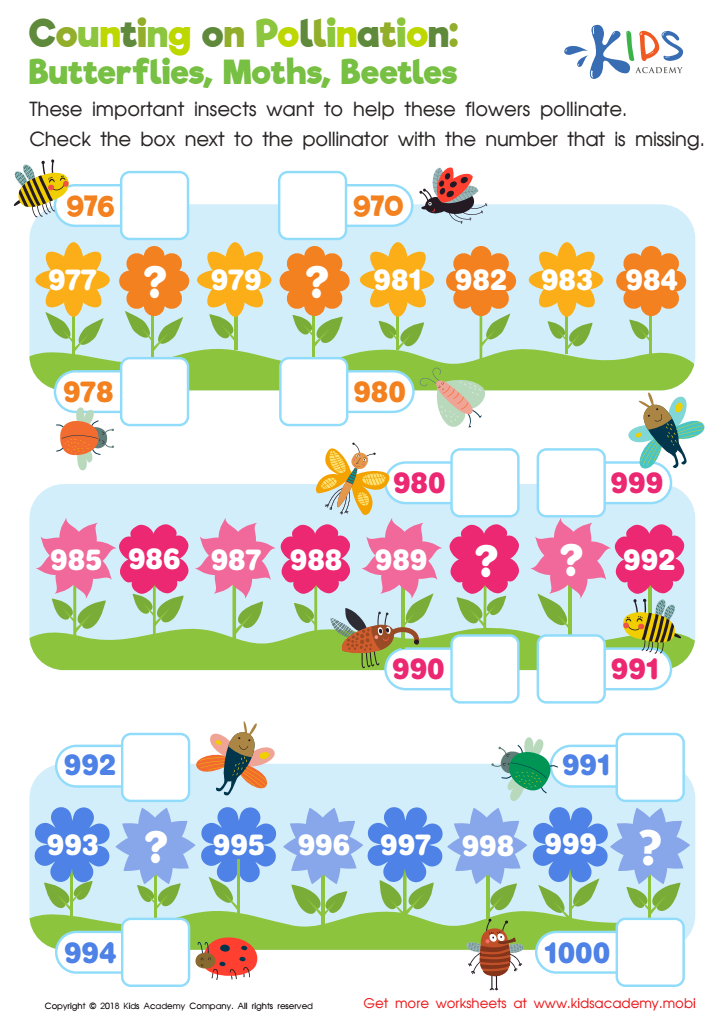
Counting on Pollination: Butterflies, Moths, Beetles Worksheet






Understanding pollination is important for young children for several reasons. Firstly, teaching kids about pollination lays the foundation for science literacy early on. By learning how pollination works, children begin to understand fundamental life processes and the interconnectedness of the natural world. They'll discover how flowers rely on bees, butterflies, birds, and even the wind to transfer pollen, helping plants produce seeds and fruits.
Secondly, pollination has direct implications for our food supply. Many of the fruits, vegetables, and grains we eat depend on pollination, largely carried out by bees and other pollinators. Educating children on this topic raises their awareness about the sources of their food and builds a broader understanding of agriculture and ecosystems.
Additionally, understanding pollination promotes a sense of environmental stewardship. Children who grasp the importance of pollinators may be more inclined to engage in behaviors and practices that help protect these essential creatures. For example, they might support planting flowers that attract bees and butterflies or oppose practices that harm pollinator populations.
Lastly, learning about pollination is engaging and can be fun! It combines beautifully with outdoor activities like visiting gardens or participating in hands-on projects, making learning an enjoyable experience that instills lasting memories and valuable information.








