Visual discrimination skills Normal Worksheets for Ages 6-8
5 filtered results
-
From - To
Enhance your child's visual discrimination skills with our expertly designed worksheets for ages 6-8. These engaging activities help sharpen the ability to recognize differences in shapes, patterns, symbols, and images, crucial for effective reading and math. With colorful and fun exercises, children learn to distinguish between similar and different objects, boosting their attention to detail and cognitive development. Perfect for both classroom or at-home learning, these worksheets support visual learning and encourage independent practice. Explore our diverse range today and give your child the foundational skills they need for academic success.
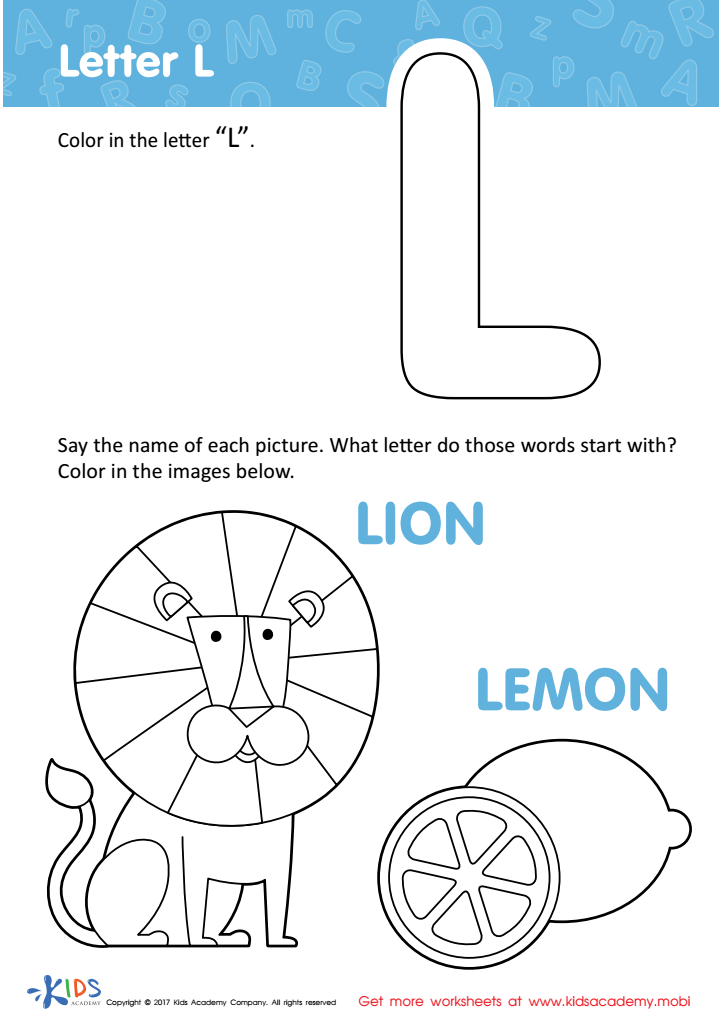
Letter L Coloring Sheet
 Assign to My Students
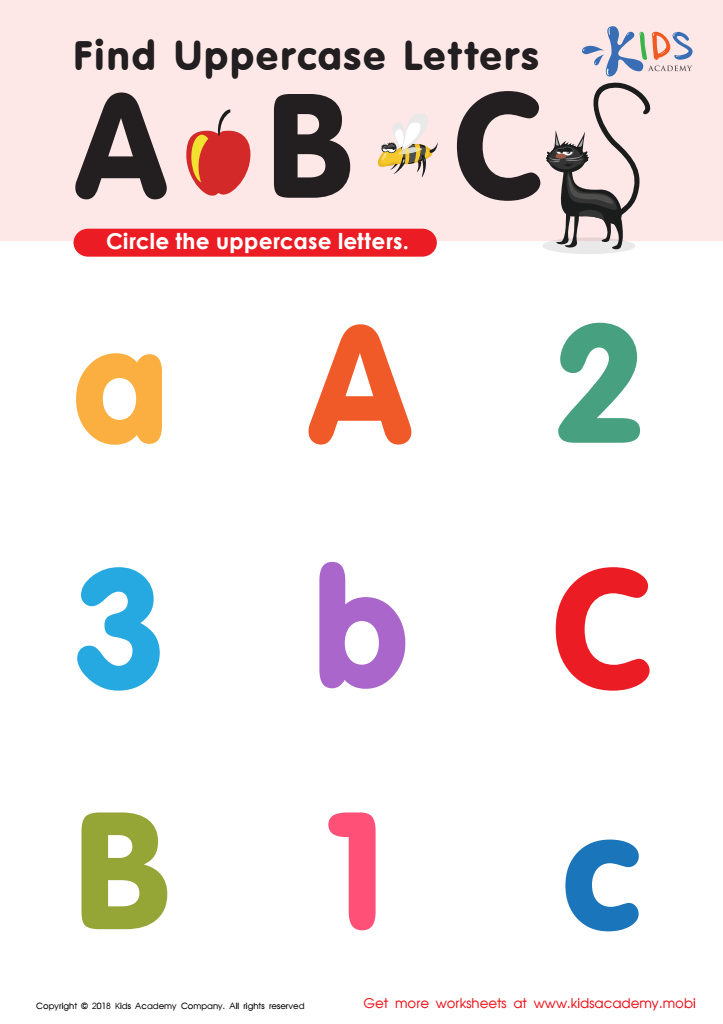
Find Uppercase Letters A, B, and C Worksheet
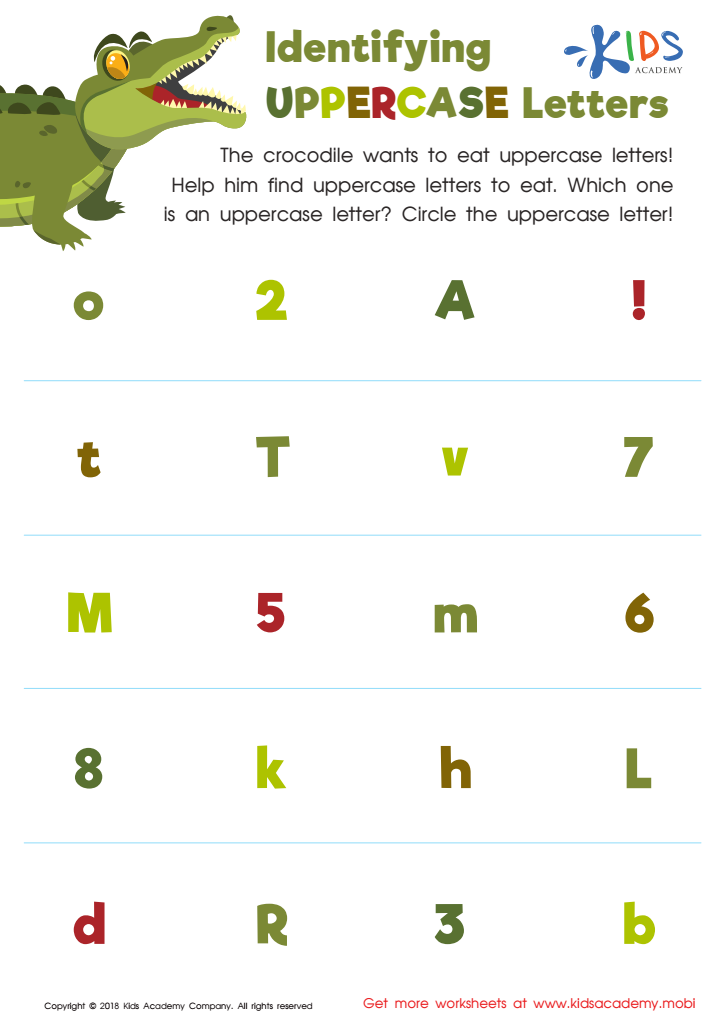
Identifying Uppercase Letters Worksheet
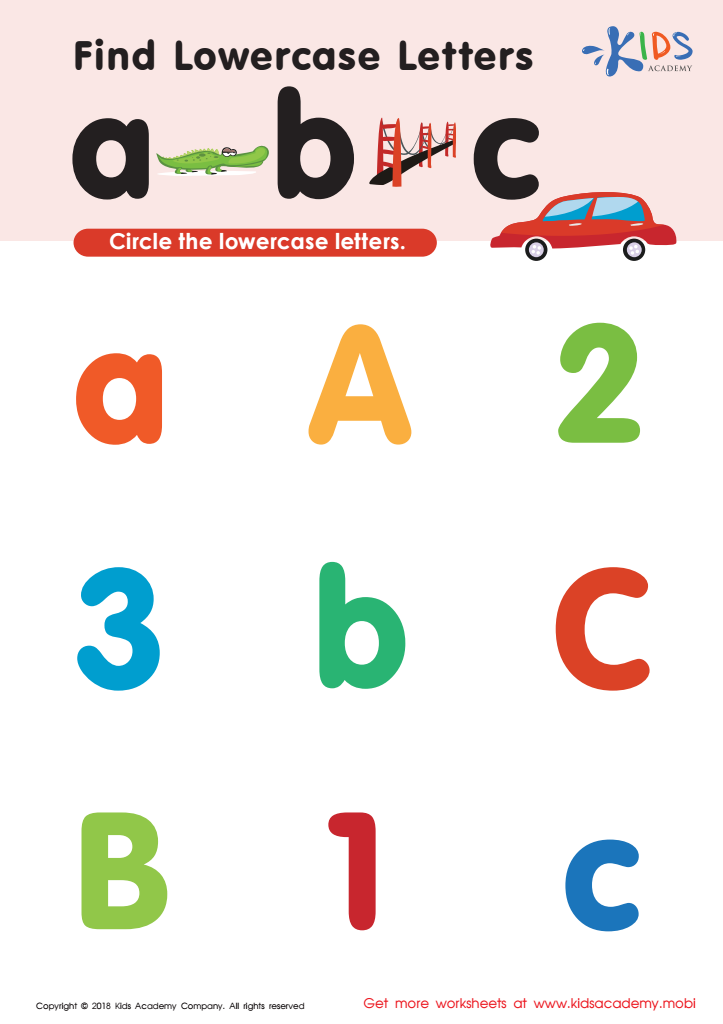
Find lowercase letters a b c Worksheet
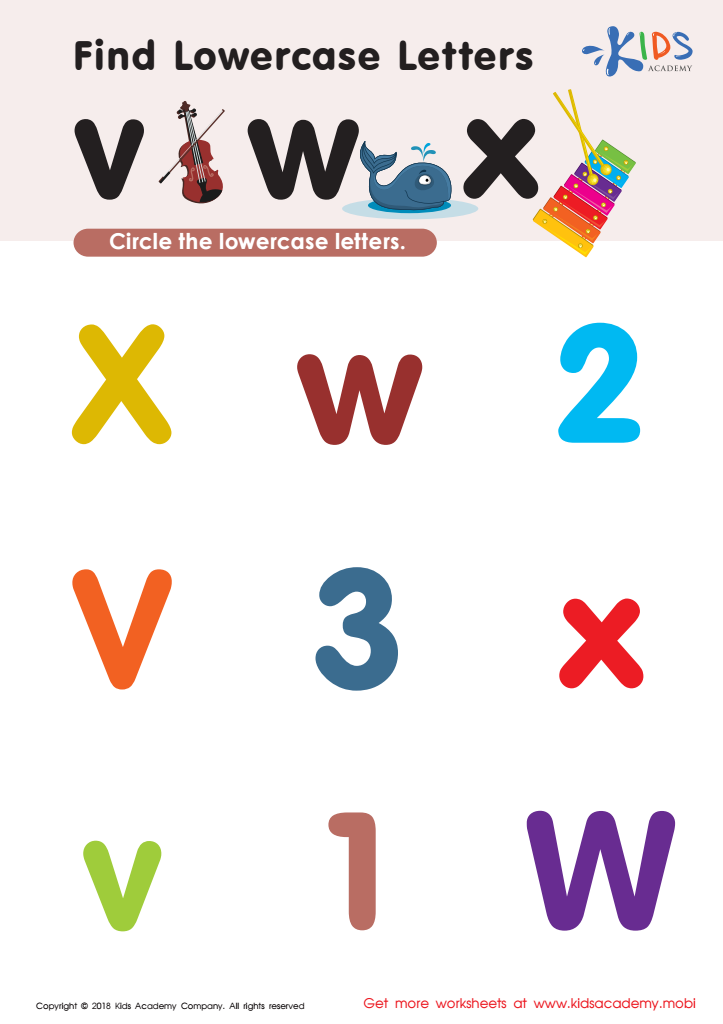
Find Lowercase Letters v w x Worksheet








Visual discrimination skills are crucial for children aged 6-8 because they form the foundation for literacy, numeracy, and overall academic success. At this age, children are learning to differentiate between letters, numbers, shapes, and patterns, which are essential for reading, writing, and mathematical problem-solving. For instance, being able to distinguish between similar-looking letters like 'b' and 'd' or 'p' and 'q' aids in fluent reading and accurate letter formation in writing.
Moreover, these skills enhance a child's ability to observe and interpret the world around them. Tasks such as sorting objects, identifying differences and similarities, and recognizing symbols all rely on visual discrimination. This skill also supports other areas of development like motor skills through activities like puzzles, which refine fine motor control and hand-eye coordination.
Inadequate visual discrimination can make academic tasks challenging and may lead to frustration, decreased confidence, and a reluctance to participate in learning activities. Early identification and support can address difficulties before they impact educational experiences. Parents and teachers play a critical role in nurturing these skills by providing visual discrimination activities, monitoring progress, and collaborating with specialists if necessary. Ensuring robust visual discrimination skills sets the stage for successful continuous learning and adaptation in a more complex academic environment.








